Sweat Hives: What Causes Them and How to Manage the Reaction
When your skin breaks out in itchy, red bumps after you sweat, you're likely dealing with sweat hives, a type of physical urticaria triggered by body heat and perspiration. Also known as cholinergic urticaria, this isn't an allergy to sweat itself—it's your immune system overreacting to the rise in body temperature that comes with exercise, hot weather, or even stress. The bumps usually show up within minutes of sweating, often on the chest, neck, back, or arms, and can feel like tiny stings or burns. Unlike regular heat rash, which clogs pores, sweat hives are driven by histamine release from mast cells in the skin, making them more like an allergic response—but to your own body’s signals.
This reaction isn’t rare. Studies show up to 1 in 5 people experience some form of cholinergic urticaria at least once, especially teens and young adults. What makes it confusing is that it doesn’t always come with other allergy signs like swelling or trouble breathing. But when it does, or if the hives last longer than an hour, it’s a red flag. People with asthma or other allergies are more likely to have this issue, and it often runs in families. It’s also not the same as a reaction to deodorant, laundry detergent, or tight clothing—those are contact irritants. Sweat hives are internal, triggered by your core temperature rising, even if you’re not working out hard.
Managing sweat hives isn’t about stopping sweat—it’s about controlling the body’s response. Antihistamines like cetirizine or loratadine taken before exercise can help many people. Cooling down quickly after sweating, wearing loose breathable fabrics, and avoiding intense workouts in hot, humid environments also make a difference. Some find that gradually exposing themselves to heat (like short, warm showers) helps their body adapt over time. If it’s getting worse or affecting your daily life, seeing a dermatologist or allergist for a sweat challenge test can confirm the diagnosis and rule out other conditions like mastocytosis or autoimmune triggers.
Below, you’ll find real-world guides on how to spot dangerous skin reactions, what medications might be making your hives worse, and how to tell the difference between a harmless rash and something that needs urgent care. Whether you’re dealing with mild flare-ups or worrying about how your meds interact with heat sensitivity, these posts give you the facts without the fluff.
Dec 4, 2025
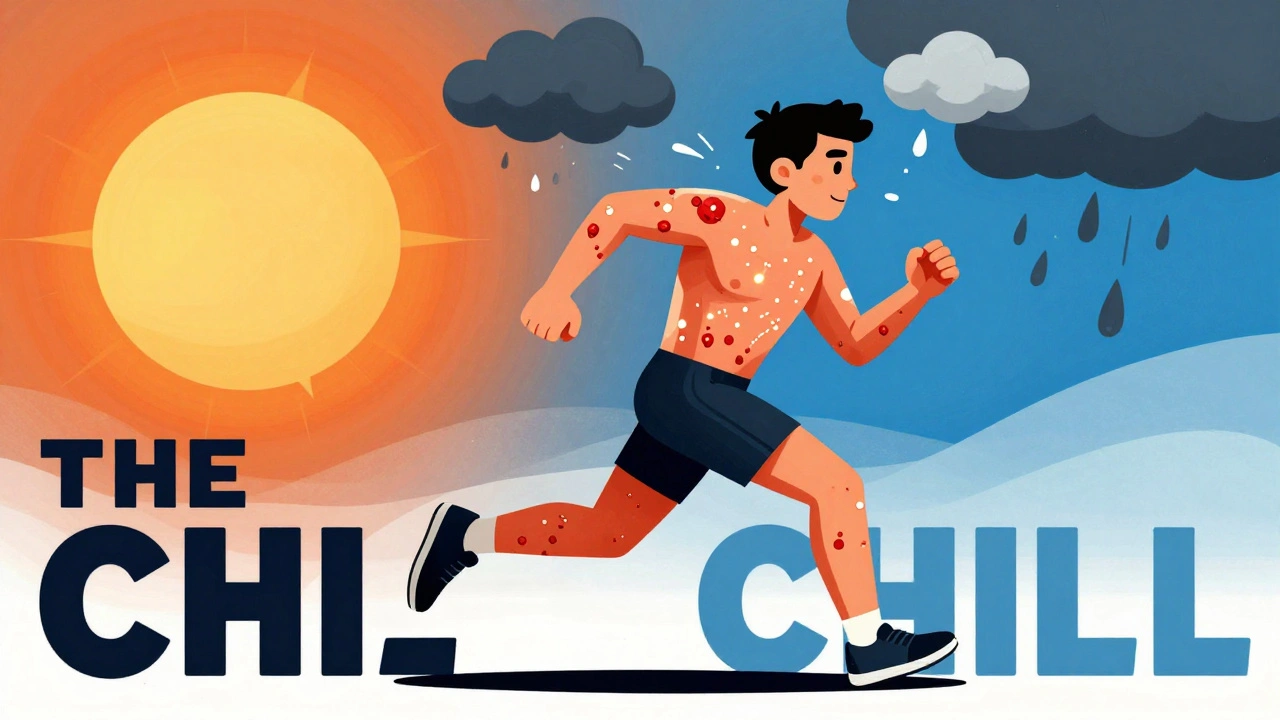
Cholinergic Urticaria: Heat-Induced Hives and How to Prevent Them
11 Comments
Cholinergic urticaria causes itchy heat-induced hives triggered by sweat and rising body temperature. Learn how to identify triggers, manage symptoms with antihistamines, and prevent flare-ups through cooling strategies and lifestyle changes.
Read More