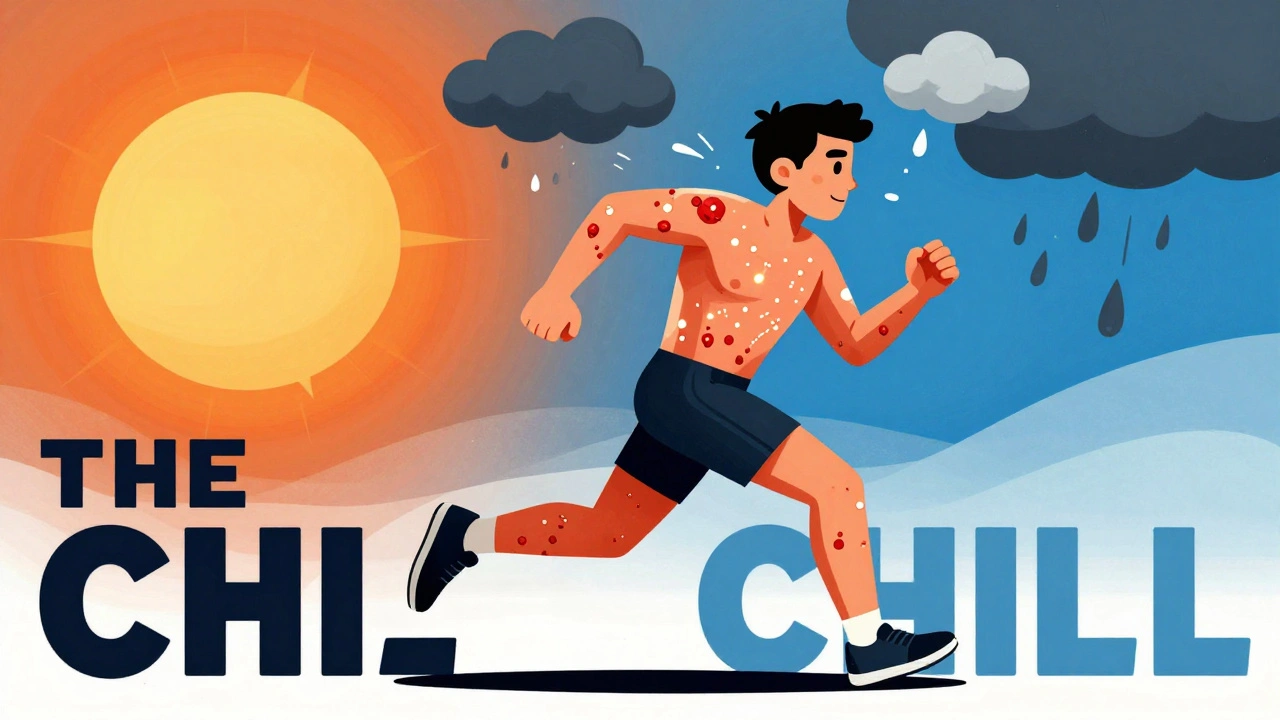
Imagine breaking out in tiny, burning bumps every time you start jogging, eat spicy food, or even walk into a warm room. For people with cholinergic urticaria, this isn’t rare-it’s daily life. Unlike regular hives that come from allergies to peanuts or pollen, cholinergic urticaria is triggered by your own body heat. It’s not an allergy to something outside you-it’s your nervous system overreacting to sweat and rising temperature. And it’s more common than most people realize.
What Exactly Is Cholinergic Urticaria?
Cholinergic urticaria (CU), sometimes called heat hives or sweat hives, is a type of physical urticaria. That means it’s caused by a physical stimulus-in this case, an increase in body temperature. When your core temperature rises above 37°C (98.6°F), nerve fibers near your sweat glands send signals that mistakenly tell your immune system to release histamine. The result? Hundreds of tiny, red, itchy bumps-usually 1 to 3 millimeters wide-surrounded by red flares. They show up fast: within 2 to 15 minutes after you start sweating.
These hives don’t show up everywhere. They’re most common on the chest (78% of cases), face (65%), upper back (62%), and arms (58%). You rarely see them on your palms, soles, or inside your mouth. The bumps feel like needles under the skin, followed by intense warmth and flushing. They usually fade within 30 minutes after you cool down, and almost always disappear within 90 minutes.
It typically starts between ages 15 and 25. While it can last for years, about 30% of people see their symptoms fade completely within 7 to 10 years. But until then, it can make even simple activities-like walking to the bus or having lunch-feel risky.
Why Does Heat Trigger These Hives?
It’s not the heat itself. It’s the sweat. And more specifically, how your body reacts to it.
Research shows that people with cholinergic urticaria have lower levels of an enzyme called acetylcholinesterase (AChE) in their sweat glands. This enzyme normally breaks down acetylcholine, a chemical that helps nerves communicate. When AChE is low, acetylcholine builds up and overstimulates receptors (CHRM3) on skin cells. This triggers mast cells to dump histamine, causing inflammation and hives.
What’s interesting is that this isn’t an allergic reaction in the classic sense. You’re not reacting to a foreign substance. Your body is essentially misfiring-like a smoke alarm going off because the kitchen got too warm, not because there’s a fire.
Studies also show higher levels of certain chemokines-CCL2, CCL5, and CCL17-in the skin of people with CU. These act like chemical sirens, pulling immune cells to the area and making the reaction worse. That’s why the hives don’t just appear-they spread and flare.
How Is It Different From Other Hives?
Not all hives are the same. Here’s how cholinergic urticaria stands out:
- Cold urticaria: Happens when you’re exposed to cold air or water. Bumps appear on exposed skin like arms or legs within minutes. CU happens with heat, not cold.
- Solar urticaria: Triggered by sunlight. Only affects areas directly exposed to UV rays. CU shows up under clothes where you sweat.
- Dermatographism: You scratch your skin and get raised lines. CU hives are random, scattered, and not caused by rubbing.
- Pressure urticaria: Bumps appear hours after wearing tight clothes or sitting in one position. CU hits within minutes of sweating.
The biggest difference? CU is predictable. If you raise your body temperature enough, you’ll get hives. That makes diagnosis easier-but also harder to avoid.
What Triggers a Flare-Up?
Any activity that makes you sweat or raises your core temperature can trigger CU. The most common ones:
- Exercise (reported by 90% of patients)
- Hot showers or baths
- Spicy foods (capsaicin raises body temp)
- Strong emotions (stress, anger, excitement)
- Warm weather or humid environments
- Fever or illness
- Wearing tight or non-breathable clothing
One Reddit user described it perfectly: “I get hives within five minutes of starting my morning run. It feels like a hundred needles pricking my chest.”
For many, exercise is the biggest problem. A 2022 Cleveland Clinic survey found that nearly 9 in 10 patients say physical activity is their main trigger. That’s not just inconvenient-it’s isolating. People miss workouts, social events, even weddings because they’re afraid of overheating.
How Is It Diagnosed?
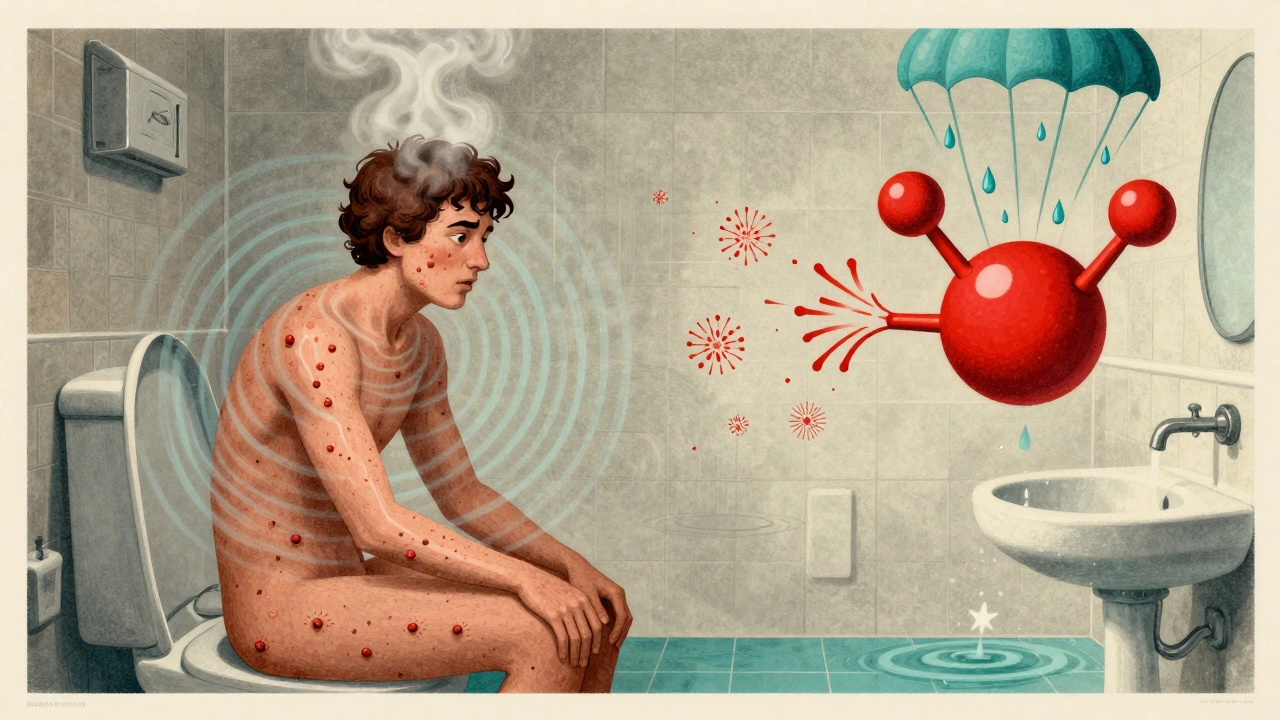
There’s no blood test for cholinergic urticaria. Diagnosis is based on symptoms and a simple test called the passive warming test.
In this test, you sit in a warm room (usually 39-40°C) while your core temperature is monitored. When your temperature rises 0.5°C above normal, doctors watch for hives to appear. In confirmed cases, this triggers the classic bumps in 94% of patients.
Some doctors also use exercise tests-like 10 minutes on a stationary bike-but these can be risky if symptoms are severe. That’s why the passive test is the gold standard.
One big warning: CU is often mistaken for exercise-induced anaphylaxis. About 22% of people who go to the ER with CU symptoms are misdiagnosed. That’s dangerous. Anaphylaxis needs epinephrine. CU usually doesn’t-but in some cases, it can.
Can It Be Dangerous?
For most people, cholinergic urticaria is more annoying than dangerous. But in 12.3% of cases, it can lead to systemic symptoms:
- Low blood pressure (systolic under 90 mmHg)
- Rapid heartbeat (over 100 bpm)
- Wheezing or trouble breathing
- Dizziness or fainting
In 8.7% of patients, doctors recommend carrying an epinephrine auto-injector. That’s not because hives alone are life-threatening-it’s because CU can sometimes trigger a full-blown anaphylactic reaction, especially if you have other allergies or asthma.
One woman in Sydney told her doctor she passed out after a hot yoga class. She had no history of allergies. Her CU hadn’t been diagnosed yet. After her first episode, she started carrying an EpiPen. “I didn’t think hives could knock me out,” she said. “Turns out, they can.”
What Treatments Actually Work?
There’s no cure for cholinergic urticaria-but there are effective ways to control it.
First-line treatment: Second-generation antihistamines
These are non-drowsy and work well for most people:
- Cetirizine: 10-20 mg daily (up to 40 mg if needed)
- Loratadine: 10 mg daily
- Fexofenadine: 180 mg daily
A 2023 study of 247 patients found these drugs reduced symptoms in 68% of cases. If standard doses don’t work, doctors often increase the dose up to four times the normal amount. That’s safe for most people and can push effectiveness to 73%.
Second-line options
If antihistamines alone aren’t enough, adding an H2 blocker like famotidine (20 mg twice daily) helps 57% of resistant cases. It works by blocking a different histamine receptor.
Biologics for severe cases
In June 2023, the European Medicines Agency approved omalizumab (Xolair) for CU. Originally used for asthma and chronic hives, it’s now showing 78% success in controlling CU symptoms at 300 mg weekly. The catch? It costs about $3,500 per month in the U.S.-and isn’t covered by most insurance for CU yet.
Other options
- Leukotriene inhibitors (like montelukast) - modest benefit
- Stress management techniques - reduce emotional triggers
- Acupuncture - anecdotal reports of improvement
Prevention: Practical Ways to Avoid Flare-Ups
Since you can’t stop sweating, the goal is to control your body’s response.
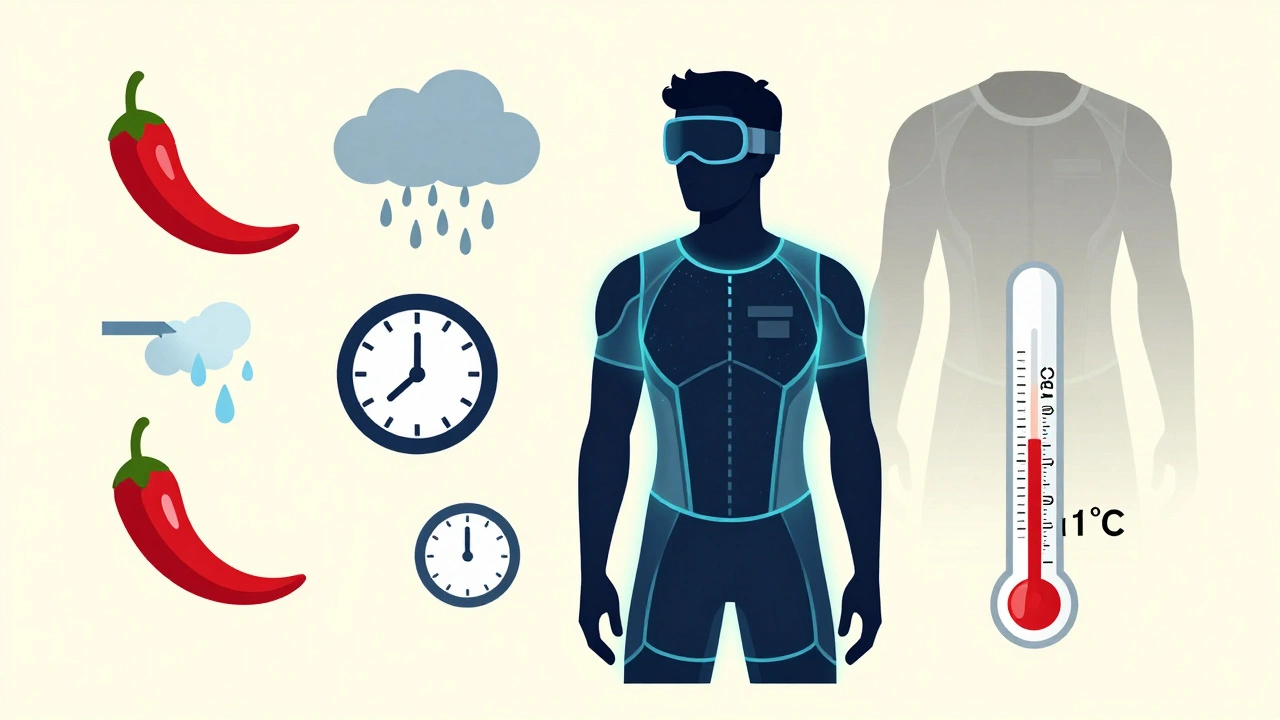
1. Cool down before you overheat
Many people with CU find that taking a cool shower before exercise helps. It lowers your baseline temperature so it takes longer to reach the trigger point.
2. Wear moisture-wicking clothing
Regular cotton holds sweat. Synthetic fabrics like polyester or merino wool pull moisture away from your skin. That keeps your skin drier and cooler. One user switched to athletic wear and cut flare-ups from daily to 1-2 times a month.
3. Avoid spicy foods and hot drinks
Capsaicin in chili peppers raises your internal temperature. If you notice hives after curry or hot coffee, skip it-or eat it slowly with plenty of water.
4. Exercise smart
- Work out in air-conditioned spaces
- Use fans or misters during exercise
- Shorten workouts and take breaks
- Try swimming-it cools you as you go
5. Track your triggers
Most people need 2-3 months to figure out what sets them off. Use a simple log: note what you did, how hot it was, what you ate, and when hives appeared. Apps like the Urticaria Center’s tracker help. Users report 85% satisfaction with symptom logging.
6. Know your personal threshold
Studies show most CU patients trigger hives at around 38.1°C (100.6°F) core temperature. That’s just 1.1°C above normal. Once you know your number, you can plan around it.
What’s Next for Cholinergic Urticaria?
Research is moving fast. Three new drugs are in clinical trials:
- Dupilumab (blocks IL-4) - shows promise for severe cases
- Fevipiprant (targets CRTH2 receptors) - reduces inflammation
- PQ-12 (mast cell stabilizer) - prevents histamine release
Wearable tech is also emerging. ThermaCare and Mayo Clinic are testing smart clothing that cools skin automatically during exercise. Early tests show a 63% drop in flare-ups.
And climate change? It’s making CU worse. Warmer global temperatures mean more people will experience heat-induced hives. By 2040, experts predict a 15-25% rise in CU cases in temperate regions like Australia, Europe, and North America.
Final Thoughts
Cholinergic urticaria isn’t just a skin problem. It’s a whole-body condition that affects sleep, exercise, relationships, and mental health. One in five people with CU report depression or anxiety because they feel trapped by their own body.
But here’s the good news: it’s manageable. With the right meds, smart habits, and awareness, most people live full lives. You don’t have to give up running. You don’t have to avoid hot days. You just need to understand your triggers-and plan ahead.
If you think you have heat hives, don’t brush it off. See a dermatologist or allergist. Get diagnosed. Start tracking. You’re not alone-and you don’t have to suffer silently.
Is cholinergic urticaria the same as a food allergy?
No. Cholinergic urticaria isn’t caused by allergens like peanuts, shellfish, or pollen. It’s triggered by an increase in body temperature, usually from sweating. While spicy foods can make it worse, it’s not an immune reaction to the food itself-it’s the heat the food generates inside your body.
Can cholinergic urticaria go away on its own?
Yes. About 30% of people see their symptoms fade completely within 7 to 10 years. It’s more common for symptoms to lessen with age, especially after 30. But for many, it’s a chronic condition that requires ongoing management.
Are antihistamines safe for long-term use?
Second-generation antihistamines like cetirizine and loratadine are considered safe for long-term use. They don’t cause liver damage or addiction. Some people need higher doses (up to 40 mg of cetirizine daily) to control symptoms, and studies show this is still well-tolerated under medical supervision.
Can I still exercise with cholinergic urticaria?
Absolutely-but you need to adjust how you do it. Work out in cool environments, wear moisture-wicking clothes, take breaks, and cool down immediately after. Many people with CU swim, bike indoors, or do yoga in air-conditioned studios. Exercise doesn’t have to stop-it just needs to be smarter.
Should I carry an EpiPen?
If you’ve ever had trouble breathing, dizziness, or a drop in blood pressure during a flare-up, yes. About 8.7% of people with CU develop severe systemic reactions. Your doctor can help you decide if you’re at risk. Better safe than sorry.
Why do I get hives after a hot shower?
Hot water raises your skin and core temperature, triggering the same nerve response as exercise. Even if you’re not sweating much, the heat alone can be enough. Try lowering the water temperature or ending your shower with a quick cool rinse.
Is cholinergic urticaria more common in hot climates?
Yes. Studies show higher rates in Southeast Asia (0.11%) compared to Scandinavia (0.03%). Warmer environments mean more frequent exposure to heat triggers. In places like Sydney, where summer temperatures regularly hit 35°C+, CU is more likely to be diagnosed-and more disruptive to daily life.
Comments
Mark Curry December 4, 2025 at 23:18
It’s wild how our bodies can misfire like this. Like a smoke alarm that goes off because the toaster got too hot. You’re not allergic to anything - you’re just stuck in a loop where your nerves scream ‘danger!’ when there’s no fire. Makes you wonder how many other systems are quietly glitching out.
Lynette Myles December 6, 2025 at 22:46
They left out the real cause: 5G towers and EMF exposure are triggering nervous system overload. This isn’t biology - it’s engineered chaos.
sean whitfield December 8, 2025 at 15:49
Antihistamines? Yeah right. Big Pharma just wants you hooked on pills while they sell you overpriced sweat-wicking gear. The real cure? Stop sweating. Move to Antarctica. Or at least stop pretending heat is normal.
Lucy Kavanagh December 9, 2025 at 09:42
I’ve been saying this for years - the UK government knows about this. That’s why they banned public gyms in 2021. They didn’t want people realizing how much heat is weaponized in modern life. You think this is coincidence? Think again.
Mellissa Landrum December 10, 2025 at 06:08
lol at people paying $3500 for a shot just to jog. Meanwhile in america we got free ibuprofen at the gas station. Just chill. Or don’t. Idc.
Annie Grajewski December 10, 2025 at 23:50
so like… if i eat a ghost pepper and then take a hot shower while running on a treadmill in a sauna… am i basically doing a science experiment on myself? because i might’ve already done that. and also i think my dog has it too. he gets red dots when i play loud music. coincidence? i think not.
Katie Allan December 11, 2025 at 07:48
For anyone struggling with this - you’re not broken. You’re just wired differently. The fact that you’ve found this community means you’re already ahead. Start small. Track your triggers. Find your cool. You’ve got this.
Kylee Gregory December 12, 2025 at 01:44
It’s fascinating how the body tries to protect itself - even when the signal is wrong. Maybe this isn’t a flaw… maybe it’s a message. What if our systems are trying to tell us we’re living too fast? Too hot? Too much? Just a thought.
Jennifer Patrician December 12, 2025 at 05:43
Oh please. The real reason this is so common now is because they’ve been pumping fluoride into the water since the 90s to suppress natural sweat regulation. You think the CDC cares about your hives? They care about control. And your body’s reaction? That’s just their side effect report.
Chris Brown December 13, 2025 at 22:20
People treat this like a medical curiosity. But what about the moral responsibility? If you’re capable of raising your body temperature to trigger a reaction - why aren’t you choosing to live more simply? Less consumption. Less heat. Less noise. Less self-indulgence. This isn’t a disease - it’s a consequence.
Manish Shankar December 14, 2025 at 13:48
Respected colleagues, I have observed in my clinical practice that this condition is often underdiagnosed due to its non-specific presentation. I urge all practitioners to consider cholinergic urticaria in patients presenting with transient, heat-related cutaneous eruptions, particularly in young adults. A structured history and passive warming test remain indispensable. Management should be holistic, with emphasis on lifestyle modification and pharmacological support under medical supervision.