Myasthenia Gravis: Symptoms, Treatments, and What You Need to Know
When your muscles tire out too fast—like when you can’t hold up your eyelids, chew properly, or even speak clearly—you might be dealing with myasthenia gravis, a chronic autoimmune disorder that disrupts communication between nerves and muscles. Also known as MG, it’s not caused by overexertion or aging, but by your immune system attacking the signals your body uses to move. This isn’t just fatigue. It’s a breakdown in the connection at the neuromuscular junction, where nerve endings release acetylcholine, a neurotransmitter that tells muscles to contract, and your body starts blocking or destroying the receptors that pick up that signal.
People with myasthenia gravis often notice symptoms get worse as the day goes on. Drooping eyelids, double vision, trouble swallowing, slurred speech, and weakness in arms or legs are common. Some can barely lift a cup. Others struggle to walk up stairs. The severity varies, but the pattern is consistent: rest helps, activity makes it worse. It’s not just muscle fatigue—it’s a neurological signal failure. And because it’s autoimmune, treatments often focus on immunosuppressants, medications that calm the immune system’s attack on nerve receptors, like azathioprine or prednisone. Others use acetylcholinesterase inhibitors to boost the signal that’s getting lost. In severe cases, plasma exchange or IVIG can temporarily remove the harmful antibodies.
Myasthenia gravis doesn’t have a cure, but it’s manageable. Many people live full lives with the right combination of medication, lifestyle adjustments, and monitoring. It’s often misdiagnosed—mistaken for stress, depression, or even normal aging—which is why recognizing the pattern matters. If you’ve had unexplained muscle weakness that improves after resting, it’s worth asking about MG. The posts below cover real-world treatment comparisons, drug interactions to watch for, and how supplements or alternative approaches might support—or interfere with—your care. You’ll find practical advice on managing symptoms, avoiding triggers like heat or stress, and understanding what your doctor means when they talk about thymectomy or antibody testing. This isn’t theory. It’s what works for people living with this condition every day.
Nov 17, 2025
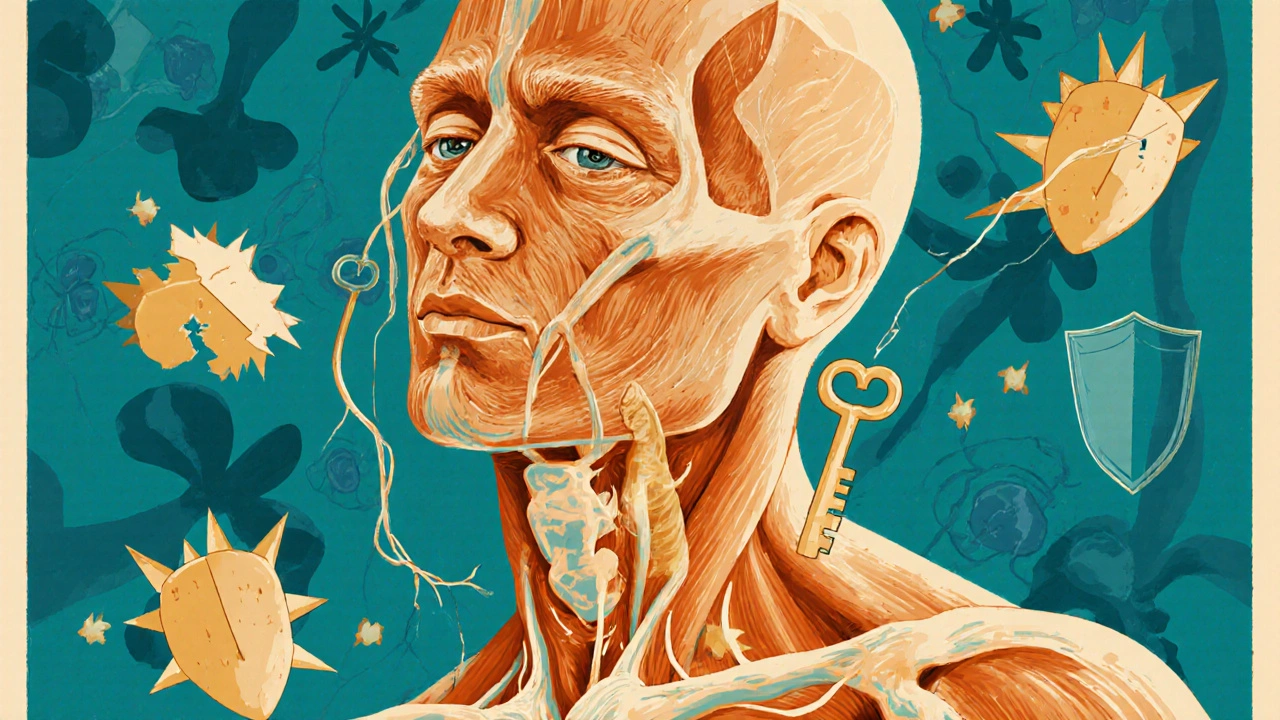
Myasthenia Gravis: Understanding Fatigable Weakness and Modern Immunotherapy
16 Comments
Myasthenia gravis causes muscle weakness that worsens with use and improves with rest. Learn how antibodies attack nerve-muscle signals, why treatment varies by subtype, and how new immunotherapies like efgartigimod are changing outcomes.
Read More