Fatigable Weakness: Causes, Conditions, and What You Can Do
When your muscles get weaker the more you use them—that’s fatigable weakness, a type of muscle weakness that gets worse with activity and improves with rest. It’s not just being tired. It’s your body literally losing strength during normal tasks, like holding a cup, climbing stairs, or even keeping your eyes open. This isn’t something you can shake off with coffee or a nap. It’s a signal from your nervous system that something’s off in how nerves talk to muscles.
It’s most often tied to myasthenia gravis, an autoimmune disorder where the body attacks the connection points between nerves and muscles. But it can also show up in other neuromuscular disorders, conditions that damage the nerves, muscles, or the junctions between them—like Lambert-Eaton syndrome, certain types of muscular dystrophy, or even side effects from some medications. Unlike general fatigue from stress or poor sleep, fatigable weakness follows a clear pattern: strong in the morning, weak by afternoon, better after resting. If you’ve noticed this, especially with drooping eyelids, trouble swallowing, or slurred speech, it’s not normal.
What makes it tricky is that many people mistake it for aging, overwork, or depression. But if your weakness changes with activity, it’s worth getting checked. Tests like nerve conduction studies, blood tests for antibodies, or the edrophonium test can help confirm if it’s myasthenia gravis or another issue. And while there’s no quick fix, treatments like acetylcholinesterase inhibitors, immunosuppressants, or even plasma exchange can make a real difference. The key is catching it early—before it affects your breathing or swallowing.
Below, you’ll find real-world guides on medications and conditions that connect to this symptom. From how certain drugs can mimic fatigable weakness, to what happens when immune system drugs go wrong, to how supplements might support nerve health—these posts give you the facts without the fluff. You won’t find guesses here. Just clear, practical info from people who’ve been there.
Nov 17, 2025
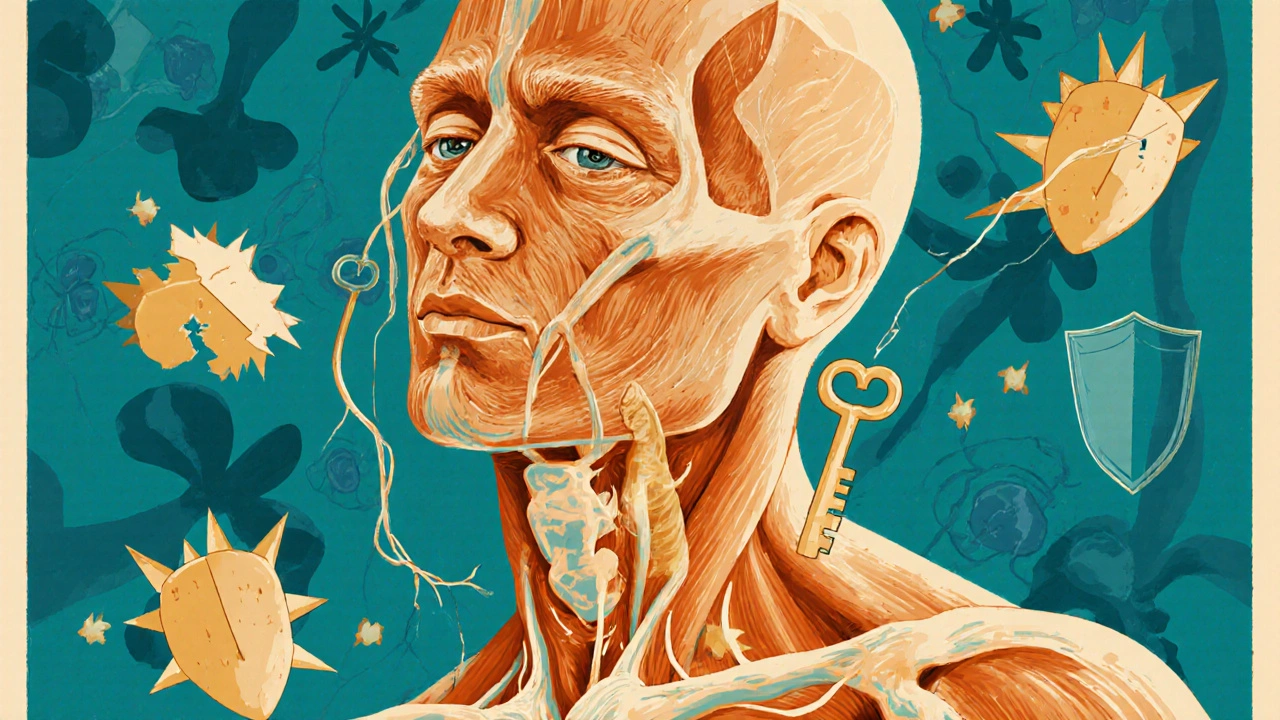
Myasthenia Gravis: Understanding Fatigable Weakness and Modern Immunotherapy
16 Comments
Myasthenia gravis causes muscle weakness that worsens with use and improves with rest. Learn how antibodies attack nerve-muscle signals, why treatment varies by subtype, and how new immunotherapies like efgartigimod are changing outcomes.
Read More