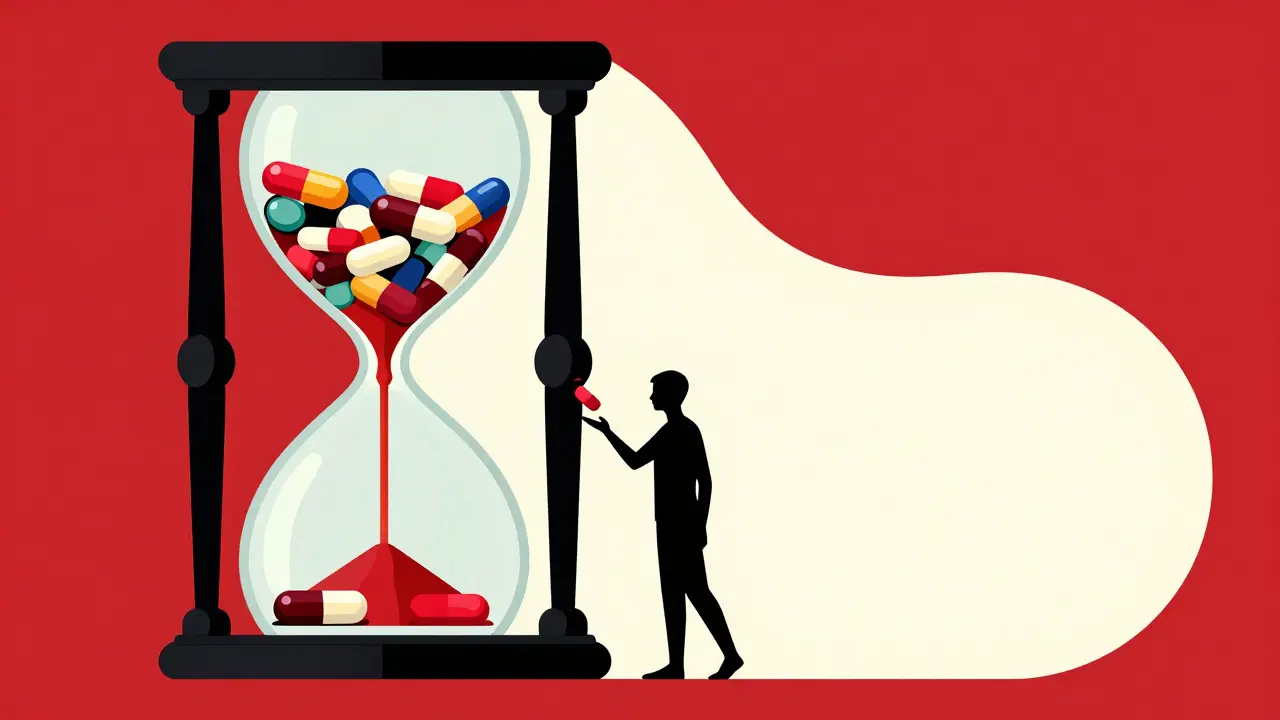
Imagine spending thousands of dollars on a cutting-edge treatment, only for it to fail because a few pills were left on the nightstand. It sounds like a simple mistake, but for millions of people, skipping a dose isn't about laziness-it's a complex struggle. In fact, the World Health Organization has found that about 50% of people with chronic conditions don't take their meds the way they're supposed to. When we talk about medication adherence is the extent to which patients take medications as prescribed by their healthcare providers, we aren't just talking about a checklist; we're talking about a life-or-death gap in healthcare.
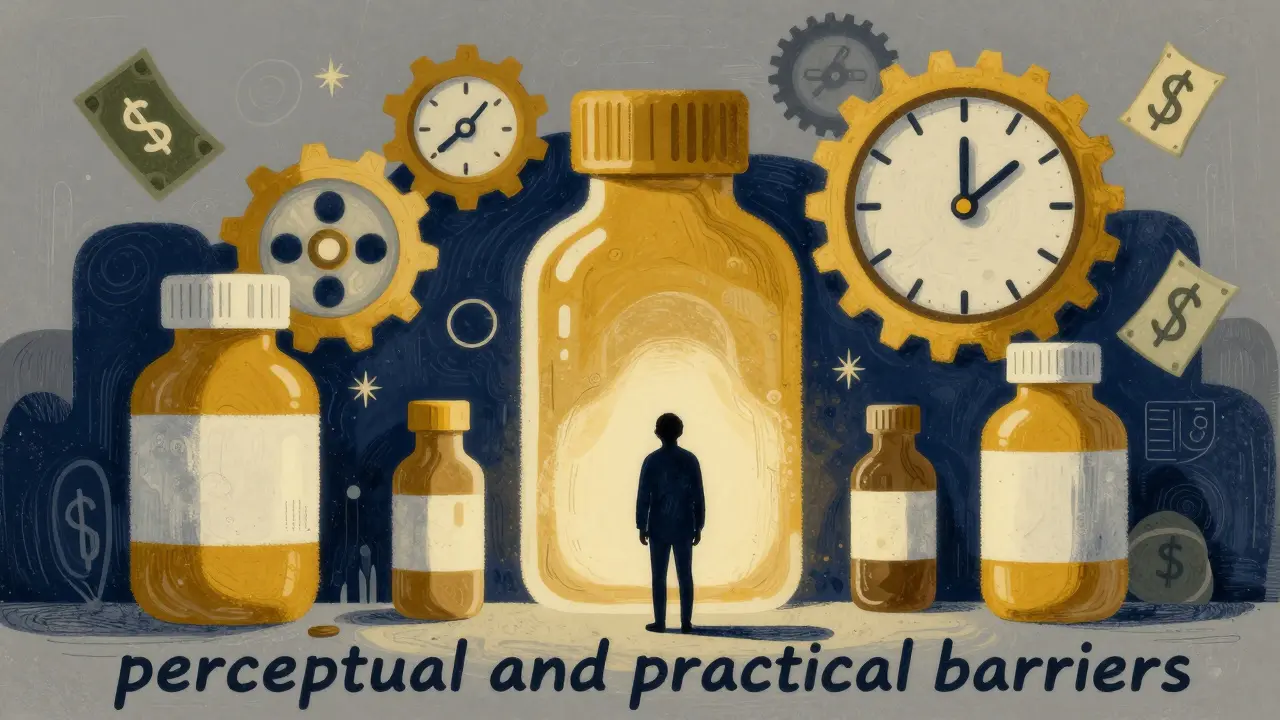
This gap has a massive price tag. In the US alone, nonadherence costs the healthcare system between $100 billion and $300 billion annually and contributes to roughly 125,000 deaths every year. Whether it's a missed blood pressure pill or a forgotten insulin dose, the results are the same: higher hospitalization rates and worse health outcomes. But why does this happen? It usually boils down to two categories: what's happening in a patient's head (perceptual barriers) and what's happening in their environment (practical barriers).
The Mental Game: Perceptual Barriers
Sometimes the biggest wall between a patient and their recovery is their own mindset. Perceptual barriers are internal. They are the doubts and fears that make someone decide, "I don't think I actually need this today." According to research by Professor Rob Horne, these doubts about necessity are a primary predictor of nonadherence, appearing in nearly 47% of cases.
Fear of side effects is another heavy hitter. About 38% of people skip doses because they're worried about how the drug will make them feel. This is often compounded by health literacy, which is the ability of a person to find, understand, and use information and services to inform health-related decisions. If you don't understand why a drug is necessary or how it works, you're 2.5 times more likely to stop taking it. For instance, a patient might stop taking a statin because they feel fine today, not realizing that the medication is preventing a heart attack ten years from now.
The Logistics of Life: Practical Barriers
Even when a patient is fully motivated, life gets in the way. Practical barriers are the external hurdles that make taking medicine a chore. The most common culprit? Forgetfulness. In one study of diabetic patients over 59, 44% cited simply forgetting their dose as a major problem.
Then there's the cost. The CDC reports that 20% to 30% of new prescriptions are never even filled because the price is too high. When you're choosing between rent and a monthly prescription, the medicine often loses. Beyond money, the physical act of taking the medication can be a barrier. Tiny print on insulin pens or confusing dosage markings can lead to dangerous errors. We also see a massive impact from polypharmacy, which is the concurrent use of multiple medications by a single patient. For every additional medication added to a regimen, the chance of nonadherence jumps by about 16%.
| Regimen Frequency | Average Adherence Rate | Example Condition Impact |
|---|---|---|
| Once Daily | 79% | High adherence for antihypertensives |
| Twice Daily | ~65-70% | Moderate decline in consistency |
| Four+ Times Daily | 51% | Significant drop-off across all conditions |
The Dosing Trap: Why Complexity Kills Consistency
The math is simple: the more times a day you have to remember a pill, the more likely you are to fail. There is a direct, inverse relationship between dosing frequency and adherence. If you take a pill once a day, you've got a nearly 80% chance of staying on track. If that jumps to four times a day, your success rate plummets to 51%.
Think about a typical workday. You've got meetings, kids to pick up, and a fluctuating schedule. As one user on Reddit described, managing five different medications at different times while working a changing shift is nearly impossible. This is why the industry is moving toward "long-acting" formulations. For example, long-acting injectables for schizophrenia show an 85% adherence rate, compared to just 45% for daily oral pills. By removing the daily requirement, the barrier effectively disappears.
Breaking the Cycle: Effective Solutions
Fixing this isn't as simple as telling a patient to "try harder." The most successful interventions are multifactorial, meaning they attack several barriers at once. One of the most effective tools is medication synchronization, which is the process of aligning all of a patient's prescriptions to be refilled on the same day each month. This reduces the number of trips to the pharmacy and eliminates the stress of managing multiple refill dates, improving adherence by about 18%.
Communication also plays a huge role. When providers spend a few extra minutes explaining the "why" behind a specific timing-like taking a blood pressure med at bedtime instead of morning-adherence can improve by 25%. For those who struggle with memory, digital tools and reminder apps are great, though they have a learning curve. Older adults often need 3 to 5 training sessions before they feel comfortable using a health app.
To truly move the needle, we need to combine these strategies:
- Simplify the regimen: Use combination pills (two meds in one) to reduce the total pill count.
- Automate the supply: 90-day mail-order prescriptions can boost adherence by 15-20%.
- Target the cost: Using generic alternatives or pharmacy assistance programs to remove the financial wall.
- Education: Moving beyond "take this twice a day" to "this prevents a stroke by doing X, which is why the timing matters."
The Future of Staying on Track
We are entering an era of "smart" medicine. AI-powered tools can now analyze electronic health records to predict who is likely to skip their meds with 82% accuracy, allowing doctors to intervene before the patient even misses a dose. We're also seeing a shift in how providers are paid; some new models actually reward doctors with bonuses if their patients hit an 80% adherence rate for critical cardiovascular meds.
Ultimately, the goal is to make the right choice the easiest choice. Whether it's through a once-a-month injection or a synchronized pharmacy delivery, removing the friction from the process is the only way to ensure that life-saving medicine actually gets into the patient's system.
What is a good Medication Possession Ratio (MPR)?
Generally, an MPR of 0.80 or higher is considered adequate adherence. This means the patient has the medication in their possession for at least 80% of the days in a given period. However, this threshold can vary depending on the specific condition and the type of medication being tracked.
Why is polypharmacy such a big problem for adherence?
Polypharmacy refers to taking multiple medications at once. The more pills a person has to manage, the higher the cognitive load. Research shows that for every single additional medication added to a regimen, the likelihood of nonadherence increases by about 16% due to increased complexity and potential drug-drug interactions.
Can digital apps really help people remember their meds?
Yes, but they aren't a magic bullet. While apps provide critical reminders, they require digital literacy. For older adults, the effectiveness of these tools depends on proper training, often requiring several sessions to become proficient. They work best when combined with other supports like pill organizers.
What are the most common reasons people skip cardiovascular meds?
The most common reasons include the high cost of prescriptions, forgetfulness, and a lack of perceived necessity-especially since many cardiovascular medications treat "silent" symptoms like high blood pressure where the patient doesn't "feel" sick.
How does medication synchronization work?
Medication synchronization involves the pharmacy aligning all of a patient's prescriptions so they are all due for refill on the same day. This reduces the number of monthly pharmacy visits and simplifies the logistics of medication management, which has been shown to improve adherence rates by roughly 18%.