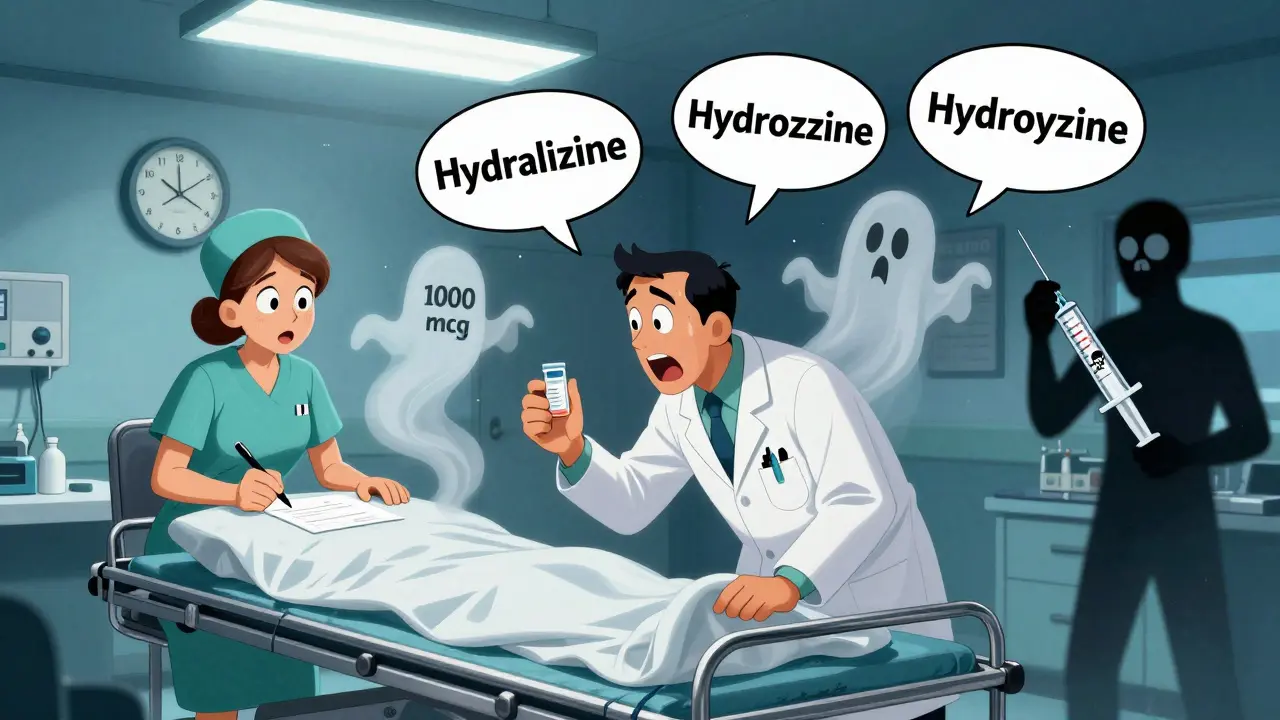
When a doctor calls out a medication order over the phone or shouts it across a busy ER bay, someone has to hear it, write it down, and give it to a patient. Sounds simple. But in reality, verbal prescriptions are one of the most dangerous steps in patient care. A misheard number, a confusing drug name, or a rushed delivery can lead to overdose, allergic reactions, or even death. According to the Institute for Safe Medication Practices Canada, up to 50% of medication errors linked to communication happen during verbal orders. That’s not a small risk-it’s a systemic flaw that still exists today, even in 2026.
Why Verbal Prescriptions Still Exist
You might think electronic prescriptions replaced verbal ones years ago. But they didn’t. They just reduced them. In hospitals today, about 10-15% of all medication orders are still given verbally. In emergency rooms, that number jumps to 25-30%. Why? Because sometimes, there’s no time to type. A trauma patient is crashing. A surgeon needs antibiotics now. A baby in the NICU is turning blue. In those moments, writing in a computer isn’t an option. Verbal orders save lives. But they also cost them-if done wrong.The Read-Back Rule: Non-Negotiable
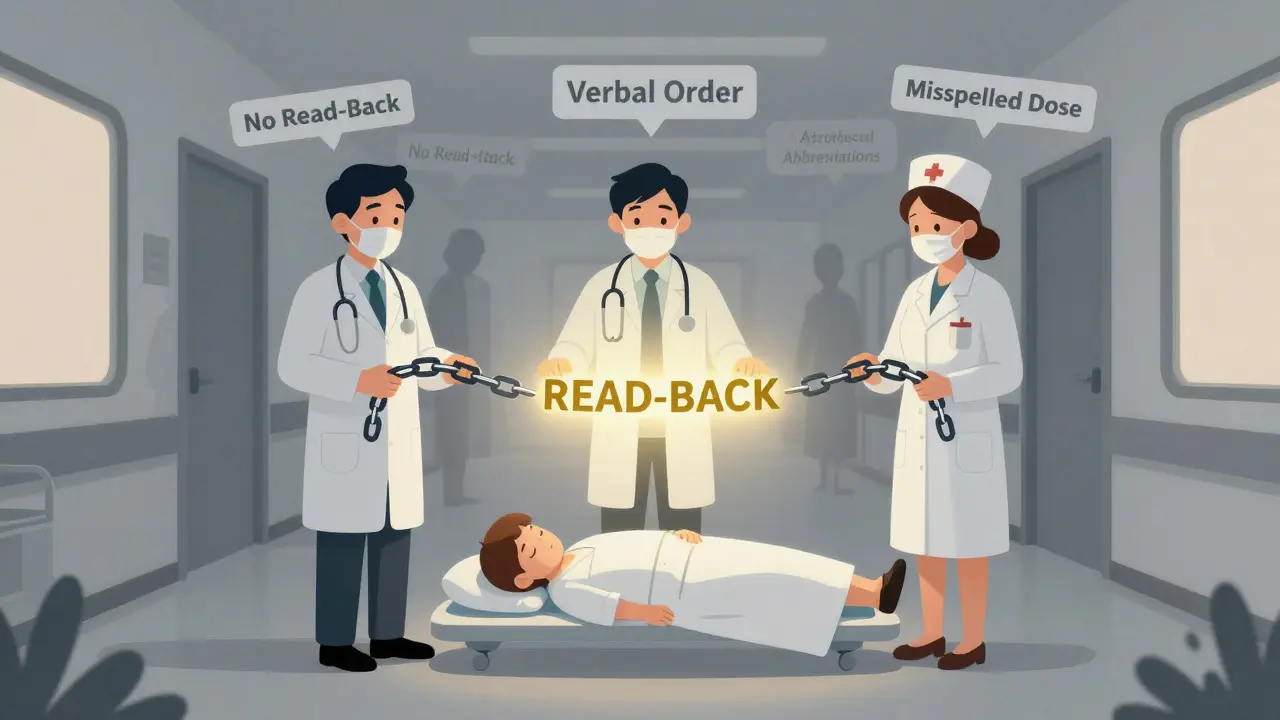
The single most effective way to stop errors is something called read-back verification. It’s simple: the person receiving the order repeats it back, word for word, to the prescriber. Not just the drug name. Not just the dose. The whole thing: patient name, medication, amount, route, frequency, reason, and who ordered it. The Joint Commission made this mandatory in 2006. And it works. Studies show it cuts errors by up to 50%. But here’s the problem: many providers skip it. Nurses report that some doctors refuse to wait for a read-back. They say, “I know what I said.” But in high-pressure settings, even experienced clinicians misremember. One nurse in Sydney told me about a near-miss where a doctor ordered “hydralazine 10 mg IV.” The nurse heard “hydroxyzine 10 mg IV.” Hydroxyzine is an antihistamine. Hydralazine is a blood pressure drug. Giving the wrong one could’ve caused a stroke. The nurse asked: “Did you say hydralazine, spelled H-Y-D-R-A-L-A-Z-I-N-E?” That pause saved the patient.How to Say It Right: Phonetics and Numbers
Drug names sound alike. A lot. Celebrex vs. Celexa. Zyprexa vs. Zyrtec. Hydralazine vs. Hydroxyzine. These aren’t rare mix-ups. The Institute for Safe Medication Practices says 34% of verbal order errors come from sound-alike names. So how do you avoid them? Spell them out. Slowly. Clearly. Say: “A-M-P-I-C-I-L-L-I-N,” not “ampicillin.” Numbers matter too. Saying “15 mg” is risky. What if the listener hears “1.5 mg”? Or “50 mg” sounds like “5 mg”? The fix? Use two methods. Say: “Fifteen milligrams. One-five milligrams.” Or “Fifty milligrams. Five-zero milligrams.” This forces the receiver to process the number twice. If they mishear once, the second version catches it.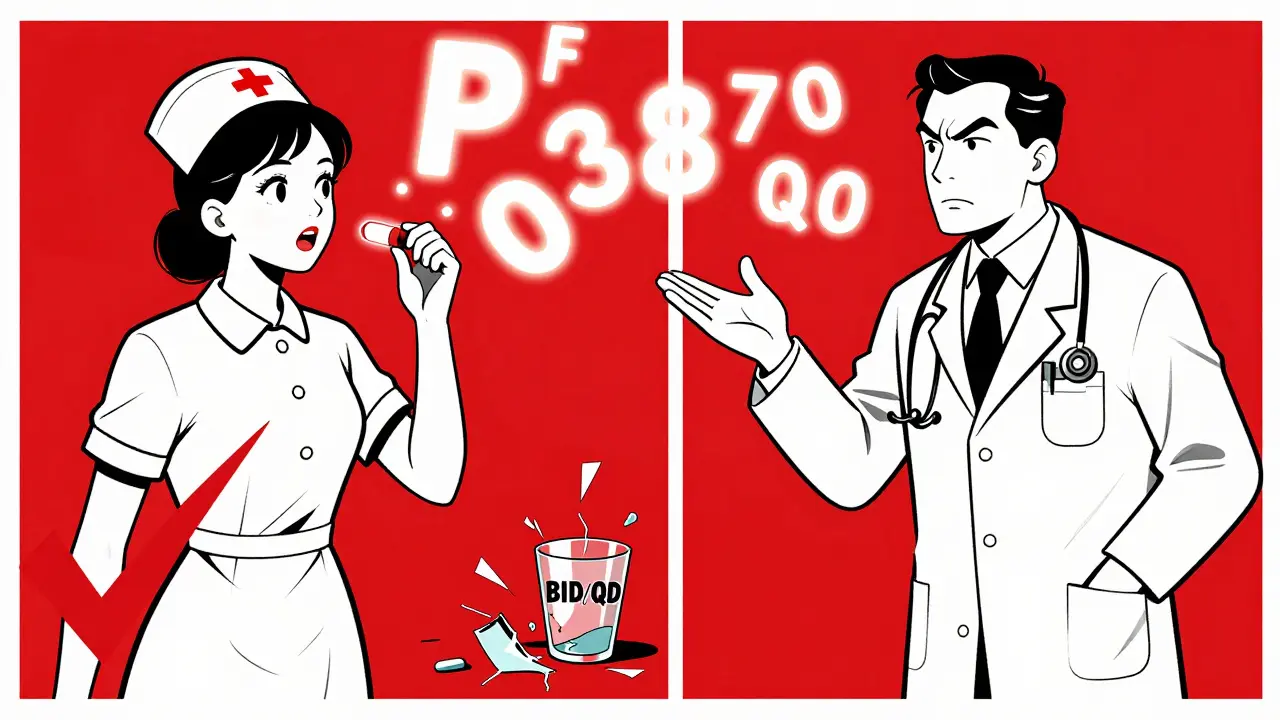
Avoid These Words at All Costs
Stop using abbreviations. Ever. “BID” means twice daily. “QD” means daily. “QHS” means at bedtime. But in a noisy unit, “BID” can sound like “TID” (three times daily). “QD” sounds like “QID” (four times). Even “PO” (by mouth) can be misheard as “IV.” The solution? Say it out loud. “Twice daily.” “By mouth.” “At bedtime.” The same goes for units. Always say “milligrams,” not “mg.” “Micrograms,” not “mcg.” A single misplaced decimal can be fatal. A patient was once given 1000 micrograms of fentanyl instead of 1000 milligrams. That’s 1000 times too much. The error happened because the order was written as “1000 mcg” and someone misread it. Never assume. Always spell it.High-Risk Drugs: When Verbal Orders Are Forbidden
Some drugs are too dangerous to order verbally unless it’s a true emergency. These include:- Insulin
- Heparin
- Opioids like fentanyl or morphine
- Chemotherapy agents
Documentation: The Only Record That Matters
The only real record of a verbal order isn’t in the nurse’s head. It’s not in the doctor’s memory. It’s in the electronic health record. And it has to be done immediately. Every order must include:- Patient’s full name and date of birth
- Medication name spelled out phonetically
- Dose with units (e.g., “ten milligrams,” not “10 mg”)
- Route (e.g., “by mouth,” “intravenous”)
- Frequency (e.g., “twice daily”)
- Reason for the order (e.g., “for elevated blood pressure”)
- Name and credentials of the prescriber
- Time and date the order was given
- Time and date it was authenticated
What Happens When It Goes Wrong
In 2006, a premature infant in a Pennsylvania NICU died after receiving the wrong antibiotics. The doctor ordered ampicillin 200 mg and gentamicin 5 mg IV. The nurse heard ampicillin 2000 mg and gentamicin 50 mg. The overdose killed the baby. The error happened during a shift change. Two people were talking at once. No read-back was done. No one spelled out the numbers. The order was written down after the fact-without verification. This isn’t an old story. It’s a warning. In 2021, a Medscape survey of 1,200 nurses found 68% had at least one near-miss every month due to unclear speech. Many of those were from prescribers who weren’t native English speakers. That doesn’t mean they’re at fault. It means we need better systems-not blame.How to Fix the Culture
The biggest barrier to safety isn’t technology. It’s culture. Doctors don’t like being interrupted. Nurses don’t want to sound like they’re challenging authority. But safety has to come first. Use scripts. Train staff. Make it normal to say: “Just to confirm, you said hydralazine 10 mg IV, spelled H-Y-D-R-A-L-A-Z-I-N-E, for hypertension, correct?” Create a no-shame environment. If a nurse asks for clarification, thank them. If a doctor refuses read-back, escalate it. Hospitals that treat verbal order safety as a team sport-not an individual responsibility-see 70% fewer errors.What’s Next?
Voice recognition and AI are getting better. By 2025, some systems will let doctors dictate orders and auto-fill them into EHRs. But even then, human verification won’t disappear. Some situations-like trauma, surgery, or cardiac arrest-will always need a voice. That’s why the ECRI Institute says verbal orders will remain necessary in 15-20% of cases indefinitely. The future isn’t eliminating verbal prescriptions. It’s making them safer. Through clearer language. Through strict protocols. Through a culture that values asking questions over saving face.Are verbal prescriptions legal?
Yes, verbal prescriptions are legal under CMS and The Joint Commission regulations. But they must follow strict safety rules: read-back verification, no abbreviations, immediate documentation, and authentication within 48 hours. State laws may add further restrictions, especially for high-risk drugs like insulin or chemotherapy.
Can nurses accept verbal orders from any provider?
No. Only licensed prescribers-doctors, nurse practitioners, physician assistants-are allowed to give verbal orders. Nurses can receive and transcribe them, but they must verify the provider’s identity and credentials. Never accept an order from someone who isn’t authorized to prescribe.
Why is read-back so important if the doctor already said it?
Because human memory is unreliable under stress. A 2006 study found that 42% of verbal order errors occurred during shift changes, when staff were tired or distracted. Read-back isn’t about doubting the doctor-it’s about catching mistakes before they reach the patient. It’s a safety net, not a challenge.
What if a doctor refuses to do a read-back?
If a prescriber refuses, pause. Say: “I need to follow protocol to keep the patient safe.” If they still refuse, document the refusal and notify a supervisor. Most hospitals have policies that allow nurses to refuse to carry out unsafe orders. Your responsibility is to the patient-not to avoid conflict.
Do verbal orders work better than electronic ones?
No. Electronic prescriptions have 85-95% accuracy. Even with perfect read-back, verbal orders still have 50-70% error rates. They’re only used because they’re necessary-not because they’re better. The goal is to reduce them, not accept them as normal.
Comments
Oliver Calvert February 18, 2026 at 01:51
Verbal orders are still necessary because medicine isn't a spreadsheet. Sometimes the patient's crashing and you don't have time to log in, type, wait for the system to lag, then click submit. I've been in the ER when every second counts. Read-back isn't optional. It's the difference between life and a coroner's report. Spell the drug. Spell the dose. Say 'one-five milligrams' not '15 mg'. Simple. Effective. Why isn't this drilled into every med student from day one?
And stop saying 'BID' or 'QD'. Say 'twice daily' and 'once daily'. The system isn't broken. The culture is.
Geoff Forbes February 19, 2026 at 01:33
Look, I'm all for safety, but let's be real-this whole read-back thing is just institutionalized micromanagement. I've been a resident for 8 years. I know what I'm prescribing. If I say 'fentanyl 50 mcg IV', I don't need some nurse to parrot it back like she's testing me for a CPR certification. It's condescending. And don't get me started on spelling out 'micrograms'. We're not in kindergarten. The system is drowning in bureaucracy while real care suffers.
Jonathan Ruth February 20, 2026 at 02:47
Spelling out every drug name like we're in a 1950s hospital? Please. We're in 2026. If your nurse can't tell hydralazine from hydroxyzine after 5 years on the floor, maybe she shouldn't be handling meds. And who the hell says 'one-five milligrams'? That's not how humans talk. It's 'fifteen'-one word. Not 'one-five'. That's just making things harder. This whole protocol feels like a checklist written by someone who's never held a stethoscope.
Also-why are we still using 'IV'? It's clear. Stop overcomplicating. I've given 10,000 doses. I've never killed anyone. Yet.
Haley DeWitt February 21, 2026 at 11:19
This is so important!! 😊 I’ve had so many near misses where I asked for clarification and the doctor was like ‘oh yeah, thanks for catching that’-and I was like ‘no, thank YOU for being human and not assuming I’m psychic’. Seriously, every nurse should get a badge for asking ‘wait, what?’ It’s not disrespect, it’s heroism. We’re not here to be yes-women. We’re here to keep people alive. 💪❤️
John Haberstroh February 22, 2026 at 14:29
Man, I love how this post doesn’t just scream ‘here’s the rules’ but actually shows why they matter. Like that story about the baby in Pennsylvania? That’s not a statistic. That’s a mother’s empty bassinet. And the fact that 68% of nurses have a near-miss every month? That’s not negligence. That’s a system on life support. We don’t need more tech. We need more courage. Courage to say ‘I need you to repeat that.’ Courage to say ‘I’m not giving this until you confirm.’ Courage to say ‘this order is unsafe.’
Because in the end, the most dangerous thing in the ER isn’t the drug. It’s silence.
Logan Hawker February 23, 2026 at 18:30
Let’s be honest: the reason verbal orders persist is because physicians are still treated like royalty in the hospital hierarchy. Nurses are expected to be perfect, but doctors? They get to bark orders like they’re generals on a battlefield. And when a nurse dares to ask for clarification? ‘I know what I said.’ That’s not confidence-that’s arrogance wrapped in a white coat. This isn’t about protocol. It’s about power. And until we dismantle that toxic culture, no amount of read-backs will save lives. The system is designed to protect the doctor-not the patient.
James Lloyd February 24, 2026 at 03:46
I’ve worked in 5 hospitals across 3 states. The ones with the lowest error rates? They didn’t have fancy AI. They had one thing: a culture where asking questions was rewarded. Not tolerated. Rewarded. I once had a senior attending thank me for catching a 10-fold insulin error because I asked for clarification. He said, ‘I’m glad you didn’t just nod and walk away.’ That’s the gold standard. Not tech. Not policy. Human trust built on accountability. We need to hire for that. Train for that. Promote for that. And fire anyone who treats safety like a suggestion.
Digital Raju Yadav February 25, 2026 at 15:51
Why are we even talking about this? In India, we’ve been doing verbal orders for decades. No read-backs. No spelling. No ‘one-five milligrams’. We trust our doctors. We trust our nurses. Why does America need 12 layers of bureaucracy for one simple order? You’re overthinking this. The real problem is not the system-it’s your paranoia. In 2026, you still think someone will mishear ‘hydralazine’? Get over it. We’ve been saving lives without these infantile rules for generations.
Adam Short February 26, 2026 at 16:06
I’ve seen this play out in the UK NHS. A nurse in Manchester once refused to give a verbal order for heparin because the doctor wouldn’t do a read-back. The doctor stormed off. The nurse got written up. The patient bled out. Then the coroner found the order wasn’t signed. Then the hospital paid £3 million in damages. And guess what? They changed the policy. But not because they cared. Because they got sued.
People don’t change because it’s right. They change because they’re scared. Let’s hope this post scares someone.
Sam Pearlman February 27, 2026 at 22:55
Wait wait wait-I gotta push back on this. You say electronic prescriptions are 85-95% accurate? So what? I’ve seen EHRs auto-fill the wrong drug because the patient had two similar names. I’ve seen systems default to ‘500 mg’ when the doctor typed ‘50 mg’. Tech isn’t magic. It’s just another layer of failure. And you think we should eliminate verbal orders? Then what? Let a trauma patient die because the EMR is down? We need both. Verbal for speed. Electronic for audit. Not one or the other. Both. Always.
Steph Carr March 1, 2026 at 02:10
So we’ve turned patient safety into a performance art. ‘Spell it out. Say it twice. Write it down. Confirm it. Authenticate it.’ And yet we still have 50% error rates. Why? Because we’ve created a ritual that feels like safety, but doesn’t actually change behavior. We’re not fixing the problem. We’re just making people feel like they’ve done their duty. It’s like saying ‘I washed my hands’ while still coughing on the patient. Real safety isn’t a checklist. It’s a mindset. And we’ve outsourced that to a policy document.
Brenda K. Wolfgram Moore March 2, 2026 at 16:12
I’ve been a nurse for 18 years. I’ve seen everything. I’ve caught errors. I’ve made them. I’ve been yelled at for asking questions. I’ve been praised for it too. But here’s what I know: the best teams don’t have perfect people. They have people who speak up. Who pause. Who say ‘I’m not sure.’ That’s not weakness. That’s the strongest thing a healthcare worker can do. And if your hospital doesn’t reward that? It’s not broken. It’s dangerous.
Philip Blankenship March 2, 2026 at 19:28
Let me tell you about the time I was on night shift and a doc called in an order for ‘morphine 10 mg IV push’. I heard ‘100 mg’. I didn’t say anything because I thought, ‘he’s a senior, he knows what he’s doing’. I started prepping the syringe. Then I looked at the vial. 10 mg per mL. 100 mg would be 10 mL. That’s a whole vial. I froze. Looked at the doc. Said ‘Wait. Did you say 10 or 100?’ He looked at me like I’d slapped him. Said ‘Ten. Ten.’ I said ‘Okay. I’m going to draw up 1 mL. Confirm with me.’ He did. We both sighed. No one got hurt. But I almost did. And I didn’t even realize I’d almost killed someone until I looked at the vial. That’s the problem. We don’t catch errors because we’re dumb. We catch them because we’re lucky.
Read-back isn’t about doubting. It’s about remembering that we’re all human. And humans mess up. Especially when they’re tired. Especially when they’re stressed. Especially when they’re in a rush. We need systems that assume we’ll fail. Not ones that assume we’re perfect.
Kancharla Pavan March 3, 2026 at 04:20
This whole thing is a Western obsession with control. In developing countries, we don’t have time for ‘phonetic spelling’ and ‘read-backs’. We have one nurse for 50 patients. We have no EHR. We have no time. We rely on experience, intuition, and trust. You think your ‘perfect protocol’ would work in a rural clinic in Bihar? No. It would kill more people than it saves. Stop exporting your bureaucratic nonsense as ‘best practice’. Real medicine isn’t about rules. It’s about resourcefulness. And if you can’t handle that, maybe you shouldn’t be in healthcare at all.