Drug Labeling Impact Simulator
Scenario: A critical "Black Box Warning" has just been issued for a medication currently in distribution. See how different labeling systems affect the time it takes for patients to receive the update.
0 Days
Time to reach patient
- ✖ Requires redesign and re-printing
- ✖ Requires shipping new batches
- ✖ Old stock remains outdated
0 Days
Time to reach patient
- ✔ Instant CMS update
- ✔ No physical change needed
- ✔ Verified single source of truth
| Feature | Traditional Printed Label | Dynamic QR Code System |
|---|---|---|
| Update Speed | Months (requires re-printing) | Real-time (instant digital push) |
| Space Constraints | Limited by physical package size | Unlimited digital content |
| Accuracy | Prone to outdated versions | Single, verified source of truth |
| Accessibility | Universal (no tech needed) | Requires smartphone & internet |
The Shift from Static to Dynamic Information
For decades, pharmaceutical labeling has been a rigid process. If a regulator issued a "black box warning"-the most serious type of alert-companies had to update the physical text on every single box. Considering that roughly 225 of these warnings are issued worldwide in a ten-year span, the logistics are staggering. This is where Dynamic QR Codes come in. Unlike a static code that always leads to the same PDF, a dynamic code allows the manufacturer to change the destination URL or the content of the page without changing the physical code on the box. In Spain, this shift began as early as 2021, allowing codes to link directly to the Summary of Product Characteristics (or SmPC), which is the definitive technical document for a drug. By 2024, the UK's Association of the British Pharmaceutical Industry (ABPI) updated its rules to allow these codes in promotional materials, specifically to give doctors and patients faster access to current prescribing info. This means a safety update can now follow a "90-day cascade model," slashing the time it takes for critical info to go global.How the Tech Works Under the Hood
It isn't as simple as just printing a square. To prevent dangerous mistakes, these systems rely on a complex tech stack. The QR code typically connects to a secure cloud-based Content Management System (CMS). When you scan the code, the system doesn't just show a page; it creates an audit log. This allows regulators to see exactly when a piece of safety information was accessed, ensuring the company is compliant with law. Security is the biggest priority here. To stop counterfeiters from redirecting patients to fake websites, these codes use encryption and authentication. They often link to manufacturer databases where you can verify the specific lot number and expiration date of your medication. Some advanced systems, like DosePacker’s CareCommunityOS, even integrate with Electronic Health Records (EHR), meaning your doctor's office could potentially see which safety updates you've acknowledged in real-time.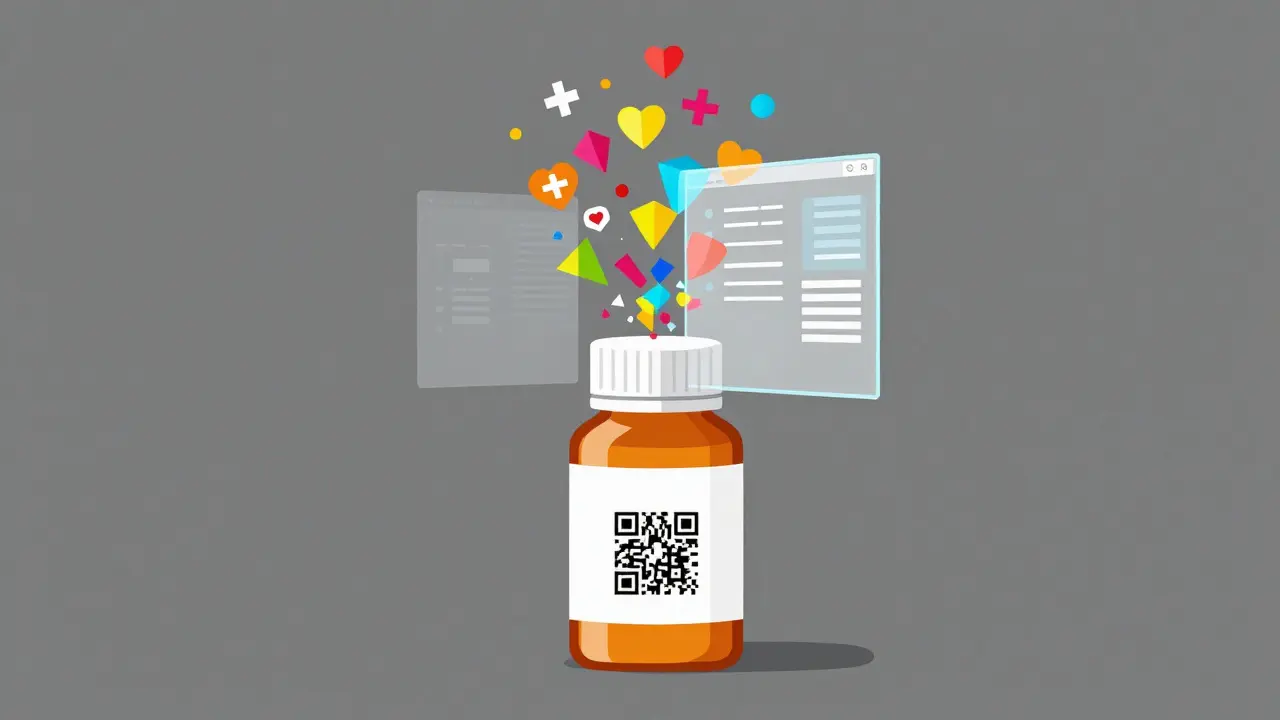
Cutting Down Medication Errors
Misreading a dosage or missing a contraindication is a leading cause of hospital readmissions. Digital labels help by providing electronic Patient Information Leaflets (ePILs). These aren't just digital versions of the paper; they can be interactive. For instance, a pharmacist can use an ePIL to walk a patient through a complex dosing schedule on a screen, rather than handing them a folded piece of paper with microscopic text. In some hospital settings, reports show that patient comprehension of complex medication regimens improved by about 40% after switching to QR-led discharge instructions. Emergency responders also benefit; instead of hunting for a physical leaflet in a patient's bag, they can scan a label and instantly see critical contraindications.The Digital Divide: Who Gets Left Behind?
While the tech is impressive, it creates a real problem: digital equity. Not everyone has the latest iPhone or a reliable data plan. If safety information moves exclusively to the cloud, elderly patients or those in rural areas might be left in the dark. Critics, including experts from the Global Health Institute, warn against a "two-tier" system where the tech-savvy get the safest information while others rely on outdated paper. To fix this, the industry is moving toward a hybrid approach. This means keeping essential printed instructions on the box while using the QR code for deeper, real-time updates. Pharmacies also play a huge role here, acting as "scanning hubs" where staff help patients access the digital info on-site.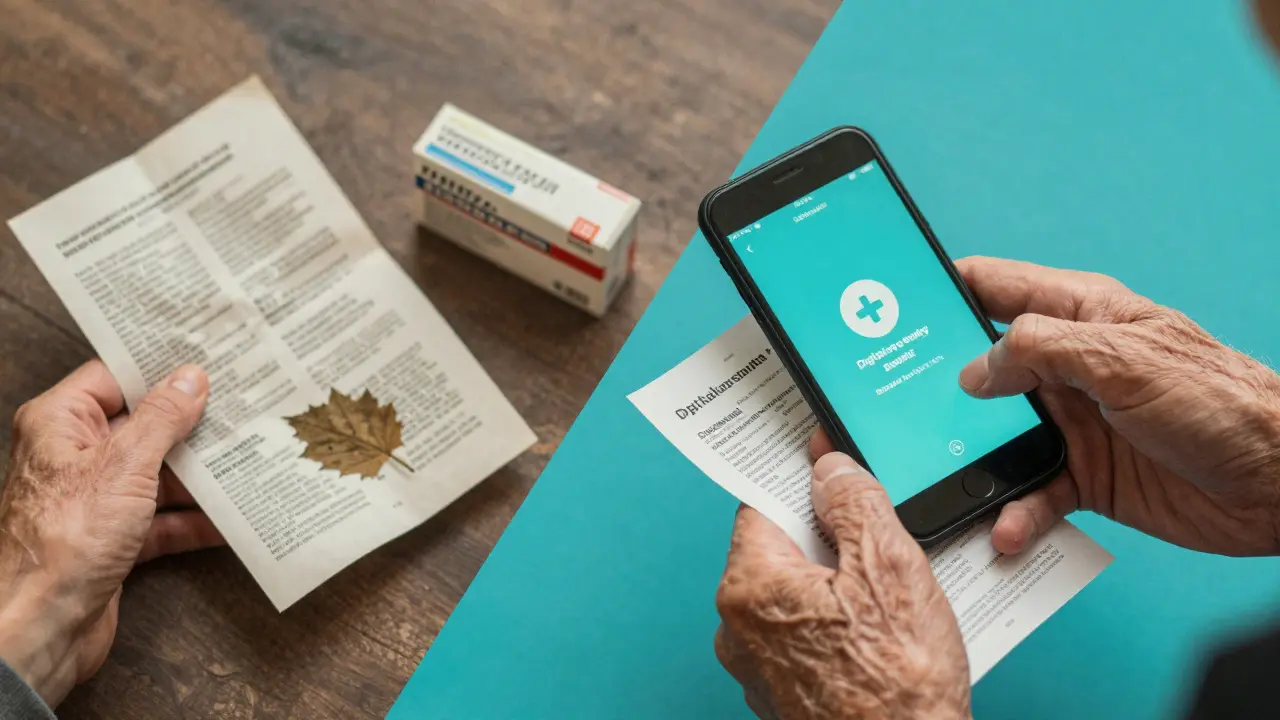
Implementation and Future Trends
If a pharmaceutical company wants to roll this out, it usually takes about 3 to 6 months. They have to migrate content, get regulatory sign-off, and train staff. They often use specialized partners like Vodori or Freyr Solutions to navigate the different laws in different countries. Looking toward 2026 and beyond, we're seeing the rise of AI-driven signal detection. Imagine a system where the QR code doesn't just give you a leaflet, but an AI assistant that answers specific questions about your drug's interaction with your other medications. We are also seeing a move toward Unique Device Identifiers (UDIs) becoming standard, which will make tracking a drug from the factory floor to the patient's hand completely transparent.Will QR codes replace paper leaflets entirely?
Probably not in the near future. Because of "digital equity" concerns, regulators generally require a hybrid approach. Essential safety info will likely stay printed, while detailed, frequently updated data will move to the QR-linked ePILs.
Are these QR codes safe from hackers?
Pharmaceutical companies use encrypted links and authentication protocols. Most systems verify the scan against a manufacturer database using the drug's lot number to ensure the user isn't being redirected to a fraudulent site.
How do these codes help with "Black Box" warnings?
Traditional black box warnings require physical repackaging of all stock, which takes months. With dynamic QR codes, the manufacturer can update the digital landing page instantly, ensuring the warning is visible to the patient the moment it is issued.
Do I need a special app to scan these labels?
Generally, no. Most pharmaceutical QR codes are designed to work with the native camera app on any modern smartphone (iOS or Android). However, some companies offer companion apps for better medication management.
Who manages the updates for the digital labels?
Cross-functional teams at the pharmaceutical company-including regulatory affairs specialists, IT professionals, and patient safety experts-manage the content via a central CMS to ensure all updates are legally compliant.