Penicillin Desensitization Eligibility Checker
This tool helps determine if penicillin desensitization is appropriate based on allergy history and clinical factors. Important: This is for informational purposes only and should not replace professional medical judgment.
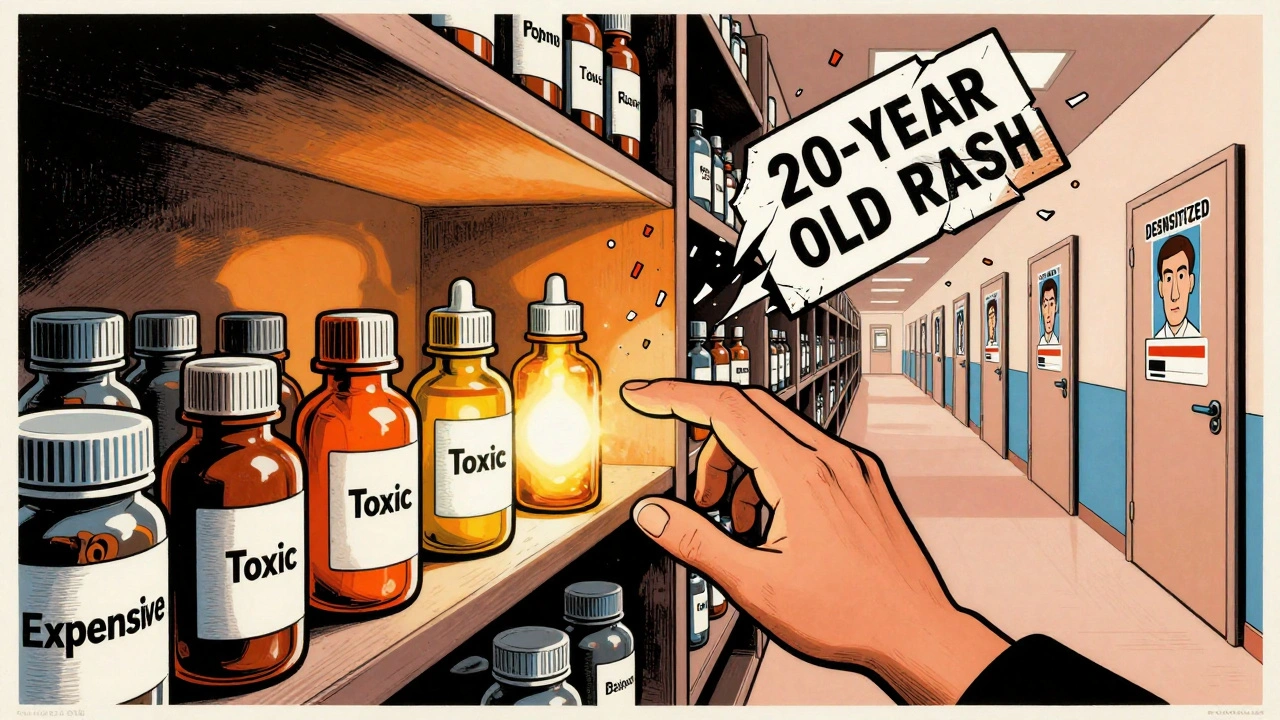
More than 10% of people in the U.S. say they’re allergic to penicillin. But here’s the catch: 90% of them aren’t. Many of these labels were given decades ago after a mild rash or a misdiagnosed virus. Yet because of that label, doctors avoid penicillin-even when it’s the most effective, safest, and cheapest antibiotic for the job. That’s where penicillin desensitization comes in.
What Penicillin Desensitization Actually Does
Penicillin desensitization isn’t a cure for allergy. It’s a temporary, controlled way to let your body tolerate penicillin when you absolutely need it. Think of it like slowly walking into a room filled with smoke. At first, you cough. But if you move in slowly, step by step, your body adjusts. That’s what happens during desensitization. Your immune system gets exposed to tiny, increasing doses of penicillin until it no longer reacts. But here’s the key: this tolerance lasts only as long as you keep taking the drug. Stop it for more than 48 hours, and you’re back to square one.This isn’t a routine procedure. It’s reserved for serious infections where penicillin is the best-or only-option. Think neurosyphilis, bacterial endocarditis, or group B strep in pregnant women. Without penicillin, doctors have to use broader-spectrum antibiotics like vancomycin or ceftriaxone. Those drugs are more expensive, more toxic, and they fuel antibiotic resistance. Studies show patients with fake penicillin allergies pay $3,000 to $5,000 more per hospital stay because of these substitutions.
How It’s Done: IV vs. Oral Protocols
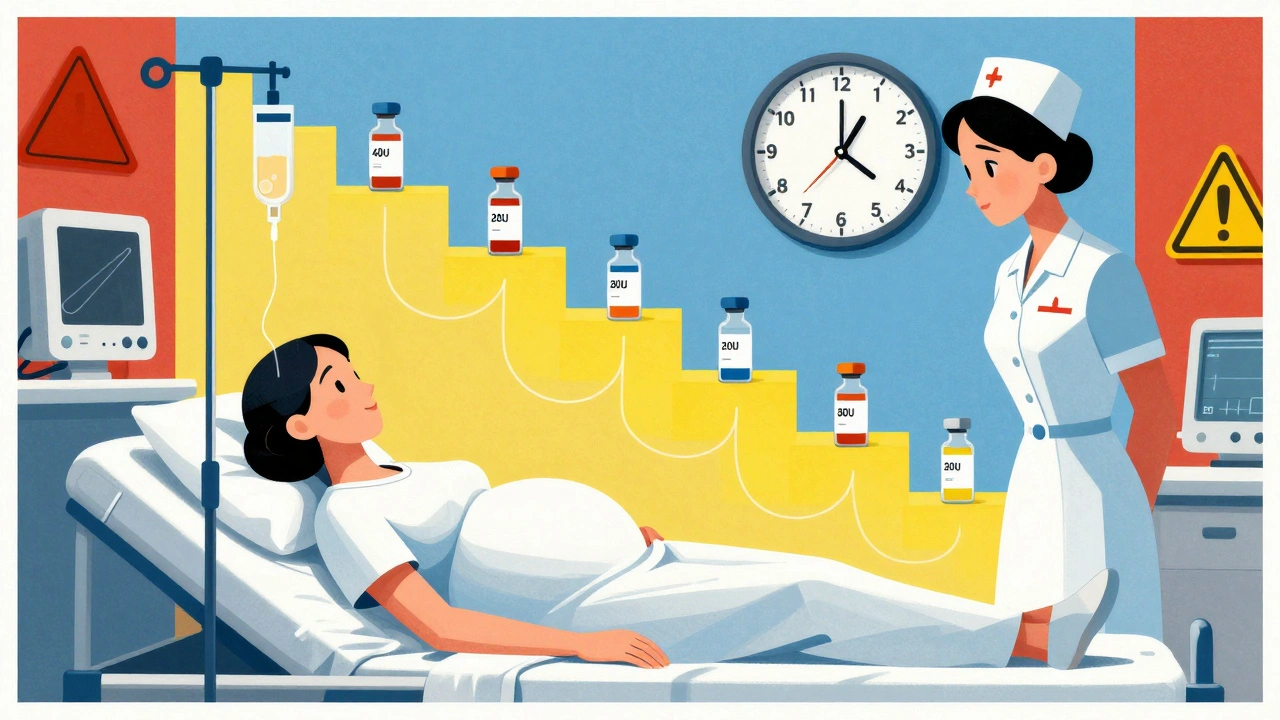
There are two main ways to do it: intravenous (IV) and oral. Both follow strict, step-by-step dosing schedules. Neither is risky if done right. But they’re not the same.IV desensitization is faster. It usually takes about 4 hours. You start with a dose so small-just 20 units of penicillin-that it’s harmless. Every 15 to 20 minutes, the dose doubles. By the end, you’re receiving the full therapeutic amount. This method gives doctors tight control over the dose and lets them react instantly if something goes wrong. It’s the go-to for patients who can’t take pills, like those in critical condition or in labor.
Oral desensitization is slower. Doses are given every 45 to 60 minutes. You might start with a 10-milligram tablet, then move up to 25, then 50, and so on. It’s often easier on patients. About one-third experience mild reactions-itching, a few hives-but those usually stop with an antihistamine. It’s preferred for stable patients, like pregnant women with syphilis who can sit in a hospital room for hours. The UNC guidelines call it “easier and likely safer.”
There’s no large study saying one is better than the other. But the bottom line: IV is for emergencies. Oral is for planned, controlled situations.
Who Shouldn’t Try It
Not everyone qualifies. Desensitization is off-limits if you’ve ever had a severe skin reaction to penicillin-like Stevens-Johnson Syndrome, toxic epidermal necrolysis, or DRESS syndrome. These aren’t just rashes. They’re life-threatening immune explosions. Even a tiny dose of penicillin could trigger them again.Also, if you’ve had anaphylaxis with low blood pressure, throat swelling, or trouble breathing, you’re still a candidate-but only if you’re in a hospital with full resuscitation equipment and staff trained in emergency response. That’s non-negotiable. No outpatient clinics. No urgent care centers. Just hospitals with ICU-level backup.
And here’s something many don’t realize: you can’t skip the prep. Before the first dose, patients get antihistamines like diphenhydramine, acid blockers like ranitidine, and sometimes montelukast. These don’t prevent reactions-they reduce their severity. They’re like seatbelts. You hope you won’t need them. But you’re not getting in the car without them.

What Happens During the Procedure
You’ll be hooked up to monitors. Your blood pressure, heart rate, oxygen levels, and breathing are checked every 15 minutes. A nurse watches you like a hawk. If you get flushed, itchy, or start wheezing, they pause the dose. They give you more antihistamines. Sometimes they slow the schedule. If your blood pressure drops or your airway swells, they stop everything and treat it like anaphylaxis-epinephrine, oxygen, IV fluids.At Prisma Health and Brigham and Women’s Hospital, staff use detailed checklists. Every dose is signed off. Every reaction is documented. Pharmacy prepares the doses with exact dilutions. One order might include 19 labeled vials. It’s not just medicine-it’s a system.
For pregnant women with syphilis, the procedure happens in Labor and Delivery. Why? Because even though severe reactions are rare, the stakes are high. If mom goes into anaphylaxis, baby’s oxygen drops. So the whole team-OB, pharmacy, allergy, nursing-is ready.
Why This Matters Beyond One Patient
Penicillin desensitization isn’t just about helping one person get better. It’s part of a bigger fight: stopping antibiotic resistance. The CDC calls penicillin allergy mislabeling a “high-impact intervention.” Every time we avoid penicillin unnecessarily, we push doctors toward stronger, broader antibiotics. Those drugs kill off good bacteria, create superbugs, and cost the system billions.Right now, only 17% of community hospitals have formal desensitization protocols. Academic centers? Nearly 90%. That gap means patients in small towns often get the wrong antibiotics-even when penicillin would work. The IDSA wants 50% of U.S. hospitals to offer this by 2027. But that won’t happen unless more staff are trained.
The American Academy of Allergy, Asthma & Immunology says you need to have supervised at least five desensitizations before doing one on your own. That’s not a suggestion. It’s a safety rule. One mistake-wrong dose, missed reaction, delayed response-can be fatal.
What Comes After
After you finish the desensitization and complete your full course of penicillin, you’re not “cured.” But you’re not stuck with the label forever. The next step? See an allergist. They can do skin testing or a graded challenge to confirm whether you’re truly allergic. If the test is negative, you can get your medical record updated. No more “penicillin allergy” on your chart. No more unnecessary antibiotics. No more $5,000 hospital bills.And if you’re still allergic? That’s fine too. You’ll know for sure. Then you can plan ahead. Maybe you’ll need desensitization again someday. Or maybe you’ll just avoid penicillin and use something else. Either way, you’re making a decision based on facts-not a 20-year-old note in your file.
Common Misconceptions
Some people think a “graded challenge” is the same as desensitization. It’s not. A graded challenge is for low-risk patients-maybe someone who had a rash as a kid and never had another reaction. They get a small dose, wait an hour, and if nothing happens, they’re cleared. It’s quick. It’s low-risk. Desensitization is for people with real, documented IgE-mediated reactions. It’s slow. It’s high-risk. Mixing them up is dangerous.Others think you can do this at home. You can’t. Not even close. There’s no home kit. No online guide. No pharmacy will fill a prescription for this. It requires continuous monitoring, emergency drugs on standby, and trained staff. Period.
And no, taking antihistamines before penicillin doesn’t make you safe if you’re truly allergic. It just masks the symptoms-until the reaction gets worse.
Future of Penicillin Desensitization
Research is moving fast. Scientists are looking at why tolerance lasts only 3 to 4 weeks. Is it about immune cells? Signaling molecules? If we understand the mechanism, maybe we can extend it. Maybe one day, a single session could give you months of tolerance.Electronic health records are also getting smarter. Some hospitals now auto-flag patients with penicillin allergies and prompt providers to consider testing or desensitization. The CDC’s 2023 draft guidelines even suggest expanding access in resource-limited settings-because in places without advanced antibiotics, penicillin might be the only option.
For now, the message is clear: if you’re labeled allergic to penicillin, don’t accept it as fact. Ask for an evaluation. If you need penicillin and can’t avoid it, ask about desensitization. It’s safe. It’s effective. And it could save your life-or someone else’s.
Comments
Sam Mathew Cheriyan December 8, 2025 at 04:32
so like... uhh penicillin allergy is just a government ploy to sell us more expensive antibiotics?? 😏 i heard they put fluoride in the water too. but hey, if i take penicillin and don’t die, does that mean i was never allergic? or did the cia just rewire my immune system?? 🤔
Nancy Carlsen December 8, 2025 at 17:31
This is SO important!! 🙌 I had my label removed last year after testing - my doctor was like ‘wait, you’ve been avoiding penicillin since 2010??’ 😅 Now I’m telling everyone I know. If you think you’re allergic, GET TESTED. It’s life-changing (and wallet-saving!). 💊❤️
Ted Rosenwasser December 9, 2025 at 09:22
The notion that ‘90% of penicillin allergies are misdiagnosed’ is statistically dubious without proper double-blind challenge data. Most studies rely on retrospective self-reporting, which is notoriously unreliable. Furthermore, the term ‘desensitization’ is misused here - it’s not tolerance, it’s pharmacological immunosuppression. The protocol is high-risk, poorly standardized outside academic centers, and the CDC’s ‘high-impact intervention’ framing is more marketing than medicine.
David Brooks December 10, 2025 at 12:40
I CRIED reading this. 🥹 My mom almost died in 2008 because they gave her ceftriaxone instead of penicillin for syphilis - it messed up her kidneys. She had a rash at 12 and was labeled allergic. No one ever questioned it. If this had been available back then… I don’t even want to think about it. This isn’t just medicine. It’s justice.
Louis Llaine December 11, 2025 at 17:08
Wow. So we’re spending $5k per patient to fix a problem caused by doctors being lazy? And you want me to believe this ‘desensitization’ isn’t just putting people in danger for billing purposes? 🙄
Jane Quitain December 12, 2025 at 22:37
ok but like... i had a rash when i was 5 and now i’m 34 and i still get nervous when i see penicillin on a med list?? can i just... try a tiny dose at home? like one pill? i promise i’ll text my friend if i start itching?? 🙏
Ernie Blevins December 14, 2025 at 07:14
so basically if you had a rash once, you’re now a walking liability. hospitals hate you. insurance hates you. doctors hate you. you’re not allergic. you’re just inconvenient. and now they want to stick you with a 4-hour IV drip to prove you’re not a problem? sounds like a scam to me.
Helen Maples December 15, 2025 at 20:38
This is exactly why we need better education in medical schools. You can’t just label someone allergic because they got a rash in 1997. That’s not medicine - that’s negligence. If you’re a provider and you haven’t reviewed your patient’s allergy history with an allergist, you’re not doing your job. Period. 🚫
Jennifer Anderson December 16, 2025 at 02:58
i just found out my dad was labeled allergic and he’s been on vancomycin for years for UTIs… he’s had kidney issues since. we’re gonna get him tested next week. i’m so mad we didn’t know this sooner. thank you for sharing this!! 🤗
Oliver Damon December 16, 2025 at 16:57
The epistemological tension here is fascinating. The medical community relies on diagnostic heuristics - like the 10-year rule for penicillin allergy - which are statistically valid but epistemologically brittle. Desensitization protocols function as a kind of temporal immunological reset, but the persistence of IgE memory suggests a neuroimmunological anchoring effect. If we could map the cytokine cascade during desensitization, we might unlock broader tolerance induction mechanisms - potentially revolutionizing not just antibiotic use, but immunotherapy as a whole. The real barrier isn’t clinical risk. It’s institutional inertia.