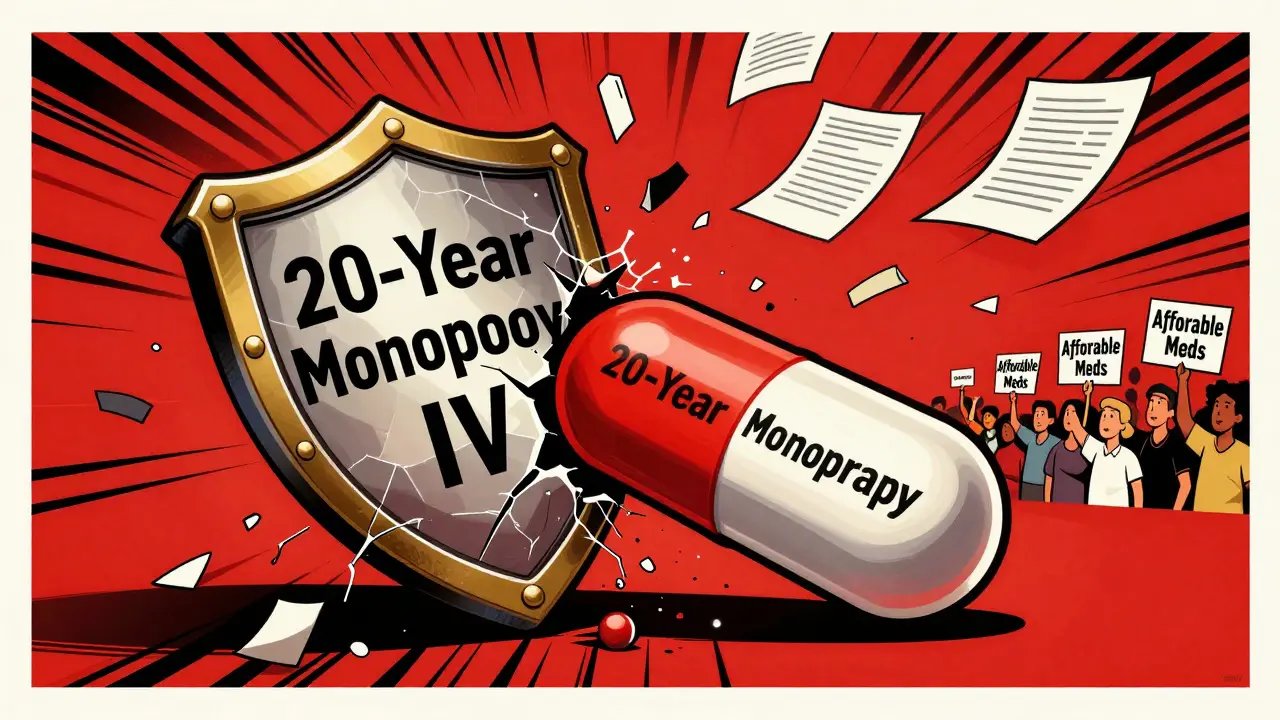
When a brand-name drug company holds a patent, it gets exclusive rights to sell that medicine for up to 20 years. But what happens when a cheaper generic version is ready to hit the market-and the patent might not even be valid? That’s where Paragraph IV certification comes in. It’s not a loophole. It’s a legal tool built into U.S. drug law to let generic manufacturers challenge weak or questionable patents before they even start selling. And it’s one of the biggest reasons generic drugs now make up 90% of all prescriptions filled in the U.S.
What Exactly Is a Paragraph IV Certification?
A Paragraph IV certification is a formal statement filed by a generic drug company as part of its Abbreviated New Drug Application (ANDA) to the FDA. It says: "This patent is either invalid, unenforceable, or our drug won’t infringe it." This isn’t just a guess. The law requires the generic company to lay out the factual and legal reasons why they believe this. It’s a bold move-and it triggers a legal battle before the generic drug ever hits shelves.
This mechanism was created by the Hatch-Waxman Act of 1984. Before that, generic companies had to wait until every patent expired, even if the patent was weak or just a minor tweak to the original drug. The law was designed to balance two things: rewarding innovation and getting affordable medicines to patients faster. Paragraph IV is the part that lets generics fight back.
How It Works: The Legal Domino Effect
Here’s the step-by-step reality of a Paragraph IV challenge:
- A generic company files its ANDA with the FDA and includes a Paragraph IV certification for one or more patents listed in the FDA’s Orange Book (the official list of patented drugs).
- Within 20 days, the generic company must send a detailed notice letter to the brand-name drug maker and patent holder. This letter can’t be vague. It must explain exactly why the patent doesn’t hold up-whether it’s obvious, not novel, or doesn’t cover the generic version.
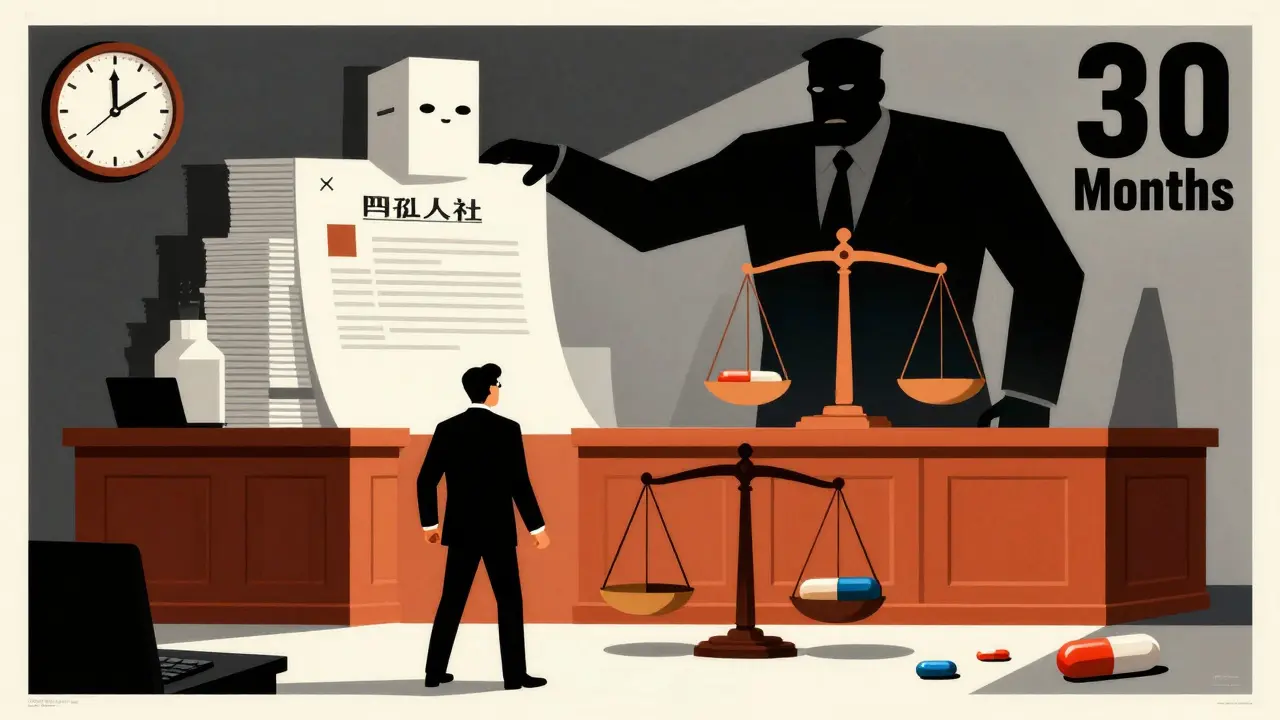
- If the brand company thinks it has a case, it has 45 days to sue for patent infringement. If they do, the FDA can’t approve the generic drug for 30 months-unless a judge decides sooner.
- During that 30-month clock, both sides argue in court. The generic company tries to prove the patent is invalid. The brand company tries to prove it’s solid.
- If the generic wins, it can launch immediately. And if it was the first to file, it gets 180 days of exclusive rights to sell its version-no other generics allowed.
This whole process is called an "artificial act of infringement." It sounds weird, but it’s intentional. Instead of letting generics launch and get sued later (which could cause chaos in the market), the system forces the legal fight to happen before anyone sells anything.
Why Do Generic Companies Take the Risk?
It’s not cheap. The median cost of a Paragraph IV lawsuit is around $12.7 million, according to Fish & Richardson’s 2022 analysis. Some cases go over $15 million. And they can take 4 to 5 years to resolve.
So why do it? Because the payoff can be massive.
The 180-day exclusivity period is the golden ticket. If you’re the first to challenge a blockbuster drug-say, one that brings in $2 billion a year-you could earn $500 million or more in those six months alone. Take Mylan’s challenge of Gilead’s HIV drug tenofovir in 2019. They won, and entered the market 27 months before the patent expired. That kind of head start turns a $12 million legal bill into a $1 billion windfall.
Apotex’s 2004 challenge of GlaxoSmithKline’s Paxil antidepressant was another big win. During their 180-day exclusivity, they made over $1.2 billion in sales.
For many generic companies, Paragraph IV isn’t just an option-it’s the core of their business model. A 2022 survey by the Generic Pharmaceutical Association found that 78% of manufacturers say these challenges are critical to staying in business.
The Other Three Certification Types (And Why Paragraph IV Is Different)
Not all generic applications are this aggressive. There are three other types of patent certifications:
- Paragraph I: "This drug isn’t patented." Used in about 5% of cases. Low risk, low reward.
- Paragraph II: "The patent has expired." Used in 15% of cases. Straightforward. No legal fight.
- Paragraph III: "We’ll wait until the patent expires." Used in 20% of cases. Safe, but no early entry.
Paragraph IV is the outlier. It makes up 60-70% of all ANDAs filed today. Why? Because it’s the only one that lets you get ahead of the patent clock. The others mean waiting. Paragraph IV means fighting-and possibly winning big.
The Dark Side: Pay-for-Delay and Patent Thickets
It’s not all fair fights. Sometimes, brand companies pay generic makers to delay their entry. This is called a "pay-for-delay" settlement. The FTC calls it anticompetitive. Between 1999 and 2009, there were 197 such deals involving Paragraph IV challenges, according to the FTC’s 2010 report.
In 2013, the Supreme Court ruled in FTC v. Actavis that these deals could violate antitrust laws-if the payment is large enough and there’s no legitimate reason for it. Since then, courts have been more skeptical of these settlements.
Another problem: patent thickets. Brand companies pile on dozens of patents-covering everything from pill shape to manufacturing methods-to make it harder for generics to find a weak spot. A 2022 survey showed 63% of generic manufacturers say patent thickets have made challenges harder since 2018.
Even worse: some brand companies launch their own "authorized generic" during the 180-day exclusivity window. That’s when the original company sells the same drug under a different label. The FTC challenged this in the 2021 Shire case, arguing it undermines the exclusivity incentive. Courts are still deciding how far this goes.
What Happens When You Mess Up?
Getting the paperwork wrong can cost you everything. Teva learned this the hard way in 2017 with its Copaxone challenge. They filed a Paragraph IV certification, won the legal battle, but failed to get FDA approval within 30 months. That meant they lost their 180-day exclusivity. By the time they got approved, five other generics were already on the market. Their windfall turned into a footnote.
Another common mistake? The notice letter. If it’s not detailed enough, the FDA will reject the whole application-even if the legal argument is strong. Fish & Richardson found that 12% of Paragraph IV filings in 2021-2022 got rejected for this reason alone.
That’s why companies hire specialized patent lawyers. Firms like Finnegan and Covington charge $750-$1,200 an hour just to draft the legal basis for the certification. It’s not just legal work-it’s science, engineering, and strategy rolled into one.
What’s Changing Now?
The rules are evolving. In 2023, the Supreme Court’s decision in Amgen v. Sanofi raised the bar for patent validity. Now, a patent must clearly explain how to make and use the full scope of the invention. This makes it harder to challenge biologics and complex drugs.
Also, more generic companies are combining Paragraph IV lawsuits with Inter Partes Review (IPR) at the Patent Trial and Appeal Board. About 42% of Paragraph IV cases in 2022-2023 included parallel IPRs. It’s a two-pronged attack: court + patent office.
The FDA’s 2023 Orange Book Modernization Act is also helping. It’s cracking down on vague or overly broad patent listings. That should reduce patent thickets over time.
Looking ahead, challenges are shifting toward complex generics-like inhalers, injectables, and topical creams. These are harder to copy than pills. But with 78% growth expected by 2028, the race is on.
Why This Matters to You
Every time you fill a prescription for a generic drug, there’s a good chance a Paragraph IV challenge made it possible. Since 1984, this system has saved U.S. healthcare over $1.7 trillion. That’s billions in lower drug costs for patients, insurers, and taxpayers.
It’s not perfect. Lawsuits are expensive. Settlements sometimes delay competition. Patent thickets still exist. But without Paragraph IV, we’d still be waiting years for affordable versions of life-saving drugs. It’s a legal tool that turns patent law into a tool for public health.
The next time you see a $5 generic instead of a $500 brand name, remember: someone fought a multi-million-dollar lawsuit to make that happen.
What is the purpose of a Paragraph IV certification?
The purpose of a Paragraph IV certification is to allow a generic drug manufacturer to legally challenge the validity or enforceability of a patent listed for a brand-name drug. This triggers a court process before the generic drug is approved, enabling earlier market entry if the challenge succeeds. It’s designed to prevent weak patents from blocking competition and to speed up access to affordable medicines.
Can a generic drug company lose its 180-day exclusivity?
Yes. The 180-day exclusivity can be forfeited under several conditions: if the company doesn’t market the drug after receiving FDA approval, withdraws its application, changes its patent certification, or fails to obtain tentative approval within 30 months of the patent challenge. Teva lost its exclusivity in 2017 for failing to get approval in time.
How long does a Paragraph IV lawsuit typically take?
Most Paragraph IV lawsuits take between 3 and 5 years to resolve. The FDA imposes a 30-month stay on approval after the brand company files suit, but courts can shorten or extend this period. Many cases settle before trial, but those that go to judgment often take longer than the 30-month window.
What happens if the brand company doesn’t sue within 45 days?
If the brand company doesn’t file a patent infringement lawsuit within 45 days of receiving the Paragraph IV notice, the 30-month stay doesn’t trigger. The FDA can then approve the generic drug immediately, and the generic company can launch without legal delay. This happens in about 8% of Paragraph IV cases.
Are Paragraph IV certifications only for pills?
No. While most Paragraph IV challenges have historically targeted oral tablets, they’re increasingly used for complex generics like inhalers, injectables, topical creams, and even biosimilars. The FDA’s 2023 guidance shows a growing number of challenges to these harder-to-copy products, with projections of 78% growth in this area by 2028.
Is a Paragraph IV certification the same as a patent invalidation?
No. A Paragraph IV certification is a legal declaration that a patent is invalid or won’t be infringed. It starts the process, but the actual invalidation only happens if a court rules in favor of the generic company. Many Paragraph IV challenges end in settlement, not court rulings.
Comments
Antwonette Robinson February 2, 2026 at 14:44
So let me get this straight - a company spends $12 million to sue over a patent that’s basically a rehash of aspirin, and if they win, they get to charge $500 for a pill that costs 50 cents to make? And we call this ‘innovation’? 🤡
Ed Mackey February 3, 2026 at 00:35
holy crap i had no idea this was even a thing. so like, if the brand company doesnt sue in 45 days, the generic just pops up? that seems kinda wild. i always thought patents were ironclad. guess not. thanks for explaining this, it actually makes sense now.
Meenal Khurana February 4, 2026 at 21:17
Paragraph IV is the only path to affordable drugs in the U.S. Without it, patients wait years.
Joy Johnston February 6, 2026 at 12:17
This is one of the most important pieces of pharmaceutical policy in modern American history, and yet almost no one talks about it. The Hatch-Waxman Act didn’t just create a legal framework - it created a market incentive for competition. The 180-day exclusivity period is genius: it turns litigation into a race, not a ransom. And the fact that 90% of prescriptions are filled with generics? That’s not luck. That’s policy working exactly as intended. We should be celebrating this, not mocking it.
Yes, there are abuses - pay-for-delay, patent thickets, authorized generics - but those are fixes, not reasons to scrap the system. The real problem is underfunded FDA oversight and a patent office that approves vague claims like ‘a blue pill with a bump on the side.’ Fix that, and we get even more savings.
Also, kudos to the generic manufacturers who risk millions on legal battles so that a diabetic in rural Ohio can afford insulin. That’s not capitalism. That’s public health.
Shelby Price February 7, 2026 at 05:23
so like… if someone challenges a patent and wins, they get 6 months of monopoly on the generic? that’s wild. kind of like winning the lottery but with a law degree 😅
Jesse Naidoo February 8, 2026 at 21:31
THIS IS A TRAP. EVERY SINGLE ONE OF THESE ‘CHALLENGES’ IS COORDINATED WITH BIG PHARMA. THEY WANT YOU TO THINK GENERIC DRUGS ARE CHEAP - BUT THEY OWN THE COMPANIES THAT MAKE THEM. THEY’RE LETTING YOU THINK YOU’RE WINNING WHILE THEY JUST SHIFTED THE MONEY TO ANOTHER ACCOUNT. THE FDA? CONTROLLED. THE SUPREME COURT? BOUGHT. YOU THINK YOU’RE GETTING A DEAL? YOU’RE BEING PLAYED.
Samuel Bradway February 9, 2026 at 06:59
Man, I never realized how much work goes into making a $5 pill. All those lawyers, scientists, and engineers fighting for months just so someone can get their blood pressure meds without going broke. Respect.
pradnya paramita February 10, 2026 at 11:50
The Paragraph IV certification constitutes a declaratory judgment mechanism under 35 U.S.C. § 271(e)(2), effectively transforming the ANDA filing into an artificial act of infringement. The 30-month stay under 21 U.S.C. § 355(j)(5)(B)(iii) functions as a statutory injunction, preserving the innovator’s exclusivity pending adjudication. Notably, the first-filer exclusivity under 21 U.S.C. § 355(j)(5)(B)(iv) creates a powerful economic incentive structure that aligns private litigation with public health objectives - provided that pay-for-delay and authorized generic strategies are constrained by antitrust enforcement.
Caleb Sutton February 12, 2026 at 02:59
They’re not just fighting patents - they’re fighting the whole system. You think this is about medicine? It’s about control. The FDA, the courts, the patents - it’s all one big game. And you’re the pawn.