Medication Organ Risk Checker
Check Your Medication Risks
Select medications you're currently taking to see which organs might be at risk.
Risk Assessment Results
What to Do Now
For each medication you selected:
- Monitor for specific symptoms mentioned in the article
- Discuss with your doctor about baseline testing (liver enzymes, kidney function)
- Consider dose adjustments if you have other risk factors (age, pre-existing conditions)
- Never stop prescribed medications without consulting your healthcare provider
When you take a pill, you expect it to help. But sometimes, the very thing meant to heal can quietly damage your organs. Not every drug affects every person the same way. Some target the liver. Others sneak into the kidneys, heart, or nerves. These aren’t rare accidents-they’re predictable, measurable, and often avoidable. In fact, organ-specific side effects are behind nearly 90% of the most common adverse drug reactions. And while many people never experience them, knowing the signs could save your life.
Liver Damage: The Silent Killer
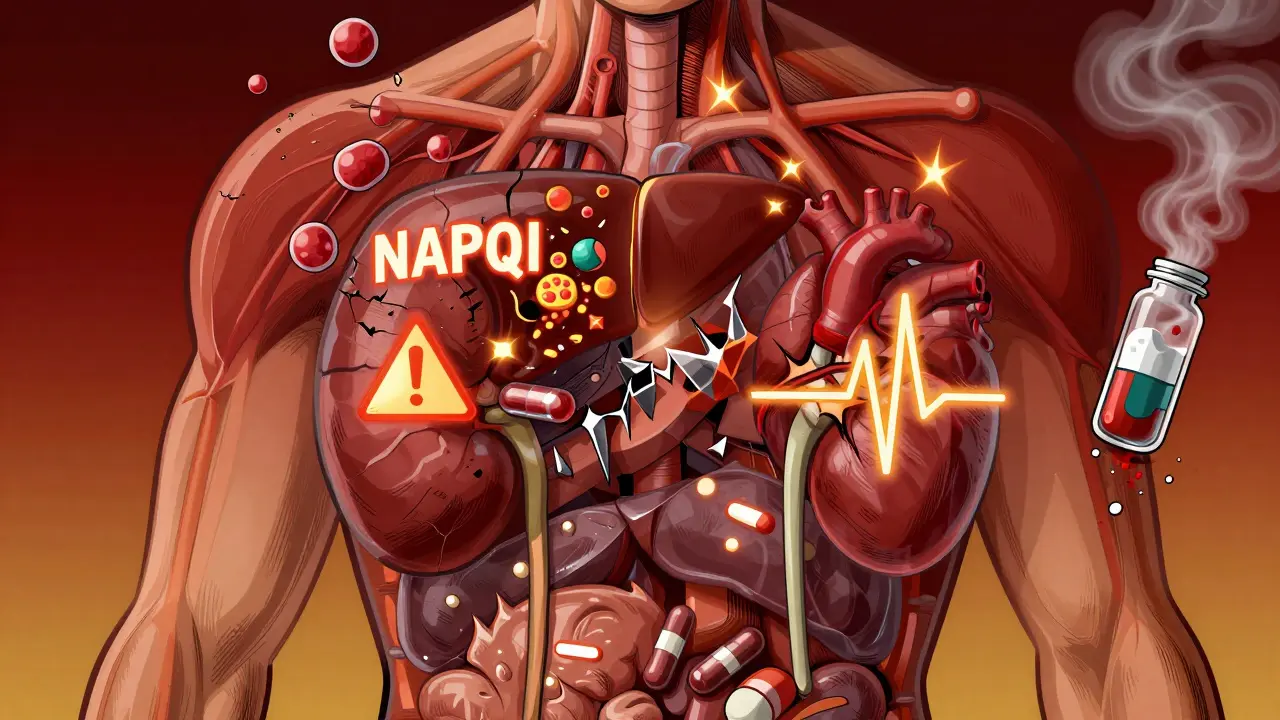
Your liver is your body’s chemical factory. It breaks down almost every medication you take. That’s why it’s also the most common target of drug toxicity. You might not feel anything at first. No pain. No fever. Just fatigue, nausea, or dark urine-symptoms easily blamed on stress or the flu. Acetaminophen (Tylenol) is the #1 cause of acute liver failure in the U.S. Take more than 7.5 grams in a day-just 15 extra pills-and you risk irreversible damage. The problem isn’t the pill itself. It’s what your liver turns it into: a toxic compound called NAPQI. Normally, your body neutralizes it with glutathione. But when you overdose, that shield runs out. The toxin then starts eating liver cells alive. Other common culprits include isoniazid (used for tuberculosis), statins (cholesterol drugs), and some antibiotics. About 1 in 5 people on isoniazid will show elevated liver enzymes. For some, that’s just a lab result. For others, it’s the start of hepatitis or worse. Genetic differences matter too. If you’re a slow acetylator (a common variation in the NAT2 gene), your liver processes these drugs slower, giving toxins more time to build up. Doctors watch for ALT levels above 5 times the normal limit. If bilirubin also rises, it’s a red flag. Stop the drug. Get tested. Don’t wait for jaundice. By then, it’s often too late.Kidney Trouble: When Your Filters Fail
Your kidneys don’t just make urine. They filter toxins, balance electrolytes, and control blood pressure. And they’re constantly exposed to whatever you swallow. Aminoglycosides like gentamicin are among the most nephrotoxic antibiotics. Up to half of patients on long-term treatment develop kidney injury. How? These drugs cling to receptors in the kidney’s tubules, wrecking mitochondria and causing cells to die. The damage can show up as early as day three. NSAIDs-ibuprofen, naproxen, celecoxib-are even more common offenders. They reduce blood flow to the kidneys, especially in older adults or those already dehydrated. One in five people over 65 who take NSAIDs long-term will have some form of kidney injury. And here’s the scary part: 44% of these patients don’t notice symptoms until a blood test shows high creatinine. Contrast dye used in CT scans can also trigger acute kidney injury. Risk? 1-6% in healthy people. But if you already have kidney disease? That jumps to 50%. Vancomycin, a powerful antibiotic, becomes dangerous when blood levels creep above 15 mg/L. For every 5 mg/L increase, your kidney injury risk rises by 30%. The fix? Don’t ignore hydration. Check your eGFR before starting risky drugs. If it’s below 60, many medications need dose changes. If it’s below 30, some should be stopped entirely. The Kidney Disease: Improving Global Outcomes (KDIGO) guidelines make this clear. But too many doctors still don’t check.Heart Risks: Arrhythmias, Weakness, and Ruptures
Your heart doesn’t just pump blood. It’s electric. And drugs can mess with that system. Anthracyclines like doxorubicin (used for breast cancer) can permanently weaken the heart muscle. After a cumulative dose of 500 mg/m², nearly 1 in 4 patients develops heart failure. The damage comes from iron-driven free radicals that destroy heart cells. Once gone, they don’t come back. That’s why doctors track your ejection fraction with echocardiograms every few months during treatment. If it drops below 45%, they stop the drug. Then there’s the newer threat: immune checkpoint inhibitors. These cancer drugs, meant to wake up your immune system, sometimes turn it against your heart. Myocarditis from these drugs is rare-less than 1% of users-but when it happens, 40-50% die. Symptoms? Chest pain, shortness of breath, irregular heartbeat. Often, it hits within the first 90 days. Fluoroquinolones like ciprofloxacin and levofloxacin don’t just cause tendon tears. They increase your risk of aortic aneurysm by 31%. How? They weaken collagen in blood vessel walls. The FDA issued a black box warning in 2018. Still, these antibiotics are overprescribed for sinus infections and UTIs. Even antipsychotics like haloperidol and ziprasidone can stretch your heart’s electrical timing. They prolong the QT interval-the time between heartbeats. A prolonged QT can trigger a deadly rhythm called torsades de pointes. Ziprasidone adds nearly 17 milliseconds. Risperidone? Only 6. That difference matters.
Neurologic Side Effects: Brain Fog, Numbness, and Memory Loss
Your nerves don’t have a blood-brain barrier. They’re exposed. And some drugs attack them directly. Platinum chemo drugs-cisplatin, oxaliplatin-are notorious for nerve damage. Up to 70% of patients on cisplatin develop permanent numbness or tingling in hands and feet. Oxaliplatin is even weirder: it causes sharp, cold-induced pain during infusion. One sip of ice water can trigger jaw spasms. It’s not psychological. It’s the drug altering sodium channels in nerves. Proton pump inhibitors (PPIs)-like omeprazole and pantoprazole-are taken daily by millions for heartburn. But long-term use? More than 4.4 years-raises dementia risk by 21%. Why? Some theories suggest reduced vitamin B12 absorption or increased amyloid buildup. Others point to altered gut-brain signaling. Either way, the data is clear. Phenytoin, an old epilepsy drug, can cause cerebellar atrophy. Long-term users lose coordination, develop slurred speech, and struggle with balance. The damage shows up on MRI scans. It’s dose-dependent. Keep serum levels below 20 mcg/mL, and you lower the risk. Immune checkpoint inhibitors can also trigger autoimmune attacks on nerves: Guillain-Barré syndrome, myasthenia gravis, encephalitis. These are rare-under 1% of users-but devastating. Symptoms like muscle weakness, double vision, or confusion need immediate evaluation.Who’s at Risk-and What to Do
Not everyone gets these side effects. But some people are far more vulnerable.- Older adults: Kidneys and liver slow down with age. Doses need adjustment.
- People with pre-existing disease: Diabetes, hypertension, or chronic kidney disease multiply risk.
- Those on multiple meds: Drug interactions are the silent killer. One pill might be fine. Ten? Not so much.
- Genetic outliers: Variants in SLCO1B1, NAT2, or CYP enzymes can turn normal doses into toxic ones.
- Know your meds. Ask your pharmacist: "Which organs does this affect?"
- Track symptoms. Fatigue? Nausea? Numbness? Don’t brush it off.
- Get baseline tests. Before starting a new drug, ask for liver enzymes, kidney function, and ECG.
- Don’t self-medicate. NSAIDs and acetaminophen seem harmless. They’re not.
- Speak up. If you feel different, say so. Your doctor might not connect the dots.
The Future: Better Detection, Fewer Surprises
The good news? We’re getting better at catching these problems before they hurt you. In 2023, the FDA approved the first blood test for liver injury that detects damage 3-5 days earlier than ALT levels. It measures microRNA-122 and keratin-18 fragments-biomarkers released when liver cells die. For kidneys, new markers like TIMP-2 and IGFBP7 can predict acute injury hours before creatinine rises. And labs are now using organ-on-chip tech-tiny devices with human cells-that mimic liver and kidney responses. These predict toxicity with 92% accuracy, cutting drug failures in development by nearly 20%. AI systems are now scanning millions of electronic health records to spot patterns. The FDA’s Sentinel Initiative flagged a kidney injury risk with canagliflozin within six months of launch. That’s faster than any clinical trial could have caught it. We’re moving from guesswork to precision. But until then, you’re your own best protector.Frequently Asked Questions
Can liver damage from drugs be reversed?
Yes, if caught early. The liver regenerates. Stopping the drug and giving it time can restore function in most cases-especially if there’s no cirrhosis. But if scarring has set in, the damage is permanent. That’s why early detection matters. Blood tests for ALT, AST, and bilirubin are your first line of defense.
Are over-the-counter painkillers safe for kidneys?
Not always. NSAIDs like ibuprofen and naproxen reduce blood flow to the kidneys. For healthy adults, occasional use is fine. But daily use, especially in people over 65, those with high blood pressure, or existing kidney disease, can cause serious harm. Acetaminophen is safer for kidneys but harder on the liver. Always check with your doctor before long-term use.
How do I know if a drug is harming my heart?
Watch for new symptoms: chest pain, palpitations, shortness of breath, swelling in legs, or extreme fatigue. If you’re on chemotherapy or antipsychotics, ask for a baseline ECG and echocardiogram. Follow-up tests every few months can catch early changes. Don’t wait for a heart attack. Many drug-related heart problems are silent until they’re advanced.
Can neurologic side effects like numbness go away?
Sometimes. With chemo drugs like oxaliplatin, nerve symptoms often improve after stopping treatment-but it can take months or even years. In some cases, the damage is permanent. Early intervention helps. If you feel tingling or weakness, tell your oncologist right away. Dose reductions or breaks can prevent long-term harm.
Are there tests to predict if I’ll get organ damage from a drug?
Not routinely-but they’re coming. Genetic tests for SLCO1B1 (statin risk) and NAT2 (isoniazid risk) are available and sometimes used in specialized clinics. New blood biomarkers for liver and kidney injury can detect damage before traditional tests. Ask your doctor if pharmacogenetic testing is right for you, especially if you’ve had side effects before or are starting multiple high-risk drugs.
What to Do Next
If you’re on any of these medications-statins, NSAIDs, antibiotics, chemo, PPIs, or antipsychotics-take action now:- Review your full medication list with your doctor or pharmacist.
- Ask: "Which organs does this affect? What signs should I watch for?"
- Get basic blood work: liver enzymes, creatinine, eGFR.
- Record any new symptoms-even small ones.
- Don’t assume "it’s just aging." Many side effects are preventable.
Comments
Meghan Hammack January 9, 2026 at 21:21
Just took my daily ibuprofen and now I’m side-eyeing my kidneys like they’re traitors. 😭 This post hit different. I thought NSAIDs were harmless. Turns out I’ve been playing Russian roulette with my eGFR.
Jerian Lewis January 10, 2026 at 13:03
People don’t realize acetaminophen isn’t ‘safe’-it’s just the drug companies’ favorite scapegoat. If you’re over 40, drinking even one glass of wine while taking Tylenol is a one-way ticket to liver hell. Stop pretending it’s just a ‘pain reliever.’ It’s a slow poison.
Matthew Maxwell January 11, 2026 at 00:19
It is regrettable that the general populace continues to regard pharmaceuticals as benign substances. The pharmacokinetic burden imposed upon hepatic and renal systems by polypharmacy is neither trivial nor incidental. One must exercise epistemic responsibility-consult prescribing information, understand metabolic pathways, and refrain from self-diagnosis via Google. The current state of medical literacy is a public health catastrophe.
Lindsey Wellmann January 12, 2026 at 02:35
OMG I JUST REALIZED I’VE BEEN ON PPIs FOR 7 YEARS 😱 I’M GOING TO GET DEMENTIA AND NOBODY TOLD ME?? I’M CRYING. ALSO MY TENDONS ARE WEAK FROM CIPRO. I’M A WALKING PHARMACOLOGICAL DISASTER. SOMEONE HUG ME. 🥺💔
Angela Stanton January 13, 2026 at 05:24
Let’s quantify the risk: 90% of ADRs are organ-specific? That’s not ‘common’-that’s systemic negligence. The FDA’s passive surveillance model is archaic. We need real-time pharmacovigilance via EHR mining + AI anomaly detection. Biomarkers like microRNA-122 and TIMP-2 are game-changers-but only if they’re integrated into primary care workflows. Until then, we’re just rearranging deck chairs on the Titanic.
Johanna Baxter January 14, 2026 at 13:01
I’ve been on statins for 8 years and now I can’t even lift my arms. My doctor said it’s ‘just aging.’ But my liver enzymes were sky-high. I stopped. I’m alive. Why didn’t anyone warn me? I feel so used. Like my body was just a lab rat for Big Pharma.
Kiruthiga Udayakumar January 15, 2026 at 13:30
In India, people take antibiotics like candy. My uncle took cipro for a cold and ended up in ICU with tendon rupture. This isn’t just a Western problem. Doctors here don’t even check kidney function before prescribing. We need education-not just warnings. Knowledge is the only real medicine.
Diana Stoyanova January 15, 2026 at 16:31
Think about this: every time you swallow a pill, you’re not just treating a symptom-you’re asking your liver, kidneys, heart, and brain to do extra work. Your body isn’t a machine. It’s a living ecosystem. And drugs? They’re like invasive species. Sometimes they fix the problem. Sometimes they destroy the whole system. We treat meds like candy because we’ve forgotten how delicate we really are. Maybe the real question isn’t ‘what does this drug do?’ but ‘what does this drug cost me?’
Darren McGuff January 16, 2026 at 16:07
As a pharmacist, I see this daily. The most common mistake? Patients doubling up on OTC meds. They take Tylenol for a headache, then a cold tablet that also has acetaminophen. Boom-liver toxicity. We need better labeling. Clearer warnings. And maybe, just maybe, pharmacists should be more involved in primary care. We’re not just dispensers-we’re safety nets.
Alicia Hasö January 17, 2026 at 06:51
You are not alone in this. If you’ve ever felt like your body betrayed you after taking a pill-you’re not crazy. You’re informed. This post is a gift. Share it with your mom. Your dad. Your best friend who takes ibuprofen like it’s candy. Knowledge doesn’t just protect-it empowers. You have the right to ask: ‘What’s the cost?’ And you deserve an honest answer.
Aron Veldhuizen January 17, 2026 at 10:34
Interesting. But let’s not romanticize ‘natural’ alternatives. The idea that ‘herbs are safer’ is a dangerous myth. Comfrey causes hepatic veno-occlusive disease. Kava induces liver failure. Even ‘clean’ supplements have unregulated metabolites. The problem isn’t pharmaceuticals-it’s ignorance masquerading as wisdom. If you want safety, demand regulation-not alternatives.
Jeffrey Hu January 19, 2026 at 00:05
Actually, the 90% stat is misleading. That’s based on hospital-reported ADRs, not population-level data. Many organ toxicities are subclinical. Also, most liver enzyme elevations are transient. The real issue is over-testing. We’re creating false positives that lead to unnecessary discontinuation of life-saving meds. Risk is not the same as harm.
Drew Pearlman January 19, 2026 at 16:29
I know it sounds scary, but here’s the good news: you’re already ahead of 90% of people just by reading this. Awareness is your superpower. Don’t panic-just pause. Ask your doctor the three questions: ‘Which organ does this affect?’ ‘What signs should I watch for?’ ‘Can we monitor it?’ You’ve got this. Your body’s listening. Just make sure you’re listening back.
Chris Kauwe January 21, 2026 at 10:03
Western medicine is a scam. You think your liver is ‘damaged’ by drugs? Nah. It’s your toxic culture. Processed food. Stress. Lack of sleep. The drugs are just the scapegoat. Go back to ancestral diets. Stop relying on pills. Your body was built to heal-not be chemically assaulted. This post is just another way to keep you dependent on the system.
RAJAT KD January 22, 2026 at 03:17
My father died from statin-induced rhabdomyolysis. No one warned us. This needs to be mandatory info on every prescription label. Not just fine print. Bold. Clear. Direct. Lives depend on it.