Every year, over 1.5 million people in the U.S. are harmed by medication errors - and most of them happen at home, managed by family caregivers. If you’re caring for an aging parent, a child with chronic illness, or someone with dementia, you’re not just helping with daily tasks. You’re holding the line against potentially deadly mistakes. A missed dose. A wrong pill. A drug interaction no one saw coming. These aren’t rare accidents. They’re preventable - if you know what to look for.
Keep a Complete, Updated Medication List
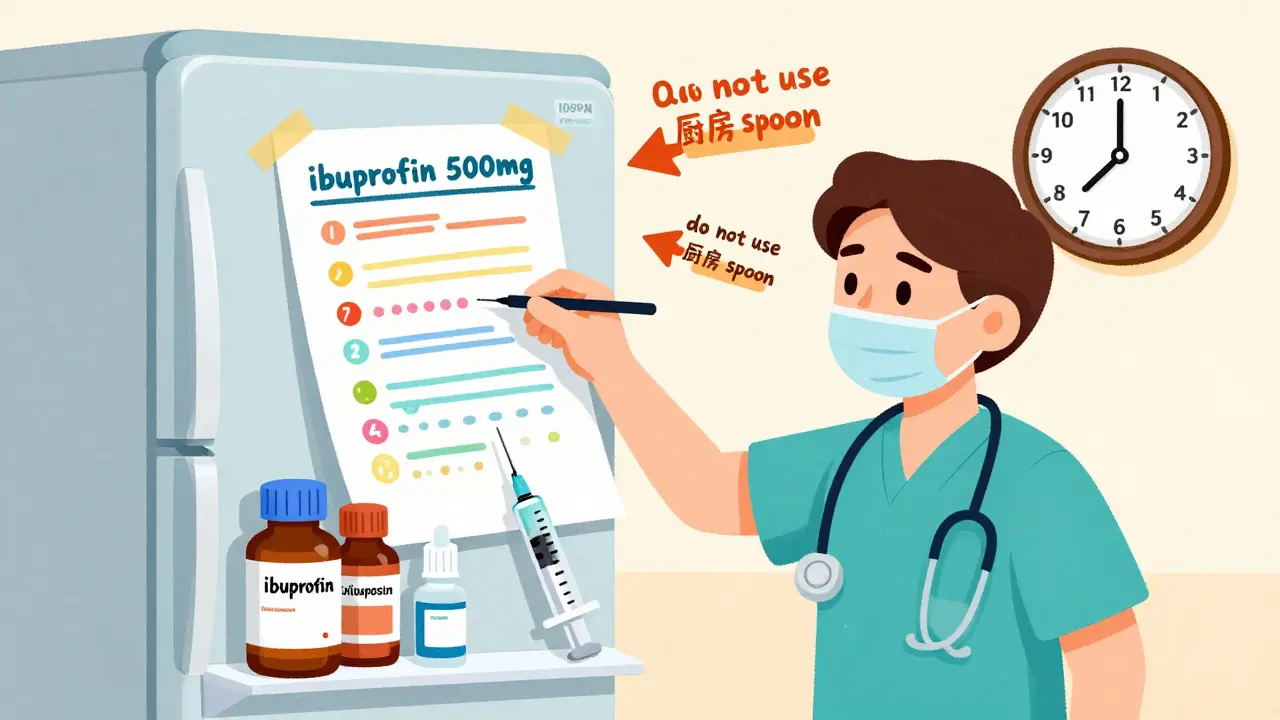
Start with the most basic but most overlooked step: writing down every medication your loved one takes. Not just the prescriptions. Include over-the-counter pills, vitamins, herbal supplements, and even eye drops. Many caregivers forget these - until a pharmacist spots a dangerous interaction. Your list needs more than names. For each medication, write:- Brand and generic name (e.g., ibuprofen, sold as Advil or Motrin)
- Exact dosage (e.g., 500 mg tablet, 10 mL liquid)
- Time of day it’s taken (e.g., 8 AM and 8 PM)
- Why it’s prescribed (e.g., "for blood pressure," "for joint pain")
- Any side effects noticed (e.g., "drowsy after lunch," "stomach upset")
Watch for Polypharmacy Risks
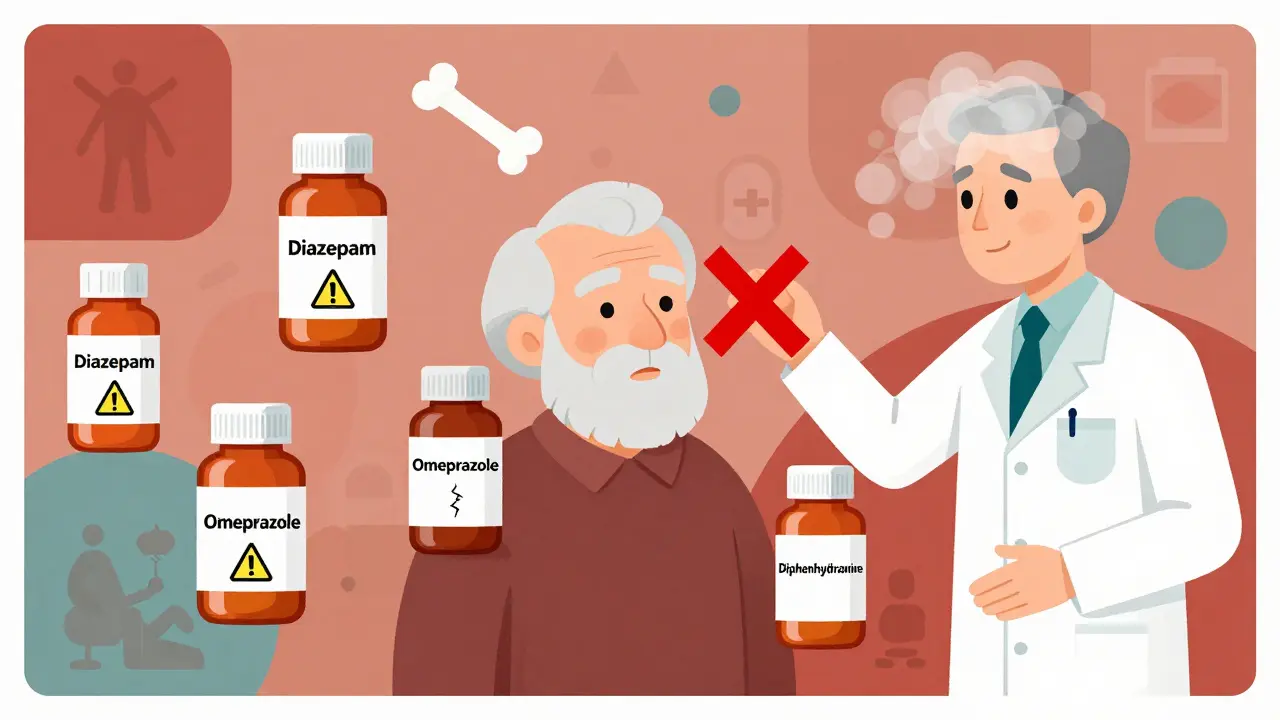
If your loved one takes five or more medications daily, they’re in a high-risk group. That’s called polypharmacy. According to the CDC, adults over 65 on five or more drugs have an 88% higher chance of a dangerous reaction. It’s not about taking too many pills - it’s about taking the wrong ones. The Beers Criteria, updated annually by the American Geriatrics Society, lists 30 medications that are risky for older adults. Common ones include:- Benzodiazepines (like diazepam or lorazepam) - increase fall risk and confusion
- Proton pump inhibitors (like omeprazole) - linked to kidney damage and bone loss with long-term use
- Anticholinergics (like diphenhydramine in Benadryl) - cause memory problems and dizziness
Use the Right Tools - No Household Spoons
Measuring liquid medicine with a kitchen spoon is one of the most common - and dangerous - mistakes. A 2021 JAMA Pediatrics study showed household spoons vary in volume by 20% to 40%. That’s not a small error. That’s a dangerous overdose or underdose. Always use:- An oral syringe (the kind with milliliter markings)
- A dosing cup that comes with the medicine
- A measuring spoon labeled in mL or tsp - never a regular spoon
Prevent Look-Alike, Sound-Alike Errors
Some drug names are dangerously similar. HydroXYZINE (for anxiety) vs. hydroCORTISONE (for skin rashes). ClonIDINE (for blood pressure) vs. clonazepam (for seizures). These mix-ups happen more often than you think - 15% of all reported medication errors, according to the Institute for Safe Medication Practices. To avoid them:- Always read the label out loud before giving the pill
- Ask the pharmacist to use clear, bold labels
- Keep similar-looking pills in separate containers
- Take a photo of the bottle and label when you pick it up - compare it when refilling
Sync Refills and Talk to the Pharmacist
Getting prescriptions on different schedules is a recipe for confusion. One drug refills on Monday. Another on Thursday. Another on Friday. It’s easy to miss one - or double up. Major pharmacy chains like CVS and Walgreens now offer free medication synchronization. You pick one day each week - say, Wednesday - and all your prescriptions are ready then. A 2023 University of Pittsburgh study found this reduced missed doses by 39%. Also, don’t skip the pharmacist. Every time you pick up a new prescription, spend 15 minutes asking:- "What is this for?"
- "What side effects should I watch for?"
- "Can this interact with any other meds?"
- "Is there a cheaper or safer option?"
Do a Monthly Medication Check
Set aside 10 minutes each week to look at all the meds. Check:- Expiration dates - expired pills can lose strength or become harmful
- Storage conditions - most meds need to stay dry and cool (68-77°F). Don’t keep them in the bathroom or car
- Empty bottles - are pills disappearing faster than they should? That could mean someone is taking them
- Unused meds - are there pills no one is taking anymore? Ask the doctor if they can be stopped
Plan for Transitions - Hospital to Home
The most dangerous time for medication errors is when someone leaves the hospital. A 2022 study by Dr. Joanne Lynn found that 62% of errors happen in this transition. Discharge papers are confusing. Pills are changed. Instructions are rushed. Before your loved one leaves the hospital:- Ask for a written list of all meds - old and new
- Request a medication reconciliation meeting - where the nurse or pharmacist compares what they were on vs. what they’re going home with
- Confirm with the pharmacist: "Are any of these new? Are any being stopped?"
- Use the CARE Act: In 47 states, hospitals are required to educate caregivers before discharge. Don’t let them skip this.
Consider Digital Tools - But Know the Limits
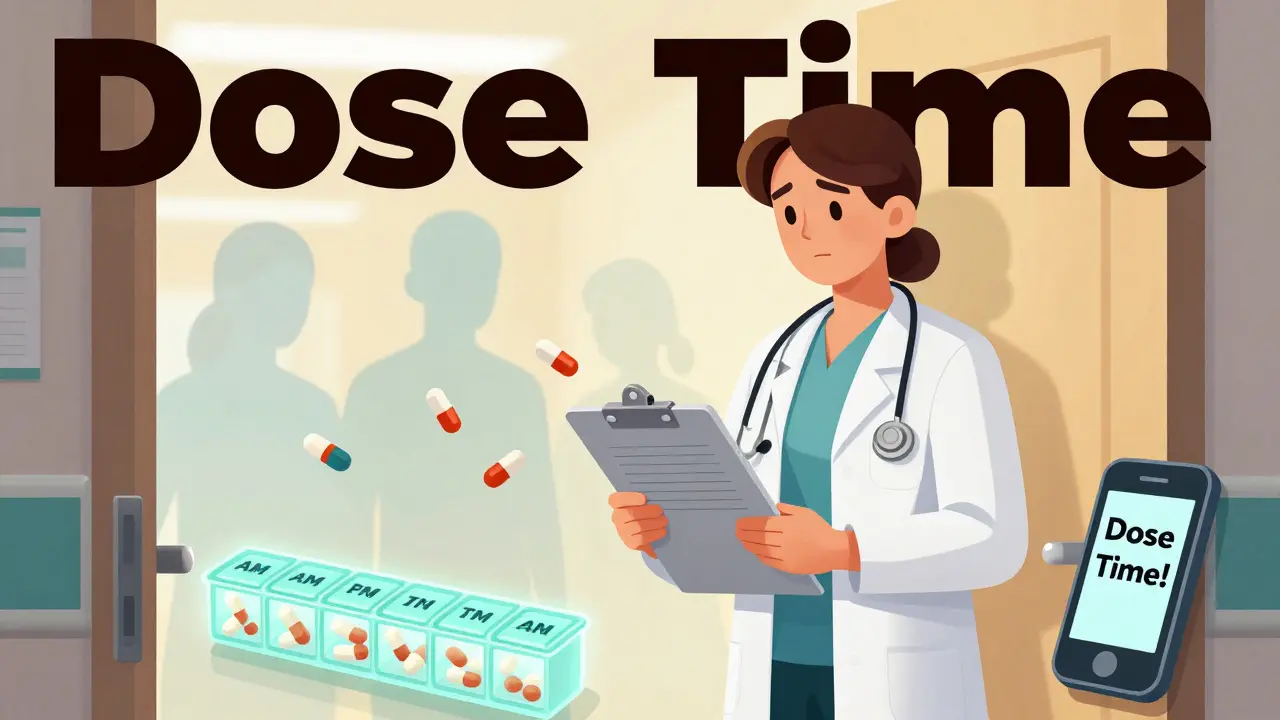
Apps like Medisafe and CareZone send reminders, track doses, and alert you to interactions. A 2023 Caregiver Action Network survey found users had 32% fewer missed doses than those using paper logs. But not everyone can use them. A 2023 National Institute on Aging focus group found 27% of caregivers over 65 found apps frustrating. If tech isn’t your thing, stick with paper lists, pill organizers, and alarms. The goal isn’t to use the fanciest tool. It’s to use something that works - consistently.Get Certified - It’s Coming
In November 2024, the Caregiver Action Network will launch the first official Caregiver Medication Safety Certification program. It’s a free, evidence-based training developed with the American Pharmacists Association. It covers everything in this guide - and more. You don’t have to wait. Start now. Print this list. Talk to your pharmacist. Write down every pill. Check expiration dates. Ask questions. These aren’t extra steps. They’re lifesavers.Medication Safety Isn’t Optional - It’s Essential
You didn’t become a caregiver because you wanted to be a pharmacist. But you are one now. And the stakes are high. Medication errors cause 30% of hospital readmissions within 30 days, according to JAMA. They cost the U.S. system $42 billion a year. And most of them happen because no one double-checked. You have the power to change that. Not with fancy gadgets. Not with perfect memory. Just with attention. With questions. With a list. With a syringe. With a weekly check. The next time you hand your loved one a pill - pause. Read the label. Ask yourself: "Is this right?" That pause could save their life.What’s the most common cause of medication errors in home care?
The most common cause is poor communication and lack of accurate documentation. Caregivers often rely on memory, misread labels, or don’t update medication lists after doctor visits. Illegible prescriptions, mixing up look-alike drug names, and using household spoons to measure liquids are top contributors. According to the Ontario Caregiver Centre, 37% of errors come from handwritten prescriptions that are hard to read.
How many medications are too many for an older adult?
Taking five or more medications daily is considered polypharmacy and significantly increases the risk of harmful side effects, drug interactions, and falls. The Beers Criteria identifies 30 specific drugs that are especially risky for seniors. If your loved one is on five or more, ask their doctor or pharmacist to review each one: Is it still needed? Is there a safer alternative? The CDC and American Geriatrics Society recommend a full med review at least once a year.
Should I use a pill organizer for someone with dementia?
Yes - and it’s strongly recommended by the Alzheimer’s Association. A seven-day pill organizer with separate AM and PM compartments helps prevent missed or double doses. Pair it with alarms on your phone or a dedicated pill dispenser with voice reminders. One caregiver reported that after using a labeled organizer, her mother’s adherence jumped from 40% to 95% in three weeks. It’s simple, affordable, and life-changing.
Can I give expired medication?
No. Expired medications can lose effectiveness or break down into harmful substances. The FDA says most pills are safe for a year or two past expiration, but this doesn’t apply to insulin, liquid antibiotics, or nitroglycerin - those can become dangerous. Always check expiration dates monthly. If in doubt, take it to a pharmacy for safe disposal. Don’t flush it or throw it in the trash.
How do I know if a medication is causing side effects?
Watch for sudden changes: confusion, dizziness, falls, nausea, extreme fatigue, or skin rashes. These often appear within days of starting a new drug or changing a dose. Keep a simple journal: "Date, Med, New Symptom." Share it with the doctor. Many side effects are mistaken for aging - but they’re often drug-related. A 2021 NEJM study found nearly half of older adults take at least one drug with more risks than benefits. Don’t ignore new symptoms.
What should I do if I think a mistake was made?
Stop giving the medication immediately. Call the prescribing doctor or pharmacist. Don’t guess. Don’t wait. If the person is having a severe reaction - trouble breathing, swelling, chest pain - call emergency services. For less urgent concerns, request a medication therapy management (MTM) review. Medicare Part D now offers this free service for people taking eight or more chronic meds. Pharmacists can spot interactions, duplications, or unnecessary drugs.
Are there free resources to help me manage meds?
Yes. The Caregiver Action Network offers free printable medication lists and safety checklists. The CDC has downloadable guides for caregivers. Most pharmacies offer free medication synchronization to align refill dates. Medicare Part D beneficiaries can get free medication reviews. And in 2024, the Caregiver Medication Safety Certification will be available at no cost. Start with your local pharmacy - they’re trained to help.
Comments
Matthew Hekmatniaz January 2, 2026 at 02:00
Been using a printed med list for my mom since last year. Changed my life. Used to stress over whether she took her blood pressure pill at 8 or 9. Now it’s just a quick glance. Also started taking photos of every new prescription bottle - saves so much confusion when refills come in different shapes.
Biggest win? Got her pharmacist to print a one-page summary with colors for each med. She can’t read small print anymore, but she knows blue = morning, red = night. Simple stuff, huge difference.
Liam George January 2, 2026 at 06:44
They don’t want you to know this - but pharmaceutical companies profit from polypharmacy. Five meds? Ten meds? They’re not fixing you - they’re monetizing dependency. The Beers Criteria? Just a PR tool. The real issue is the FDA’s cozy relationship with Big Pharma. They approve drugs that should’ve been banned decades ago.
And don’t get me started on pill organizers. They’re surveillance tools disguised as safety aids. Who’s tracking your dose patterns? Who’s selling that data? You think this is about safety? It’s about control.
sharad vyas January 2, 2026 at 14:06
In India, many elders take medicine without labels. Sometimes, they just know the color. I once saw a man take a red pill thinking it was for heart - but it was for diabetes. No one wrote anything down. No one asked.
What this post says is true - but it’s hard when you don’t have access to pharmacies or doctors. Maybe the real solution isn’t just lists - it’s community. Someone who checks in. Someone who listens. Not just a paper.
Dusty Weeks January 4, 2026 at 01:49
OMG YES. I used a spoon once. Like, a regular spoon. My grandma almost went to the ER. I felt so dumb. Now I have 3 syringes and a whole drawer labeled "MED STUFF". Also I use emojis to track meds 🟢=taken 🚫=missed 🤕=side effect. It’s dumb but it works. My phone is full of screenshots of pill bottles. I’m basically a med detective now 😎
Sally Denham-Vaughan January 5, 2026 at 06:11
My aunt’s pharmacist caught a dangerous interaction between her antidepressant and a common OTC sleep aid. She’d been taking it for years. No one ever asked. That’s the thing - pharmacists are the unsung heroes here. They’re not just handing out pills. They’re saving lives. Next time you pick up a script, say thanks. And ask questions. No shame in it.
Also - pill organizers are magic. Get the ones with alarms. Even if you think you’re tech-averse. It’s worth the 15 minutes to learn.
Bill Medley January 5, 2026 at 22:17
Accurate documentation prevents harm. Consistent communication reduces error. Systematic review enhances safety. These are not suggestions. They are standards of care.
Failure to implement them constitutes negligence - not ignorance.
Richard Thomas January 5, 2026 at 22:27
I’ve been thinking about this a lot since my dad’s stroke. We were so focused on recovery, on rehab, on the big stuff - that we didn’t notice he was still taking his old cholesterol med, even though his doctor had stopped it months before. The bottle was just sitting there. He didn’t remember. I didn’t check.
It made me realize: safety isn’t about being perfect. It’s about being present. It’s about showing up, day after day, even when you’re tired. Even when you’re overwhelmed. Even when you don’t feel like a pharmacist. You are one. Because you care. And that’s the only credential that matters.
I started writing everything down. Not because I’m organized - but because I’m afraid. Afraid of what I might miss. Afraid of what I might have already missed.
So now I check the expiration dates. I take pictures of labels. I ask the pharmacist the same three questions every time. And sometimes, I just sit with him while he takes his pills. Not to watch. Not to control. Just to be there. Because sometimes, the most dangerous thing isn’t the medicine. It’s the silence.
Paul Ong January 7, 2026 at 09:03
Print the list. Use the syringe. Set the alarm. Check the bottle. Ask the pharmacist. That’s it. No apps needed. No certifications. Just do the damn thing.
Stop overthinking. Start doing.
One day at a time. One pill at a time.
You got this
Andy Heinlein January 7, 2026 at 15:31
My sister swears by the CareZone app - says it saved her dad from a bad interaction. But I’m 68 and I still use a notebook and a Sharpie. I write in big letters. I color code. I put it on the fridge next to the grocery list. My grandkids even help me check the dates now. It’s become a family thing. We laugh about it - but we don’t skip it.
And yeah I misspelled "medication" just now. But I got the pill in his hand. That’s what counts.
Ann Romine January 9, 2026 at 12:55
When I started caring for my mother, I didn’t know what "anticholinergic" meant. I still don’t. But I learned to ask: "Is this still necessary?" And I learned to write down every single thing - even the herbal tea she swears helps her sleep. Turns out, it interacts with her blood thinner. I never would’ve known if I hadn’t written it down.
It’s not about being an expert. It’s about being curious. And stubborn. And willing to look stupid asking questions.
That’s the real safety net.