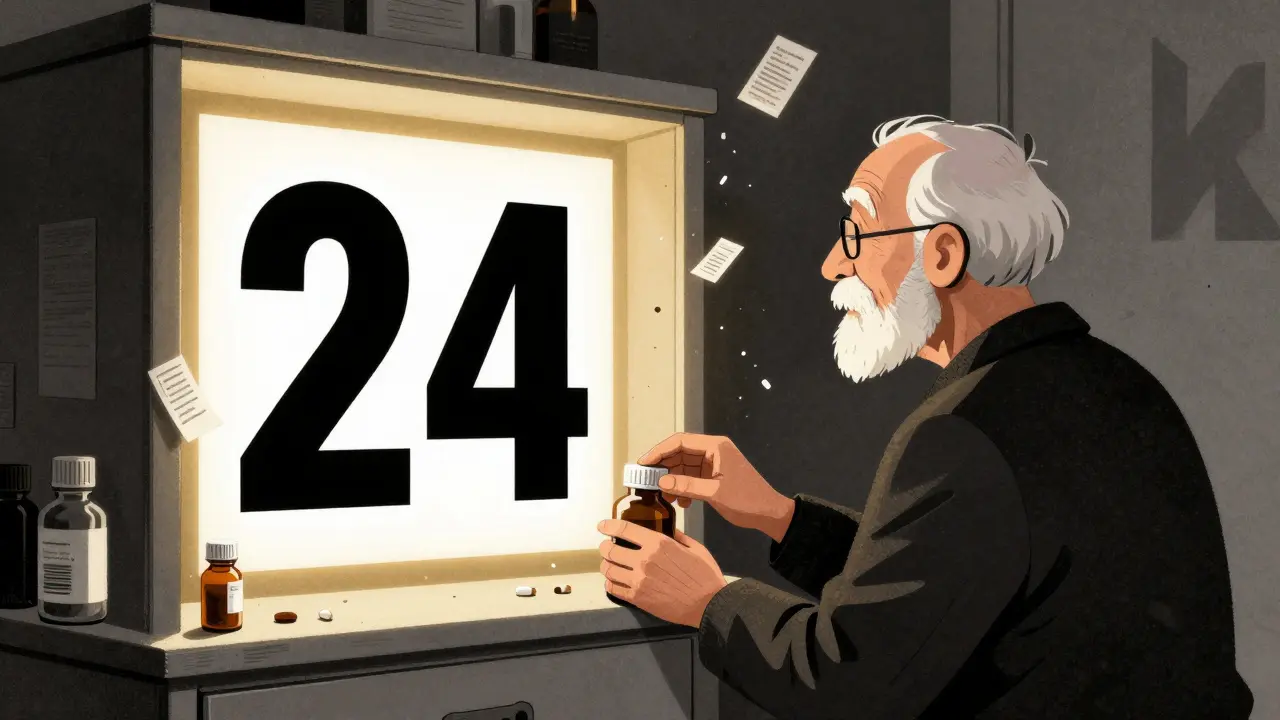
Imagine opening your medicine cabinet and not being able to read what’s inside. Not just a little blurry - completely unreadable. For millions of people with low vision, this isn’t a hypothetical. It’s daily reality. And the stakes? Life or death. Taking the wrong pill, at the wrong time, in the wrong dose - it happens more often than most people realize. But there’s a simple, proven fix: large print and accessible prescription labels.
Why Standard Prescription Labels Fail People with Low Vision
Most pharmacy labels are printed in tiny, 8- to 10-point font. That’s fine if you have 20/20 vision. But for someone with macular degeneration, glaucoma, diabetic retinopathy, or just age-related vision loss? It’s useless. A 2021 CDC survey found that 20% of adults over 45 struggle to read standard prescription labels. That’s nearly 1 in 5 people. And it’s not just about inconvenience. The National Center for Biotechnology Information found that people with low vision take up to 8 seconds longer to read a label - time that could mean mistaking a blood pressure pill for a diabetes pill. Standard labels also cram too much info into too little space. Name, dosage, instructions, refill date, pharmacy contact - all crammed in a font so small it needs a magnifier. And even then, glare from glossy paper or poor contrast makes it worse. No wonder so many people end up guessing what’s in their bottle.What Makes a Label Actually Accessible?
Accessible doesn’t mean “bigger font.” It means designed for real use. The American Foundation for the Blind (AFB) and the Access Board have laid out clear standards - and they’re not suggestions. They’re requirements under the FDA Safety and Innovation Act of 2012.- Font size: Minimum 18-point. Some people need 20- or 24-point. Standard pharmacy labels can’t fit everything at 18-point - so pharmacies use duplicate labels. One small one stays on the bottle. The large print one goes in the bag or gets taped to the outside.
- Font type: Sans-serif fonts like Arial, Verdana, or APHont™ (a free font designed specifically for low vision by the American Printing House for the Blind). Serif fonts? Avoid them. The little lines on letters like “i” and “l” make them harder to distinguish.
- Contrast: Black text on pure white background. No gray, no cream, no beige. High contrast = faster reading. Glare-free paper is a must.
- Layout: Left-aligned text. All lowercase letters except for numbers in instructions (like “Take 2 TABLETS”). Yellow highlighting for critical info like “Take with food” or “May cause drowsiness.”
The Three Main Types of Accessible Labels
Not all accessible labels are the same. There are three main types - each with pros and cons.1. Large Print Labels
The most common and easiest to use. Printed on durable, matte paper in 18-point or larger font. No tech needed. Just read it like a book. Pros: Immediate. No batteries. No phone. Works for anyone who can see, even a little. Free at most major pharmacies. Cons: Takes up more space. Can’t fit everything on a small pill bottle - so you get a second, larger label. Some pharmacists still don’t offer it unless you ask.2. Audible Labels (ScripTalk)
These use RFID chips embedded in the label. You hold a small handheld reader (or use a smartphone app) over the bottle, and it speaks the label aloud: “Metformin 500 mg. Take one tablet twice daily with meals.” Pros: Full audio description. Can include refill reminders, side effects, drug interactions. Works for people who are blind or have very low vision. Used by CVS, Walgreens, and other big chains. Cons: Requires a device. Costs $150-$200 per reader. Not everyone knows how to use it. Older users may find tech intimidating.3. QR Code Labels (ScriptView)
A QR code on the label links to an audio recording via smartphone. Scan it, and you hear the instructions. UK HealthCare’s ScriptView system also lets you download recordings for offline use. Pros: No extra hardware needed if you have a phone. Can store long audio files. Easy to update if dosage changes. Cons: Requires smartphone, data, and basic tech skills. Doesn’t work if your phone dies or you don’t have internet.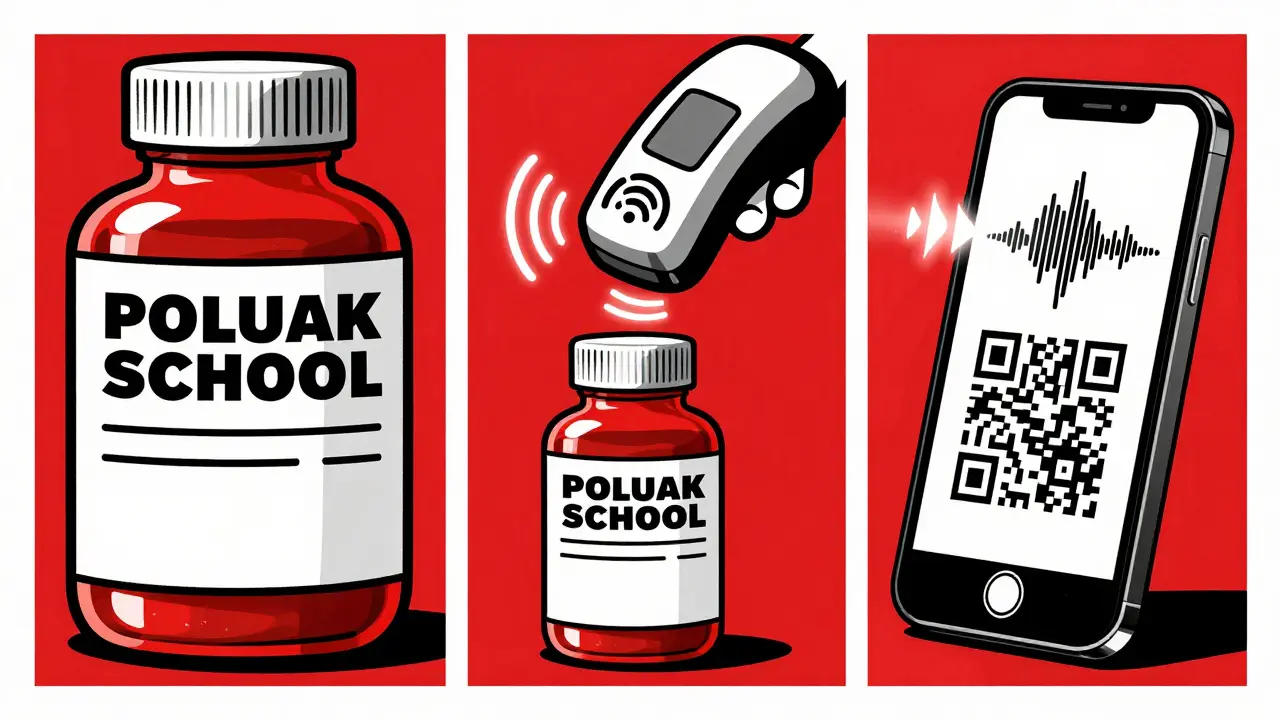
What’s Working? Real Stories from Real People
People aren’t just grateful - they’re saved. One Reddit user, ‘VisionLiberation,’ wrote in March 2023: “Since my pharmacy started offering large print labels (18pt Arial), I’ve stopped taking the wrong pills twice a week like I was doing before - it’s literally life-changing.” A 78-year-old diabetic in Kentucky switched to ScriptView labels with QR code audio. Before? She had three hypoglycemic episodes in one month. After? A 75% drop. She now manages her insulin without help. Healthgrades has over 1,200 reviews of pharmacies offering accessible labels. The average rating? 4.7 out of 5. The top two comments? “Finally being able to read my meds independently” and “I don’t panic anymore when I open my pill bottle.”How to Get Accessible Labels - Step by Step
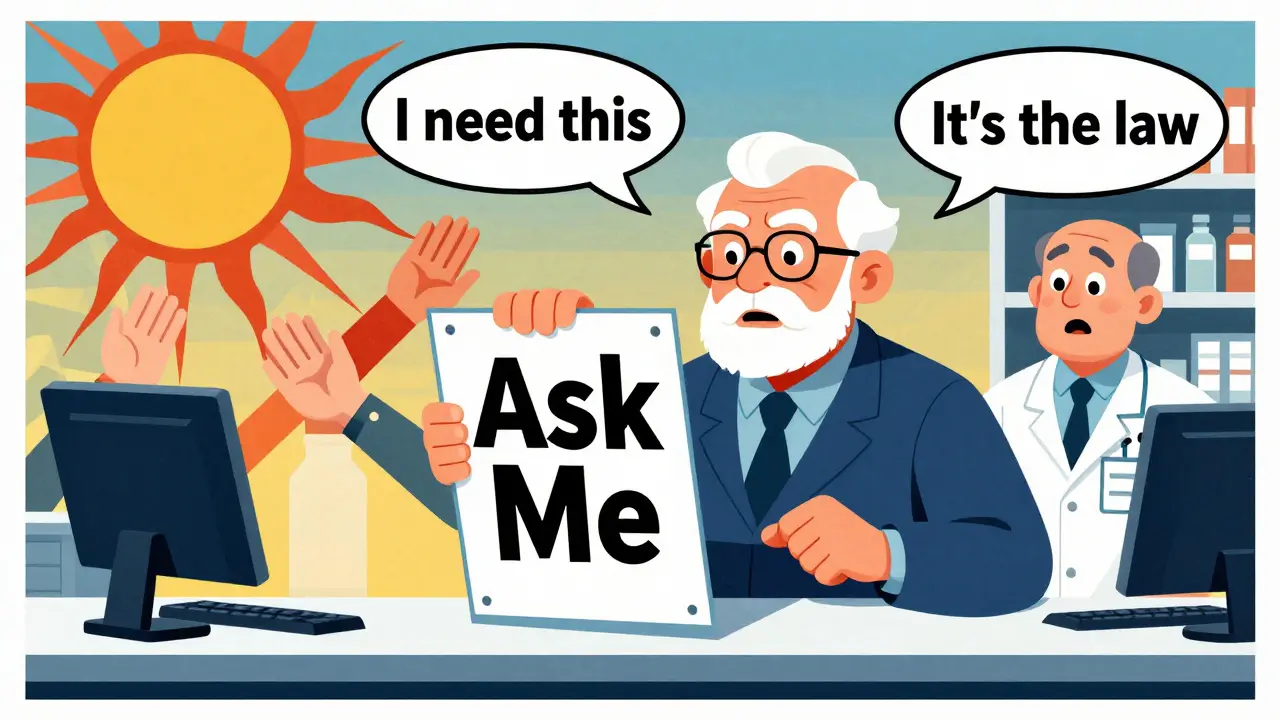
You don’t have to wait for your pharmacy to offer this. You can ask - and you have the right to it.- Ask your pharmacist: Say, “I have low vision. Can you print my prescriptions in large print or provide an audible label?” Don’t say “Is this available?” Say “I need this.”
- Know your options: Ask specifically about ScripTalk, large print, or QR code labels. Not all pharmacies offer all three.
- Request duplicate labels: If the bottle is too small, ask for a second, larger label to keep with your meds.
- Ask for training: If you’re getting ScripTalk or QR codes, ask the pharmacist to show you how to use it. Most will do it for free.
- Call ahead: Some pharmacies keep large print labels in stock. Others need 24 hours. Call before you pick up.
Why Some Pharmacies Still Don’t Offer This
You’d think this would be universal by now. But it’s not. Independent pharmacies? Only about half offer any form of accessible labeling. Why? Cost. Setting up ScripTalk readers costs $500-$2,000 per location. Training staff takes time. Some small pharmacies just can’t afford it. Also, many pharmacists don’t know the rules. A 2022 survey found 37% of negative reviews cited: “My pharmacist didn’t even know about accessible labels.” That’s not your fault. It’s the system’s failure. But here’s the good news: Big chains are catching up fast. CVS now offers ScripTalk in over 9,800 locations. Walgreens and Walmart are close behind. And by 2026, the American Pharmacists Association predicts 100% of U.S. pharmacies will offer large print labels.What’s Coming Next?
The future of accessible labels is digital - and it’s already here. CVS just announced a $15 million investment to expand ScripTalk to every single one of its 9,900 U.S. pharmacies by late 2024. That’s huge. The FDA is also moving to require accessible labels on electronic prescriptions and patient portals by 2026. That means if you log into your pharmacy app, you’ll be able to hear or enlarge your label there too. New tech like Be My Eyes’ AI-powered label reader lets you point your phone at a label and get instant audio help from a live volunteer. Over 1.2 million labels have been read this way since June 2023.What You Can Do Today
You don’t need to wait for change. You can start now.- Ask for large print or audible labels on your next prescription.
- If your pharmacy doesn’t offer it, ask for a printed copy you can enlarge at home - or use your phone’s camera to zoom in.
- Help someone else. If you know someone with low vision, offer to go with them to the pharmacy. Help them ask for the right labels.
- Report pharmacies that refuse. Contact the National Federation of the Blind or your state’s pharmacy board. You’re not being difficult - you’re protecting lives.
Are large print prescription labels free?
Yes. Large print, audible (ScripTalk), and QR code labels are offered for free at major U.S. pharmacies like CVS, Walgreens, and Walmart. You don’t pay extra - it’s part of their service under the FDA’s accessibility rules. Some independent pharmacies may charge, but they’re required to provide accommodations under the ADA.
Can I get large print labels for over-the-counter meds?
Pharmacies are not legally required to provide accessible labels for over-the-counter drugs - but many will if you ask. Some pharmacies keep large print copies of common OTC meds on hand. If they don’t, ask if they can print a custom label with dosage and warnings in 18-point font. You’re not being unreasonable - you’re being smart.
What if my pharmacist says they don’t have the equipment?
Say: “I understand you may not have the system set up, but under the ADA and FDA rules, you’re required to provide accessible labels. Can you order large print labels or refer me to a nearby pharmacy that does?” Most will comply when reminded of the law. If they refuse, file a complaint with your state pharmacy board or the National Federation of the Blind.
Do I need a doctor’s note to get accessible labels?
No. You do not need a doctor’s note, proof of diagnosis, or a vision test. All you need to say is: “I have trouble reading small print.” That’s enough. Pharmacies are required to accommodate based on your stated need - not your medical records.
Can I use a magnifying app on my phone instead?
You can, but it’s not ideal. Phone cameras often distort text, create glare, or miss small print. Plus, you need to hold your phone steady, which can be hard with shaky hands. Accessible labels are designed for quick, reliable reading - without tech. Use your phone as a backup, not a replacement.
How do I know if my pharmacy offers ScripTalk?
Check the pharmacy’s website - CVS, Walgreens, and Walmart list ScripTalk under accessibility services. You can also call and ask: “Do you offer RFID-based audible prescription labels?” If they say yes, ask for a demo. The reader is small, about the size of a key fob, and easy to use.
Comments
doug b January 27, 2026 at 16:04
Just asked my pharmacy for a large print label today. They gave it to me without a fuss. No doctor’s note, no hassle. If you can read it, you can live better. Simple as that.
Rose Palmer January 28, 2026 at 13:27
It is imperative that pharmacists recognize their legal obligations under the Americans with Disabilities Act and the FDA Safety and Innovation Act. Accessible labeling is not an accommodation-it is a civil right. Failure to comply constitutes discrimination.
Lance Long January 29, 2026 at 00:15
Oh my GOD. I had a friend who almost died because she took her husband’s blood pressure pill thinking it was her diabetes med. She’s 76, blind in one eye, and her pharmacy didn’t even know what ‘large print’ meant. I cried for a whole hour. Then I drove her to CVS and made them show me how ScripTalk works. Now she reads her meds like a book. I swear to you, if you’re reading this and you have a loved one struggling-go with them. Don’t wait. It’s not about being nice. It’s about keeping them alive.
Timothy Davis January 29, 2026 at 04:44
Let’s be real-most people who claim they ‘can’t read labels’ just don’t want to use their phone’s zoom feature. You don’t need 18-point font. You need to adapt. This whole ‘accessible label’ movement is just another example of over-regulation. The FDA doesn’t need to micromanage pharmacy typography.
John Rose January 29, 2026 at 22:17
I’m so glad this is getting more attention. My grandma started using ScripTalk last year and now she takes her meds without me. That’s the best gift you can give someone with low vision-autonomy. Keep pushing for this. It’s not just about labels, it’s about dignity.
Colin Pierce January 31, 2026 at 05:40
Biggest tip I’ve learned: if they say they don’t have large print, ask for a printed copy you can take to a copy shop. Most places will do it for free or $2. Or use Google Lens-it works better than you think. I’ve scanned labels and zoomed to 300% on my phone and read them perfectly. Not ideal, but better than guessing. Also, if you’re in a small town, call ahead. Pharmacies with fewer customers often don’t stock it unless they know you’re coming.
Mark Alan February 1, 2026 at 23:56
THIS IS A NATIONAL EMERGENCY 😭🇺🇸 My aunt almost went to the ER because she took 4 pills instead of 1. They didn’t even have a magnifier at the pharmacy. I’m so mad. We need to make this mandatory. Like, RIGHT NOW. #AccessibleLabelsNow #NoMoreGuessingGames
Amber Daugs February 3, 2026 at 18:40
People like you who demand ‘accessible labels’ are the reason pharmacies are going out of business. You want everything handed to you on a silver platter. Why can’t you just use a magnifying glass? Or ask your grandkid? It’s not the pharmacy’s job to cater to every minor inconvenience. This is entitlement culture at its worst.