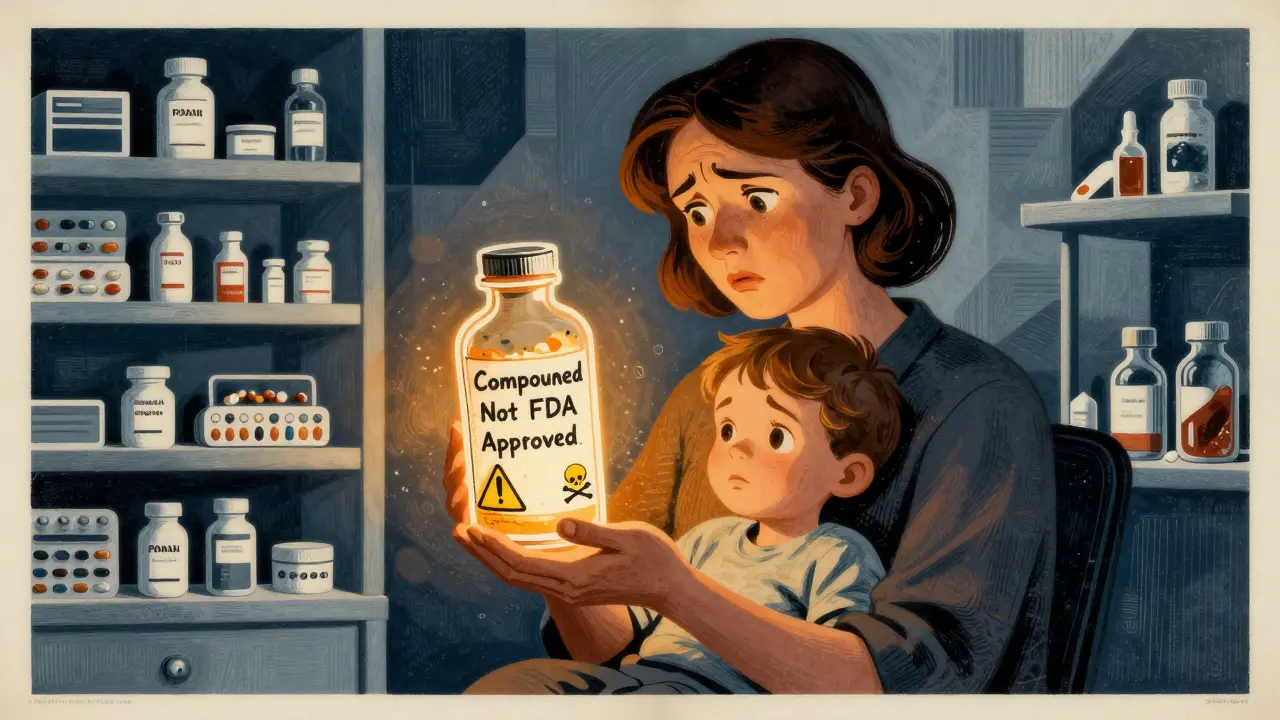
When your child needs a medication that isn’t available in a store-bought form, compounded medications can feel like a lifeline. Maybe they can’t swallow pills. Maybe they’re allergic to dyes or preservatives. Or perhaps the only available version is too strong, and the pharmacist is asked to dilute it to a safe dose. These custom-made drugs are made by licensed pharmacists to fit a child’s exact needs. But here’s the hard truth: compounded medications aren’t FDA-approved. That means no government agency checks their safety, strength, or purity before they reach your home. And for kids, that gap can be deadly.
Why Compounded Medications Are Used for Children
Pediatric compounding isn’t about convenience-it’s about necessity. Commercial drugs are made for adults. They come in pills, capsules, or adult-sized doses. Kids need different forms. A 3-year-old can’t swallow a 10mg tablet. A newborn can’t handle alcohol or sugar in their medicine. A child with diabetes needs sugar-free options. A child with a severe allergy needs preservative-free injections. Common reasons for compounding in children include:- Liquid forms instead of pills or capsules
- Flavoring to mask bitter tastes (like strawberry or bubblegum)
- Sugar-free formulas for diabetic children
- Alcohol- and dye-free preparations for sensitive kids
- Diluting adult-strength drugs (like morphine or fentanyl) into tiny, safe doses for babies
- Removing allergens like lactose or gluten from the formula
The Hidden Dangers of Compounded Drugs
The biggest danger isn’t the drug itself-it’s the lack of oversight. Unlike FDA-approved medications, compounded drugs don’t go through testing for purity, potency, or stability. The FDA doesn’t inspect them before they’re given to patients. That’s not a loophole-it’s the law. According to the Institute for Safe Medication Practices, 14% to 31% of pediatric medication errors involve compounded drugs. Most of these are dosing errors. A child might get 10 times too much-or 40% too little. One parent on Reddit reported their 8-year-old ended up in the ER after a compounded levothyroxine dose was far weaker than prescribed. The child developed hypothyroid symptoms because the pharmacy got the concentration wrong. Then there’s contamination. In 2012, a compounding pharmacy shipped fungal-contaminated spinal injections. Nearly 800 people got sick. Sixty-four died. The outbreak wasn’t caused by a new drug-it was caused by dirty equipment and untrained staff. Even worse, some pharmacies are now making large batches of compounded drugs for popular medications like semaglutide and tirzepatide, even after FDA-approved versions became available. As of December 2024, the FDA recorded over 900 adverse events linked to these compounded versions-including 17 deaths. Children are more likely to suffer gastrointestinal problems, fainting, or acute pancreatitis from these errors.How to Find a Safe Compounding Pharmacy
Not all compounding pharmacies are the same. Some are run by highly trained professionals with strict controls. Others operate with minimal oversight. You need to know how to tell the difference. Look for accreditation. The two gold standards are:- PCAB (Pharmacy Compounding Accreditation Board)
- NABP (National Association of Boards of Pharmacy)
What to Ask Before Your Child Takes the Medication
Never assume the dose is correct. Never assume the label is accurate. Always double-check. Here’s what you must ask the pharmacist before leaving the pharmacy:- “What is the exact concentration?” (e.g., 5 mg/mL, not just “10 mg per teaspoon”)
- “How was this dose calculated?” Did they use the child’s weight? Age? Medical history?
- “Is this a sterile preparation?” (For injections or IV meds, this is critical)
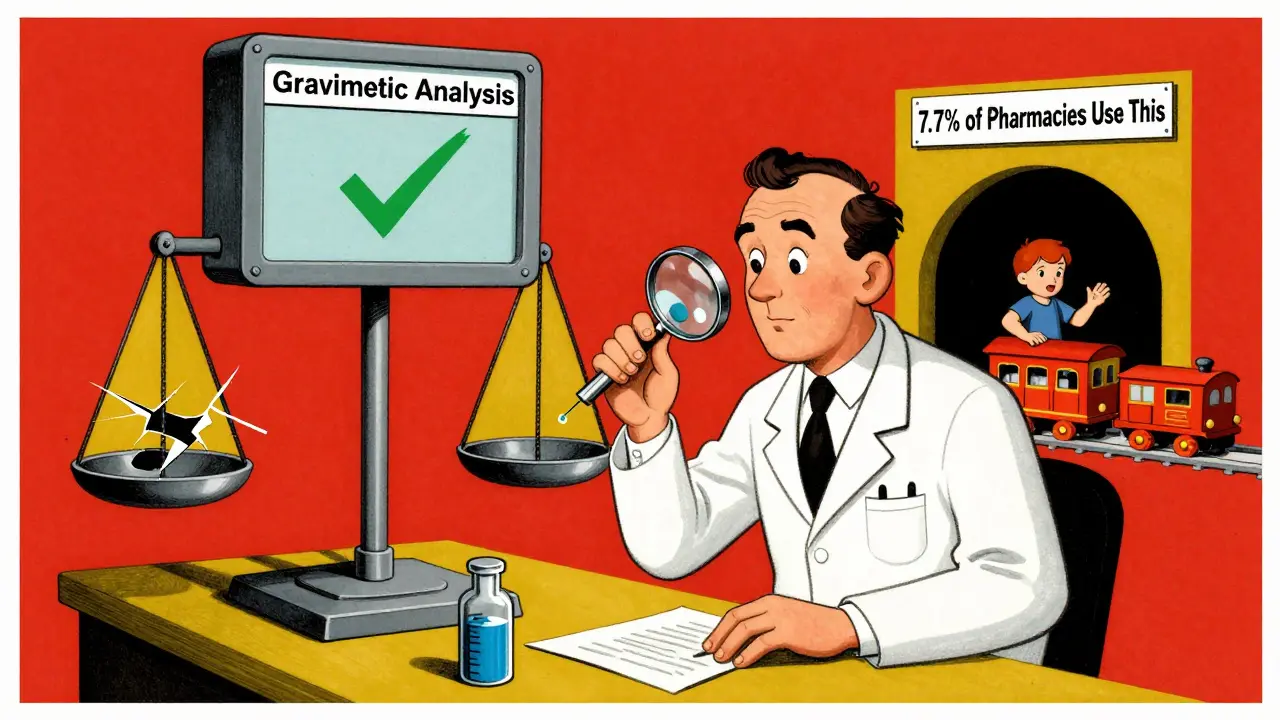
- “Do you use gravimetric analysis?” (This is a precise weighing method that reduces errors by up to 75%)
- “Can I see the original prescription and the compounding log?”
How to Measure and Give the Dose Correctly
Once you get the medication home, the risk isn’t over. Many parents use kitchen spoons to measure liquid meds. That’s dangerous. Always use:- A calibrated oral syringe (not a cup or spoon)
- A dosing device that matches the concentration (e.g., if it’s 2 mg/mL, use a syringe marked in milliliters, not teaspoons)
- A clean, dry syringe-never reuse or rinse with water
When to Avoid Compounded Medications Altogether
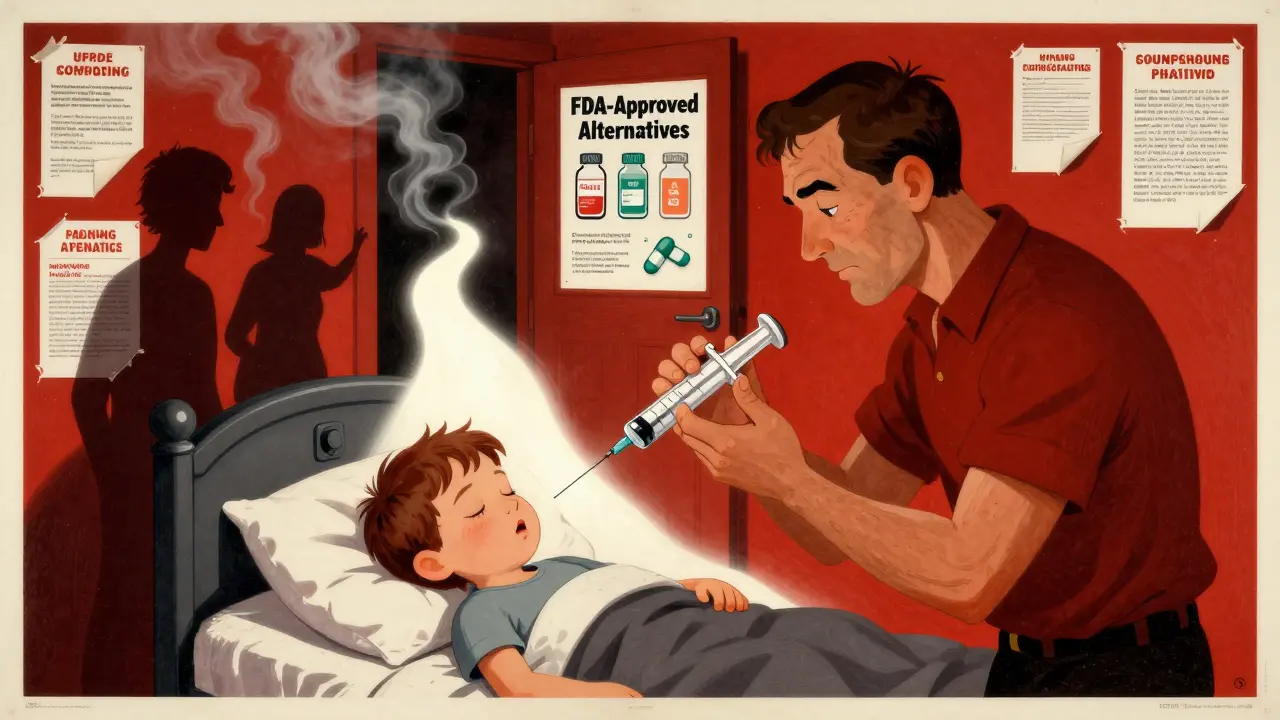
Compounded drugs should be a last resort. If an FDA-approved version exists-even if it’s more expensive or harder to get-choose that instead. For example:- For thyroid replacement, use FDA-approved levothyroxine tablets that can be crushed or dissolved in water.
- For antibiotics, use commercially prepared pediatric suspensions with flavoring already added.
- For pain relief, use pre-measured liquid acetaminophen or ibuprofen instead of compounded versions.
The Technology That Could Save Lives-And Why It’s Rare
There’s a simple, proven way to prevent most dosing errors: gravimetric analysis. It’s a system that uses ultra-precise digital scales to weigh ingredients instead of relying on volume measurements. It’s accurate to within 0.1%. Hospitals that use it report a 75% drop in pediatric compounding errors. But only 7.7% of U.S. hospitals use it. Why? It costs $25,000 to $50,000 per station. It requires 6-8 weeks of training for technicians. Many small pharmacies can’t afford it. The Emily Jerry Foundation was started after a 2-year-old died in 2006 from a compounded chemotherapy error. Her parents found out the pharmacy had the technology to prevent the mistake-but didn’t use it. Since then, 28 states have introduced “Emily’s Law” bills to require gravimetric analysis for pediatric sterile compounding. None have passed nationwide. Until that changes, the burden falls on parents to ask the right questions and demand the safest options.What to Do If Something Goes Wrong
If your child has an unexpected reaction-vomiting, drowsiness, rash, rapid heartbeat, or signs of overdose-stop the medication immediately and call your doctor or go to the ER. Bring the medication bottle and the prescription with you. Report the incident to:- The FDA’s MedWatch program (online at fda.gov/medwatch)
- The Institute for Safe Medication Practices (ismp.org/report)
- Your state’s pharmacy board
Final Thought: Trust, But Verify
Compounded medications can be lifesaving. But they’re not safe by default. They’re only as safe as the people who make them-and the questions you ask. Don’t be afraid to challenge your pharmacist. Don’t assume your doctor knows the risks. You are your child’s last line of defense. If you’re unsure, get a second opinion. Ask another pharmacist. Call your child’s specialist. Write down every detail. Keep records. Ask for proof. Demand accountability. Because when it comes to your child’s medicine, there’s no room for guesswork.Are compounded medications FDA-approved?
No, compounded medications are not FDA-approved. The FDA does not review their safety, effectiveness, or quality before they are dispensed. This means there’s no guarantee the dose is correct, the ingredients are pure, or the product is stable. Compounded drugs are made on a case-by-case basis and fall under state pharmacy regulations, not federal drug approval.
Can I trust any pharmacy that compounds medications?
No. Only about 1,400 of the 7,200+ compounding pharmacies in the U.S. are accredited by PCAB or NABP. These accreditations mean the pharmacy follows strict safety standards for cleanliness, training, and accuracy. Always ask if the pharmacy is accredited and verify their license through your state’s pharmacy board website.
What’s the safest way to measure a compounded liquid for my child?
Always use a calibrated oral syringe, not a kitchen spoon or cup. Make sure the syringe matches the concentration listed on the label (e.g., if it’s 5 mg/mL, measure in milliliters). Never guess the dose. Write down the exact amount, time, and date each time you give it. If the medicine looks cloudy, smells odd, or has particles, don’t use it.
Why do some children get sick after taking compounded drugs?
The most common reasons are dosing errors (too much or too little), contamination from unclean equipment, or incorrect ingredients. For example, a compounded levothyroxine might be 40% weaker than prescribed, causing hypothyroid symptoms. Or a sterile injection might contain fungi or bacteria. The FDA has documented over 900 adverse events linked to compounded semaglutide and tirzepatide, including 17 deaths.
Is there a safer alternative to compounded medications for kids?
Yes. Always ask your doctor or pharmacist if there’s an FDA-approved version available-even if it’s more expensive or harder to find. Many medications now come in flavored liquids, dissolvable tablets, or pre-measured doses designed for children. For example, levothyroxine tablets can be crushed and mixed with water. Antibiotics are often available in pre-formulated pediatric suspensions. Compounded drugs should only be used when no approved alternative exists.
What should I do if I suspect a compounding error?
Stop giving the medication immediately. Contact your child’s doctor or go to the emergency room if there are signs of overdose or reaction. Report the incident to the FDA’s MedWatch program and the Institute for Safe Medication Practices. Keep the bottle, label, and prescription. Your report could help prevent harm to other children.
Comments
Candice Hartley January 27, 2026 at 06:48
My son had a compounded antibiotic last year and it tasted like chalk. We switched to the FDA-approved flavored version and he actually asked for it. No more battles at breakfast.
Simple fix. Why don't more parents know this?
John O'Brien January 27, 2026 at 23:13
Y'all are acting like compounding pharmacies are some kind of dark magic lab. They're just pharmacists doing the job the big pharma giants refuse to. If you want safe meds, demand better regulation-not panic. I've seen more kids hurt by generic OTC syrups with hidden sugars than by properly made compounding.
Stop fearmongering and start pushing for real change.
Murphy Game January 29, 2026 at 02:09
They're not just unregulated-they're being used to bypass FDA approval entirely. Semaglutide compounding? That's Big Pharma funding shady labs to sell cheaper knockoffs. The 17 deaths? Covered up. The FDA? Complicit. You think this is about kids? It's about profit. And they're using your child as the bait.
astrid cook January 30, 2026 at 04:57
I'm just saying… if your kid needs a compounded med, maybe you shouldn't be parenting. Like, why didn't you find a doctor who actually knows how to prescribe properly? This isn't a DIY situation. You're gambling with their life.
And now you want a medal for asking questions? No. You should've done better from the start.
Desaundrea Morton-Pusey January 30, 2026 at 09:35
USA is the only country that lets pharmacies make meds like they're baking cookies. In Germany, they have centralized labs with military-grade sterilization. We let some guy in Ohio with a $200 scale make insulin for toddlers. This isn't healthcare. It's a horror movie.
And we wonder why people leave.
Anjula Jyala January 30, 2026 at 19:35
Gravimetric analysis isn't optional it's baseline standard for pediatric sterile compounding the fact that 92% of pharmacies don't use it is a systemic failure not an oversight the FDA should shut down every non-accredited compounding pharmacy yesterday no exceptions no excuses no more children dying because someone thought eyeballing a dose was fine
Conor Flannelly February 1, 2026 at 11:05
My cousin in Dublin had her daughter on a compounded thyroid med after the commercial version caused rashes. The pharmacy there is PCAB-accredited and uses gravimetric analysis. They even sent her a video of the preparation process. It's possible. It's just not common here.
Don't give up on the system-demand better from it.
suhail ahmed February 1, 2026 at 15:50
Man I remember my cousin’s kid needing a custom anticonvulsant mix-no sugar no alcohol no dyes. The local pharmacy didn’t have the gear so they sent it to a specialty lab in Ohio. Took three weeks but the log showed every batch weighed to the milligram. We cried when it worked.
It ain’t perfect but when it’s done right? It’s pure magic.
Don’t throw the baby out with the bathwater.
Harry Henderson February 2, 2026 at 06:42
Enough with the fear. If you're scared of compounded meds then stop having kids. Or better yet-get your kid on a waiting list for a $12,000 FDA-approved drug that doesn't even come in liquid form. This isn't about safety-it's about privilege.
Real parents make it work. We don't wait for perfection.
Andrew Clausen February 3, 2026 at 07:42
The post incorrectly conflates compounding with compounding for commercial distribution. The FDA explicitly permits compounding for individual patients under section 503A of the FDCA. The 900 adverse events cited are overwhelmingly linked to 503B outsourcing facilities-regulated differently and often operating as de facto manufacturers. Misrepresenting this undermines public trust in legitimate compounding practices.
Kirstin Santiago February 3, 2026 at 09:09
I used to think compounding was sketchy until my daughter got her first custom seizure med. The pharmacist spent 45 minutes explaining everything. She even drew diagrams. We asked all the questions you listed. And yeah-we kept a log.
It’s not about fear. It’s about showing up.
You can do this.
Kathy McDaniel February 5, 2026 at 02:10
my kid got a compounded med last year and it was perfect like literally perfect no side effects no taste issues just worked
maybe the bad stuff gets all the attention but the good stuff? it just helps kids live
so please don't scare people off from something that saved my daughter
Paul Taylor February 6, 2026 at 10:34
Let’s be real here the entire system is broken and nobody wants to fix it because it’s too expensive too complicated too inconvenient
Parents are left holding the bag while regulators play politics and pharmacies chase profits
Accreditation should be mandatory not optional
Gravimetric analysis should be required not a luxury
And we should stop pretending that asking a pharmacist if they’re accredited is enough
We need federal oversight not patchwork state rules
And until that happens every parent who uses compounded meds is essentially signing a waiver with their child’s life
That’s not healthcare that’s negligence dressed up as compassion
Kegan Powell February 7, 2026 at 10:31
Look I get the fear but let’s not forget the kids who would’ve died without these meds
My niece had a rare metabolic disorder and the only thing that worked was a custom compounded enzyme mix
She’s 12 now and running track
Yeah the system’s flawed but we can’t throw out the baby with the bathwater
Let’s push for better standards not panic
And if you’re gonna judge a parent for using a compounded med…
maybe sit down and listen first 😊
April Williams February 8, 2026 at 03:21
You think this is about safety? No. It’s about control. The FDA doesn’t want to regulate compounding because they don’t want to admit they failed to create pediatric formulations. The pharmaceutical industry doesn’t want to make small batches because it cuts into profits. So they let parents risk their kids’ lives so they can keep making billions.
And you’re still trusting them?
Wake up. This isn’t medicine. It’s exploitation.