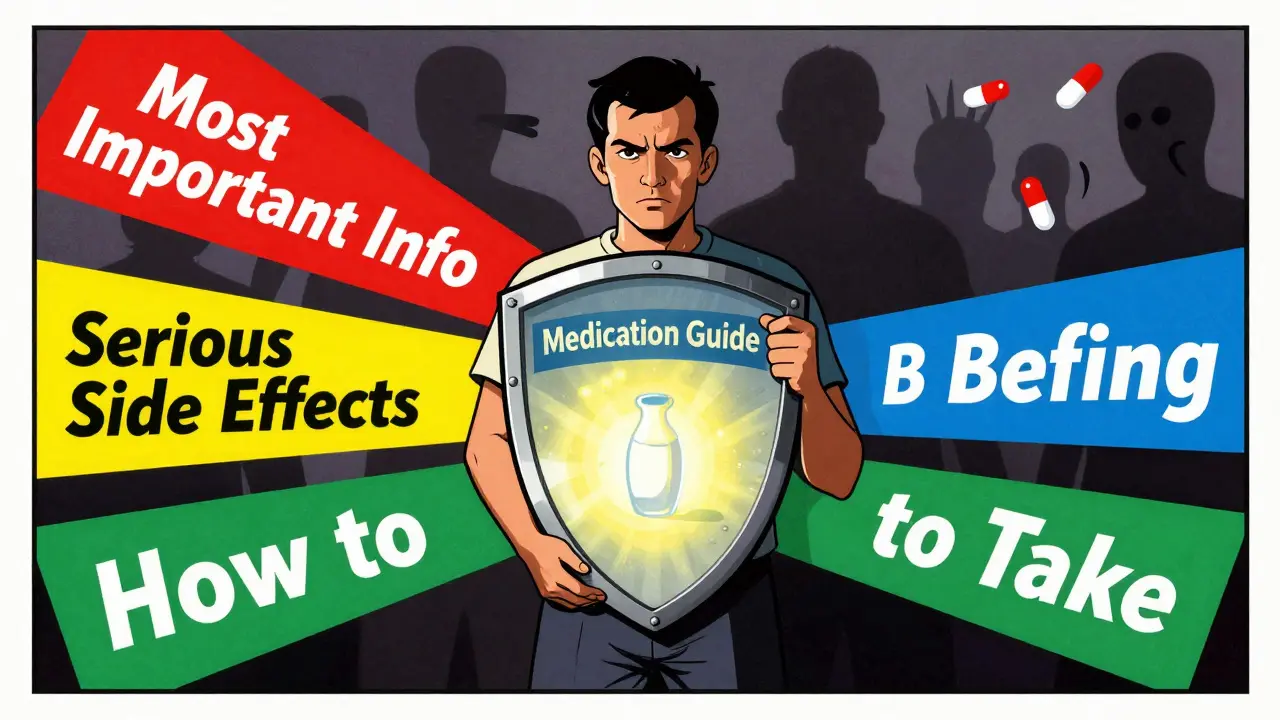
Most people get their prescription meds and just toss the little paper insert into the drawer. But if you’re on a drug with serious risks-like blood thinners, antidepressants, or immune suppressants-that paper could be the difference between staying safe and ending up in the hospital.
What Medication Guides Actually Are
Medication Guides aren’t just extra paperwork. They’re legally required documents the FDA forces drug makers to give you when a medicine carries serious, preventable dangers. These aren’t the same as the tiny print inside the bottle. Those are for doctors. Medication Guides are written for you, in plain language, at a 6th to 8th grade reading level. And they’re updated regularly-if a new danger pops up, the company has 30 days to fix the guide.Right now, about 150 different Medication Guides exist. They cover drugs for conditions like psoriasis, depression, cancer, and blood clots. Each one is built the same way, so once you learn how to read them, you can use the same system for any drug.
The Four Sections That Matter Most
Don’t read the whole thing front to back. That’s how people get overwhelmed. Instead, go straight to the four sections that actually keep you safe.1. What is the most important information I should know about [drug name]?
This is your first stop. It’s usually bolded and near the top. This section tells you the one or two things that could kill you if you ignore them. For example, the guide for the antidepressant fluoxetine (Prozac) says: “Some people taking antidepressants have thoughts about suicide, especially at the start of treatment or when the dose changes.” That’s not vague. That’s a direct warning. If your drug says something like “can cause liver damage” or “may lead to life-threatening infection,” this is where you see it.
2. What are the possible or reasonably likely serious side effects of [drug name]?
This is where monitoring instructions live. Look for phrases like:
- “Get your blood tested regularly”
- “Your doctor should check your liver function every 3 months”
- “Call your doctor immediately if you notice unusual bruising or bleeding”
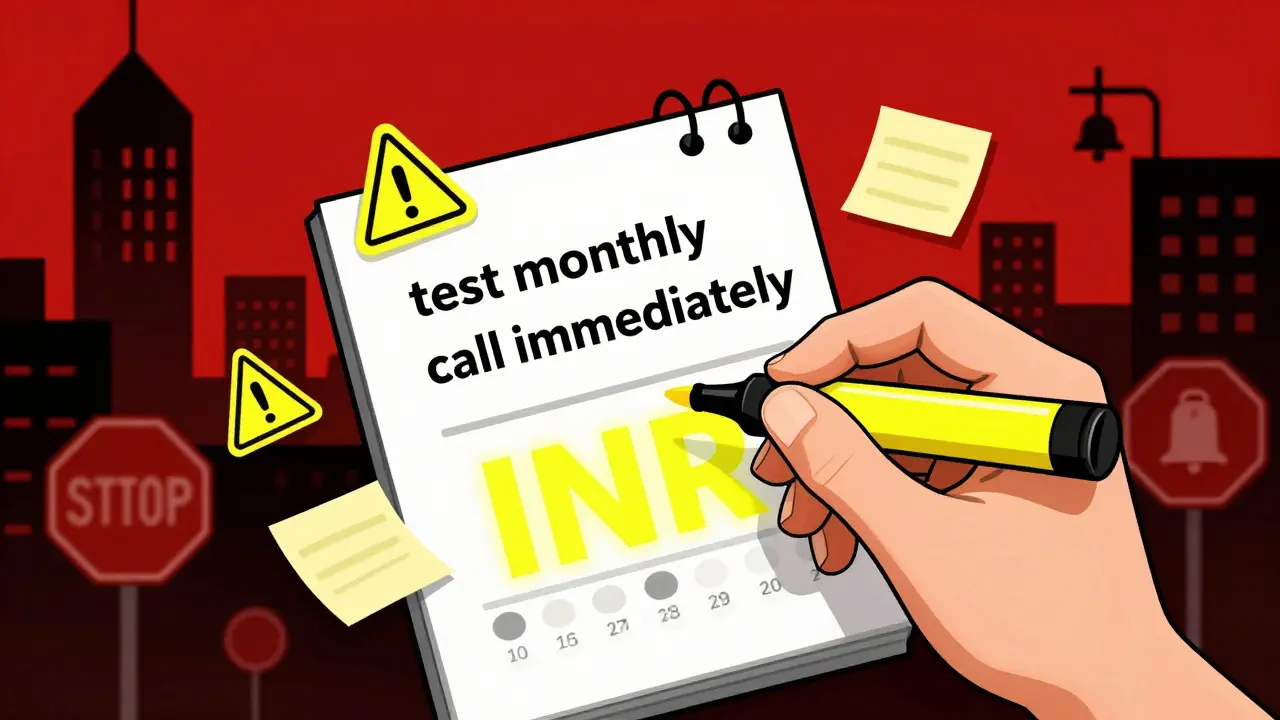
Take the blood thinner warfarin (Coumadin). Its guide says: “Your INR must be checked at least once a month. If your dose changes, check it more often.” That’s specific. It tells you exactly what test to ask for (INR), how often (monthly), and what triggers more frequent checks (dose change).
Compare that to a guide that just says “may cause dizziness.” That’s useless. The good ones use numbers: “25% of users experience dizziness.” That helps you know if it’s common or rare.
3. What should I tell my healthcare provider before taking [drug name]?
This section tells you what to disclose to your doctor. It’s not just about allergies. It’s about your full health picture. For example, if you’re taking clozapine (Clozaril), the guide says: “Tell your doctor if you’ve ever had low white blood cell counts.” Why? Because clozapine can wipe out your white blood cells. About 1 in 200 people get a dangerous drop-and it’s only caught with weekly blood tests. If you didn’t mention your past low count, your doctor might skip the test. Big risk.
4. How should I take [drug name]?
This isn’t just about “take with food” or “take at bedtime.” It’s about timing your monitoring. The guide for abiraterone (Zytiga), used for prostate cancer, says: “Your healthcare provider should perform blood tests before you start and every 3 months while taking this medicine.” That’s a schedule. Write it down. Put it on your calendar. Don’t wait for your doctor to remind you. They’re busy. You’re the one who has to show up.
How to Read These Guides Like a Pro
Most people skim. That’s dangerous. Here’s how to read them properly:- Use the 3-2-1 Method. Spend 3 minutes reading the guide when you first get the prescription. Then, 2 minutes every time you refill. And 1 minute every month to check if anything changed. The FDA says this simple habit cuts adverse events.
- Highlight, circle, underline. Grab a yellow highlighter and mark every word like “test,” “monitor,” “check,” or “measure.” Circle every time frame: weekly, monthly, immediately. Underline any symptom that says “call your doctor right away.” This turns a wall of text into a visual alert system.
- Use the traffic light system. Green = normal side effect (like mild headache). Yellow = needs monitoring (like dizziness that doesn’t go away). Red = emergency (like chest pain, black stools, or confusion). Keep this in your phone notes or on a sticky note next to your meds.
- Write it in your journal. A University of Michigan study found patients who wrote down their monitoring schedule had 68% fewer bad reactions. Just write: “Take Zytiga. Blood test every 3 months. Call doctor if fever over 101°F.”
Why People Miss the Warning Signs
It’s not that the guides are bad. It’s that people don’t know how to read them. A 2022 survey found 63% of patients misunderstood monitoring instructions. Many thought “monitor monthly” meant “only check if you feel bad.” That’s wrong. Monitoring means testing-even if you feel fine.Pharmacists report that only 38% of patients even look at these guides. Why? They’re long. They’re dense. They look like legal documents. But here’s the truth: the critical parts are usually under 200 words. You don’t need to read the whole thing. Just find the four sections above.
One pharmacist in Sydney told me: “When I point to the monitoring section and say, ‘This takes 90 seconds to read,’ compliance with blood tests jumps from 45% to 82%.” That’s not magic. That’s clarity.
What to Do If Your Guide Is Missing
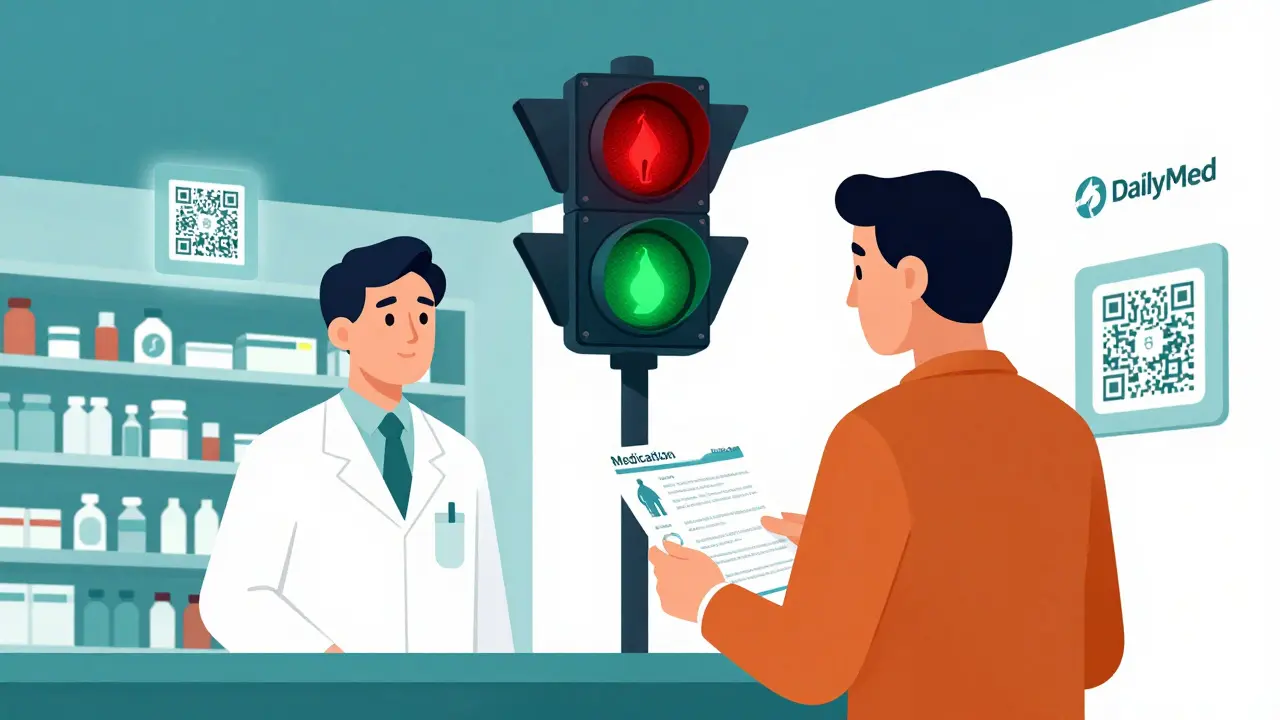
By law, pharmacies must give you a Medication Guide every time you pick up a prescription that requires one. But a 2022 audit found 41% of independent pharmacies don’t always do it.If you don’t get one, ask for it. Say: “I need the FDA Medication Guide for this drug.” If they say they don’t have it, call the manufacturer’s patient help line (it’s on the bottle). Or go to DailyMed, the NIH’s free site. Search your drug name, and you’ll get the latest official guide.
Some new drugs now have QR codes on the box. Scan it and you’re taken straight to the current guide. It’s still new, but it’s coming fast.
What’s Changing in 2025
The rules are getting tighter. By 2025, all drugs with Risk Evaluation and Mitigation Strategies (REMS) will need a Medication Guide. That’s more than 120 drugs now, up from 42. The FDA is also testing pictograms-simple icons for blood tests, sun exposure, and emergency signs-so people who struggle with reading can still understand.Some companies are even using AI to personalize guides. Pfizer’s pilot program takes your age, other meds, and health history, then highlights only the risks that apply to you. Early results show patients understand their risks 63% better.
But here’s the catch: 40% of Americans still read below a 6th grade level. No matter how good the design gets, if you can’t read it, you won’t understand it. That’s why asking your pharmacist or doctor to explain it in plain words is still the most powerful tool you have.
When to Call Your Doctor Right Away
The guides list symptoms that need immediate attention. These are not “maybe” symptoms. They’re red flags. Here’s what to watch for:- Unusual bruising or bleeding that won’t stop
- Fever above 101°F with no other cause
- Sudden mood changes, thoughts of self-harm, or new panic attacks
- Yellowing of skin or eyes
- Severe stomach pain with vomiting
- Swelling in your face, throat, or tongue
If you see any of these, don’t wait. Don’t check Google. Call your doctor or go to the ER. These are the exact symptoms the FDA says you need to act on.
Final Tip: Make It Part of Your Routine
Think of your Medication Guide like a car manual. You don’t read it once and forget it. You check it when something changes-new medicine, new symptoms, new doctor. Keep the guide in a folder with your other meds. Or take a photo of the key sections on your phone. Set a monthly reminder to re-read the monitoring part.Medications save lives. But they can hurt you too-if you don’t know the risks. The guide isn’t there to scare you. It’s there to help you stay in control. You’re not just taking a pill. You’re managing a health plan. And this guide? It’s your instruction manual.
Are Medication Guides the same as the instructions inside the pill bottle?
No. The small print inside the bottle is called a Package Insert. It’s written for doctors and includes detailed clinical data. Medication Guides are separate, FDA-mandated documents designed for patients. They focus only on serious risks and monitoring steps, written in plain language.
What if I don’t understand the medical terms in the guide?
Ask your pharmacist or doctor to explain it. They’re required to help you understand. Don’t pretend you get it. Say, “Can you break this down in simpler terms?” For example, if it says “INR,” ask, “What does that test check for?” Most guides use terms like “blood test” or “check your liver,” which are easier to understand. If you’re still unsure, call the drug company’s patient line-every one has one.
Do I need to read the guide every time I refill my prescription?
Yes. Drug companies update guides when new risks are found. Even if you’ve taken the medicine for years, the warning could have changed. A 2022 FDA report showed 92% of guides were updated that year. That means the risks you knew last year might be different now. Spend two minutes each refill to check for changes.
Can I rely on my pharmacist to explain everything?
Pharmacists are great resources, but they’re often busy. Don’t wait for them to explain everything. Use the guide as your checklist. If something says “get blood tests every month,” write it down. Then ask your pharmacist: “Is this correct?” That way, you’re not just listening-you’re verifying. Studies show patients who do this have better outcomes.
What if my doctor doesn’t mention the monitoring tests?
Bring the guide with you to your appointment. Point to the monitoring section and say, “According to the FDA guide for this drug, I need a blood test every three months. Can we schedule that?” Many doctors don’t remember every detail, but they’ll act when you show them the official instructions. You’re not being pushy-you’re being safe.
Are Medication Guides available online?
Yes. Go to DailyMed (dailymed.nlm.nih.gov), a free site run by the NIH. Type in your drug’s name, and you’ll get the latest official guide. This is especially useful if you lost your copy or if your pharmacy didn’t give you one. Always use DailyMed-it’s updated in real time.
Next Steps: What to Do Today
If you’re on a high-risk medication, here’s your action list:- Find your current Medication Guide. If you don’t have it, download it from DailyMed.
- Open it and highlight the four key sections: Most Important Info, Serious Side Effects, Before Taking, and How to Take.
- Write down the monitoring schedule on your phone calendar.
- Set a monthly reminder to re-read the guide.
- Next time you see your doctor, bring the guide and ask: “Am I following the monitoring plan correctly?”
One small step-reading the guide-can keep you out of the hospital. You’ve already taken the first one by reading this. Now take the next one.