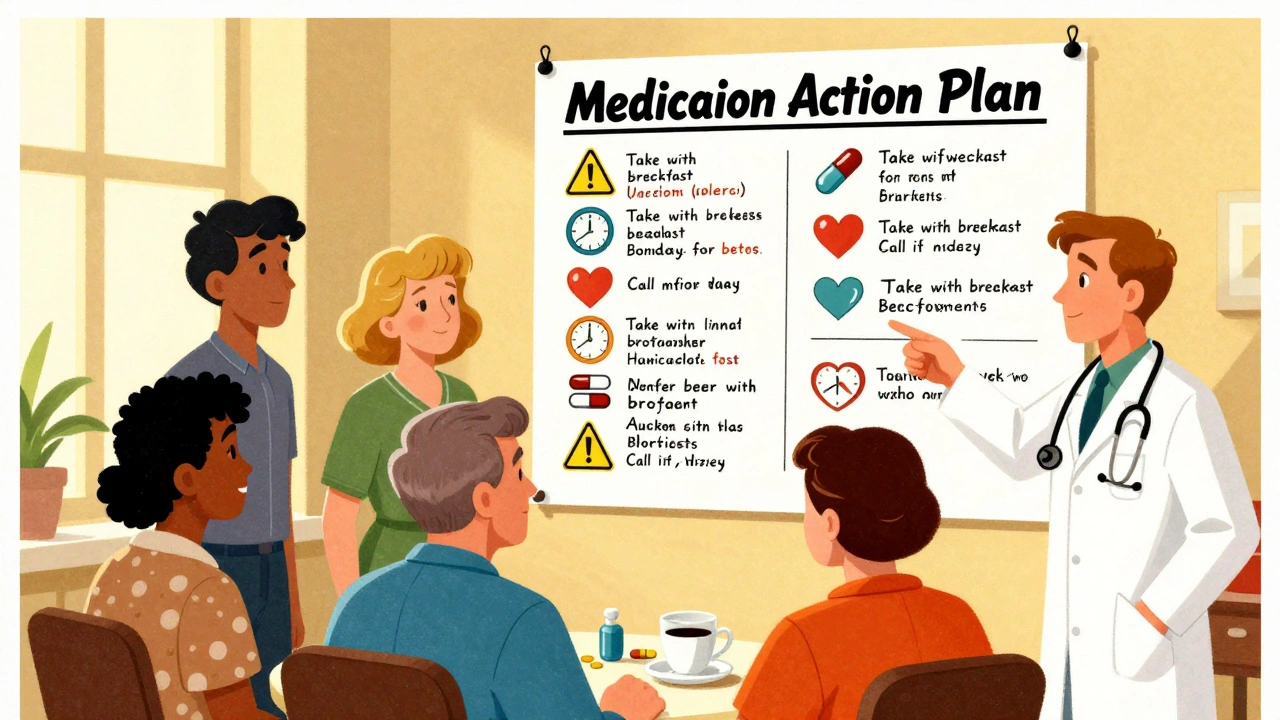
Getting your medications right isn’t just about taking pills on time. It’s about understanding why you’re taking them, when to take them, what to do if something goes wrong, and how to fit it all into your real life. A Medication Action Plan (MAP) is the tool that turns confusion into control. It’s not just a list of drugs - it’s your personal roadmap for staying healthy, made with your care team, in your words, for your daily routine.
What Exactly Is a Medication Action Plan?
A Medication Action Plan is a written, personalized guide that tells you exactly what to do with your medications. It’s built around your life, not the other way around. Unlike a simple prescription list, a MAP includes clear steps: when to take each medicine, what to watch out for, what to do if you miss a dose, and how to track your progress. It’s part of something bigger called Medication Therapy Management (MTM), a service offered by pharmacists and doctors to help people manage multiple medications safely. In the U.S., MTM became part of Medicare Part D in 2006, and since then, it’s been proven to cut hospital visits by up to 32% for people taking three or more chronic medications. In Germany, since 2016, patients on three or more prescribed medicines get a standardized medication plan automatically - updated every time they pick up a new prescription. The goal? Fewer mistakes, fewer side effects, and more confidence.Why Most People Don’t Get One - And Why You Should
Here’s the hard truth: 43% of patients eligible for a Medication Action Plan never receive one. Why? Because many doctors don’t offer it. Pharmacies don’t always have time. Patients don’t know to ask. But if you’re taking three or more medications - especially for conditions like diabetes, high blood pressure, heart disease, or arthritis - you’re at higher risk for dangerous interactions, missed doses, or side effects. A MAP isn’t a luxury. It’s a safety net. People who use a personalized MAP report 70% less confusion about their meds. One 68-year-old woman with type 2 diabetes went from 65% adherence to 95% after turning her plan into a visual chart: a coffee cup next to her morning pills, a dinner plate for her evening ones. That’s not magic. That’s smart design.Step 1: Gather Everything You’re Taking
Before you even sit down with your care team, collect every single thing you swallow, sprinkle, or apply. This includes:- Prescription drugs (even ones you don’t take every day)
- Over-the-counter medicines (ibuprofen, antacids, sleep aids)
- Vitamins and supplements (fish oil, vitamin D, herbal teas)
- Topical creams or patches (like nicotine or pain patches)
Step 2: Book a Comprehensive Medication Review
This is the core of making your plan. You need a 30- to 60-minute session with a pharmacist or your doctor. Many pharmacies offer this for free if you’re on Medicare Part D. Even if you’re not, ask your doctor or local pharmacy - some private insurers cover it now. During this review, your care team will:- Check for duplicates (like taking two different drugs for the same condition)
- Spot dangerous interactions (e.g., blood thinners mixed with certain supplements)
- Identify side effects you might have ignored
- Ask you: “What’s hard about taking your meds?”
Step 3: Build Your Plan Together
Now comes the real work: turning what you’ve learned into a plan you’ll actually follow. Your care team should help you write down:- Each medication’s purpose - not just “for blood pressure,” but “to keep your heart from working too hard.”
- Exact timing - “Take with breakfast,” not “once daily.”
- What to do if you miss a dose - “If I forget my morning insulin, I take it within 2 hours. After that, I skip it and call my doctor.”
- Warning signs - “If I feel faint or my legs swell, I call my nurse immediately.”
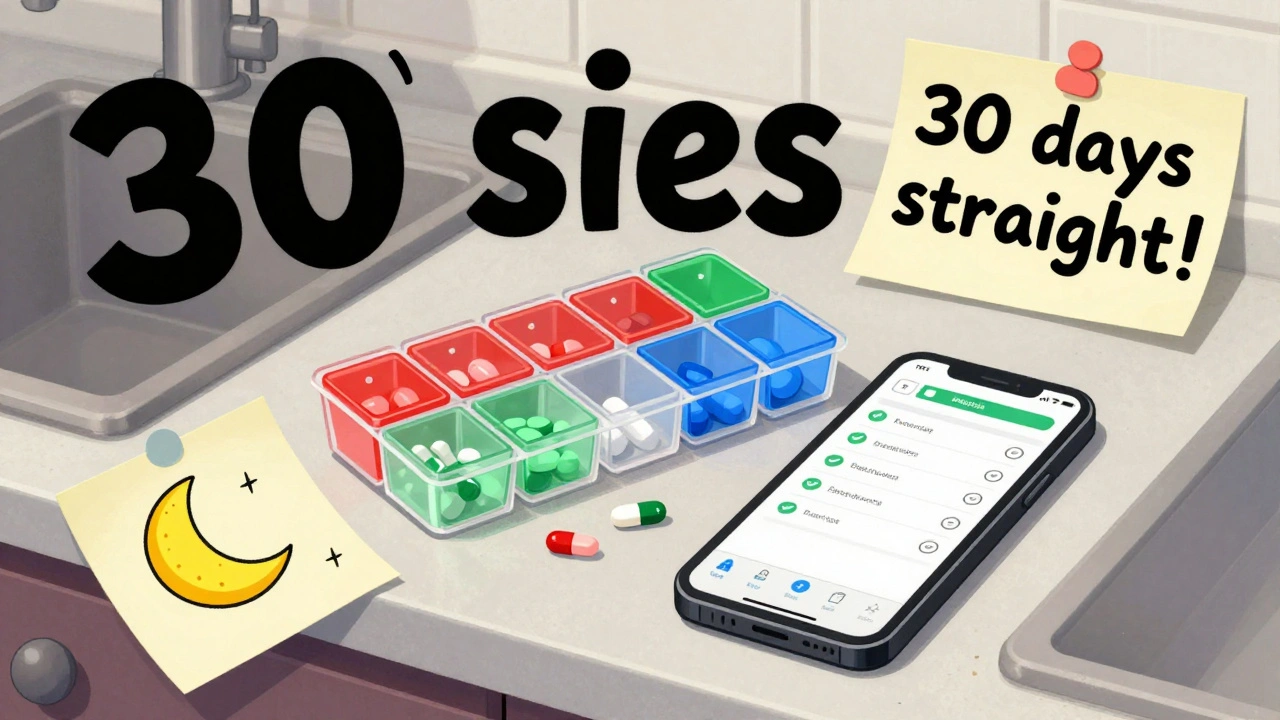
- One measurable goal - “I want to take all my meds correctly for 30 days straight.”
Step 4: Make It Visible and Easy to Use
A plan on paper that sits in a drawer won’t help. Your MAP needs to live where you live. - Use a pill organizer with morning, afternoon, evening, and night sections. Label each slot with the medicine’s purpose (e.g., “heart,” “sleep,” “pain”). - Stick a printed version on your fridge or bathroom mirror. - Use color codes: red for critical meds (like blood thinners), green for daily maintenance, blue for as-needed pills. - If you’re tech-savvy, use an app that sends reminders and lets you log whether you took your dose. Some pharmacy apps even sync with your MAP. One man with Parkinson’s and three other conditions drew pictures of his pills next to his daily activities: brushing teeth = morning meds, turning off TV = nighttime dose. He didn’t miss a dose for 11 months.Step 5: Review and Update Regularly
Your MAP isn’t set in stone. It’s a living document. Every time your doctor changes a prescription - even if it’s just a dose increase - update your plan. If you start a new supplement, add it. If you stop a pill, cross it out. Experts recommend reviewing your MAP every three months. That’s when you should:- Check your progress: Did you hit your 30-day goal? What got in the way?
- Ask: “Is this still working for me?”
- Update the plan with your care team - even if you think it’s fine.
What If Your Care Team Doesn’t Offer This?
If your doctor says, “Just take your pills,” or your pharmacist says, “We don’t do that,” push back. You have the right to ask for a Medication Action Plan - especially if you’re on multiple meds. Say this: “I’m taking several medications and want to make sure I’m doing it right. Can we create a simple action plan together?” If they say no, ask for a referral to a pharmacist who specializes in Medication Therapy Management. Many community pharmacies now have MTM clinics. Call ahead. Ask: “Do you offer free medication reviews for patients on multiple prescriptions?” You can also ask your insurance company. Many commercial plans now cover MTM services - even if you’re not on Medicare.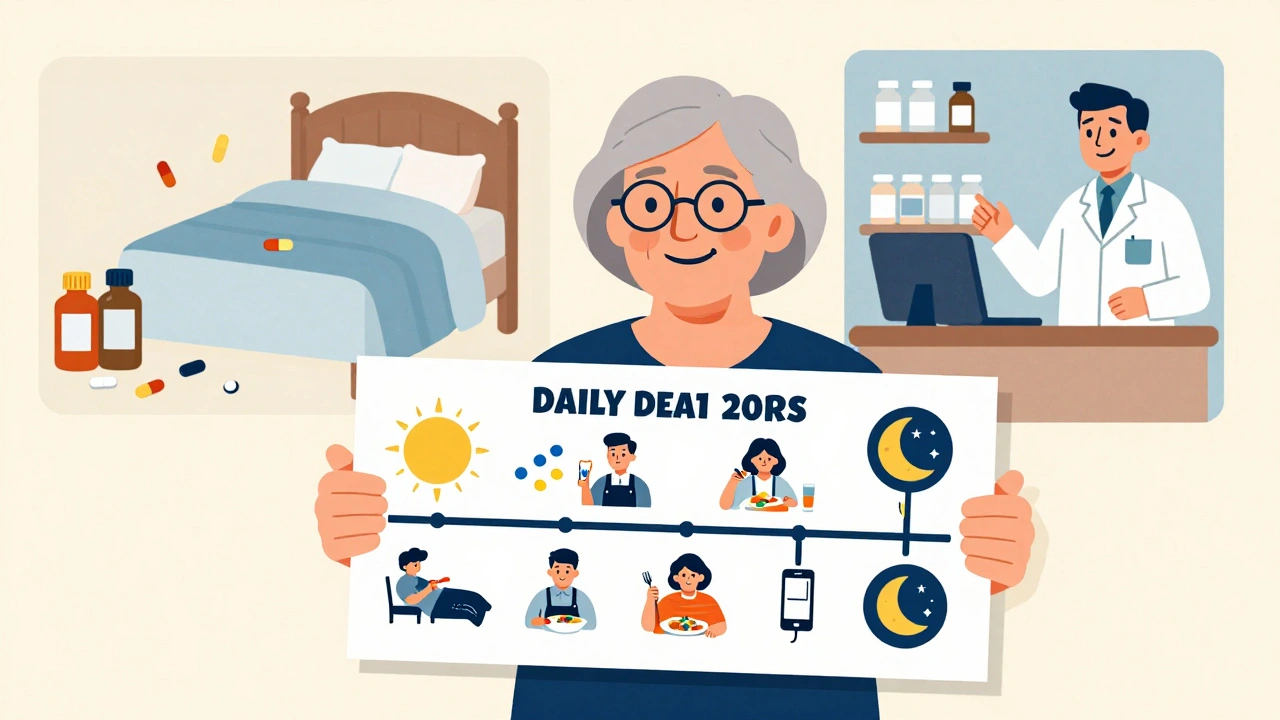
Real Results: What Happens When People Use Their MAP
Data from the Centers for Medicare & Medicaid Services shows:- Patients with a personalized MAP are 25-40% more likely to take their meds correctly.
- They have 32% fewer hospital visits related to medication problems in the next year.
- Those on blood thinners, diabetes drugs, or opioids see the biggest drop in emergency room visits.
Common Mistakes to Avoid
- Using a pharmacy’s generic template - These often use medical terms and don’t fit your life. - Not including OTC meds or supplements - These can interact with prescriptions just like real drugs. - Letting the plan sit unused - If it’s not visible or updated, it’s useless. - Assuming your doctor knows everything you take - Many patients don’t tell their doctors about vitamins or herbal teas. That’s a risk. - Waiting until something goes wrong - Don’t wait for a hospital visit to start. Start now.Who Should Have a Medication Action Plan?
You don’t have to be elderly or sick to benefit. If you:- Take 3 or more medications (prescription or not)
- Have a chronic condition like diabetes, heart disease, or asthma
- Feel confused about when or why to take your pills
- Have trouble remembering doses or experience side effects
- See multiple doctors or get prescriptions from different pharmacies
Final Thought: Your Health, Your Plan
Your medications are tools. A Medication Action Plan is the instruction manual - written by you, for you. It’s not about following orders. It’s about taking charge. Start small. Bring your pill bottles to your next appointment. Ask one question: “What’s the one thing I should do differently with my meds?” Then write it down. Build from there. You don’t need to be perfect. You just need to be clear. And with the right plan, you can be.What’s the difference between a medication list and a Medication Action Plan?
A medication list just shows what drugs you take. A Medication Action Plan tells you what to do with them - when to take them, what to watch for, what to do if you miss a dose, and how to track your progress. It’s personalized, action-based, and designed to fit your life, not just your prescriptions.
Do I need a doctor to make a Medication Action Plan?
Not necessarily. Pharmacists are trained to create these plans and often have more time to walk through them with you. Many pharmacies offer free Medication Therapy Management (MTM) reviews. Your doctor can help too, but a pharmacist is usually the best person to start with - especially if you’re on multiple medications.
Can I use an app instead of a paper plan?
Yes - and many people find apps more helpful. Apps like MyTherapy, Medisafe, or your pharmacy’s app can send reminders, track doses, and even share reports with your care team. But make sure the app lets you input your own goals and actions, not just generic alerts. The best digital plans are built from your personal MAP.
What if I can’t read or have trouble understanding medical terms?
Your plan must be in language you understand. Ask your pharmacist or doctor to use simple words, pictures, or symbols. You can draw icons - a sun for morning, a moon for night. You can use color coding. You can even record a voice note on your phone explaining each pill. The goal isn’t to read it - it’s to follow it.
Is this only for older adults?
No. Anyone taking three or more medications - young or old - can benefit. Parents of children with chronic conditions, people recovering from surgery, or those managing mental health meds all need clear plans. It’s about complexity, not age.
Will my insurance pay for this?
If you’re on Medicare Part D and take 8+ chronic meds (or 5+ as of 2024), you’re eligible for free MTM services, including a Medication Action Plan. Many private insurers now cover it too. Call your plan or ask your pharmacy. Even if it’s not covered, many pharmacies offer it for free as part of their care services.
How often should I update my plan?
Update it every time your meds change - new prescription, stopped drug, dose adjustment. Even if nothing changes, review it every three months. Ask yourself: Is this still working? What’s hard? What’s easy? Then update the plan with your care team.
Comments
Shayne Smith December 6, 2025 at 06:23
Finally someone gets it. I’ve been telling my grandma for years to write down her meds instead of just trusting her memory. She used to mix up her blood pressure pills with her arthritis ones - now she’s got a color-coded fridge note and actually remembers to take them. Game changer.
Also, why do pharmacies act like giving you a plan is some special service? It’s basic care.
Karen Mitchell December 6, 2025 at 20:59
This entire article is a gross oversimplification of a complex healthcare issue. Medication Therapy Management is not a panacea, nor is it universally accessible. The notion that a printed plan can mitigate polypharmacy risks without systemic reform is dangerously naive. Moreover, the reliance on patient self-reporting is statistically unsound. The data cited is cherry-picked from industry-funded studies. This is not empowerment - it’s corporate healthcare theater.
Geraldine Trainer-Cooper December 6, 2025 at 23:48
meds are just another thing we’re told to manage like a to-do list
what if you just… don’t want to manage them
what if the system is the problem not the person
why are we supposed to be so grateful for a checklist when we’re being poisoned by 7 different pills just to stay alive
no one talks about that part
Kenny Pakade December 8, 2025 at 08:24
So now we’re handing out worksheets to old people because the government can’t fix the fact that Big Pharma is selling us poison and then charging us to clean up the mess
Real solution: ban pill mills and regulate drug prices
Not another damn sticky note
Mansi Bansal December 9, 2025 at 17:08
While the intent behind the Medication Action Plan is commendable, one must acknowledge the structural inequities that render such initiatives inaccessible to marginalized populations. In developing nations, where pharmaceutical access is already constrained by economic disparity, the notion of a 'personalized' plan is a luxury. Furthermore, the cultural assumption that patients possess the literacy, technological access, or cognitive capacity to engage with such systems is not only patronizing - it is ethically indefensible. The burden of compliance is disproportionately placed upon the vulnerable, while systemic failures remain unaddressed.
Dan Cole December 10, 2025 at 06:47
Let me break this down with clinical precision. The article conflates adherence with empowerment. Taking a pill on schedule is not agency - it’s compliance. True autonomy requires dismantling the pharmaceutical-industrial complex that creates dependency in the first place. The fact that 43% of eligible patients don’t receive a MAP isn’t due to oversight - it’s because the system profits from confusion. Every missed dose, every ER visit, every hospitalization is a revenue stream. This isn’t a safety net - it’s a profit model dressed in patient-friendly language.
And don’t get me started on apps. Your phone doesn’t care if you’re dizzy. It just pings you. That’s not care. That’s surveillance with a smiley face.
Billy Schimmel December 12, 2025 at 03:35
My uncle took 14 pills a day. He didn’t miss one in 3 years. Didn’t use an app. Didn’t have a plan. Just had a daughter who yelled at him every morning. Sometimes the real MAP is just someone who cares enough to remind you.
Not everything needs a template.
Myles White December 13, 2025 at 16:37
I’ve been using a Medication Action Plan for over five years now, and honestly, it’s been the single most life-changing thing I’ve done for my health. I was on seven different prescriptions for hypertension, diabetes, and neuropathy, and I kept forgetting which ones were for what, and when to take them, and what side effects were normal versus dangerous. I went to my local pharmacy and asked for an MTM review - they had a dedicated pharmacist who sat with me for an hour and a half, asked me about my daily routine, my work schedule, my sleep habits, even how I felt emotionally about taking so many pills - and then we built this visual timeline with sticky notes and color-coded pill boxes and even a little calendar I hang by my coffee maker. I used to have panic attacks before doctor’s visits because I couldn’t remember what I was taking. Now I bring my plan in, and the doctors are like, ‘Wow, you’re one of the most prepared patients we’ve ever seen.’ It’s not magic, it’s just organization - but it’s organization that respects your life, not the other way around. I’ve had zero hospitalizations since I started. My A1C dropped. My blood pressure is stable. And honestly? I feel like I’m finally in control instead of just surviving.
olive ashley December 15, 2025 at 12:49
they’re selling you a plan because they don’t want to fix the fact that your meds are made by the same company that owns the hospital you get sent to
you think this is about safety
it’s about liability
if you die from a pill mix-up, at least they’ve got your signed checklist
also - did you know most of these ‘free’ MTM services are just upsells for insurance add-ons?
you’re not being helped
you’re being screened
Ibrahim Yakubu December 16, 2025 at 16:28
In Nigeria, we don’t have MTM clinics. We have pharmacies where the guy behind the counter asks if you’re taking ‘that blood thing’ and hands you a plastic bag with 10 unlabeled pills. A plan? We wish. My auntie died last year because two doctors gave her conflicting meds and no one ever sat down to check. This article reads like a dream from another world. You people have apps to remind you to take your pills - we have prayers and hope.
Brooke Evers December 17, 2025 at 18:15
I work as a community health worker, and I can tell you - this plan works. Not because it’s fancy, but because it gives people back their dignity. One woman I worked with was terrified of her insulin because she didn’t know what ‘hypoglycemia’ meant. We drew a little sun for morning, a moon for night, and a red heart for the insulin - and she started writing little notes to herself: ‘I am strong. I am doing this.’ She told me that was the first time she felt like her meds were helping her, not hurting her. It’s not about perfection. It’s about feeling seen. And that’s everything.
Chris Park December 18, 2025 at 08:58
Of course they want you to make a plan. It’s easier than regulating drug prices or holding doctors accountable. They’ll give you a checklist while they keep charging $400 for a single pill. This is distraction therapy. You think your sticky note stops the pharmaceutical industry from overprescribing? You think your app stops them from lobbying Congress? Wake up. The system doesn’t want you healthy - it wants you compliant. A plan makes you feel like you’re in control. That’s the whole point. So you don’t revolt.
Saketh Sai Rachapudi December 18, 2025 at 09:45
Indian people dont need this. We have been taking medicine since ancient times. Ayurveda is better than your western pills. Why are you so dependent on drugs? This is american sickness. We dont make plans we have faith. Also why do you need apps for pills? Your brain is weak.
joanne humphreys December 18, 2025 at 20:54
I’ve been thinking about this a lot. I have a friend who’s on six meds and just says ‘I forget sometimes’ - and I used to just nod and say ‘yeah, it’s hard.’ But reading this made me realize - I never asked her what ‘hard’ meant. Was she scared? Confused? Overwhelmed? Or just tired? Maybe she needs someone to sit with her, not a checklist. Maybe the real MAP is just showing up. I’m going to call her tomorrow. Just to ask.