Emotional Blunting Assessment Tool
How Emotionally Blunted Are You?
This assessment tool helps you determine if you might be experiencing emotional blunting from SSRIs. It's designed to be used alongside a conversation with your healthcare provider.
Your Assessment Results
For many people, SSRIs are a lifeline. They pull you out of the crushing weight of depression, help you get out of bed, and make daily life possible again. But for a lot of those same people, something unexpected happens: they start to feel nothing. Not sadness. Not joy. Not even anger. Just flat. Empty. Like someone turned down the volume on their entire emotional life.
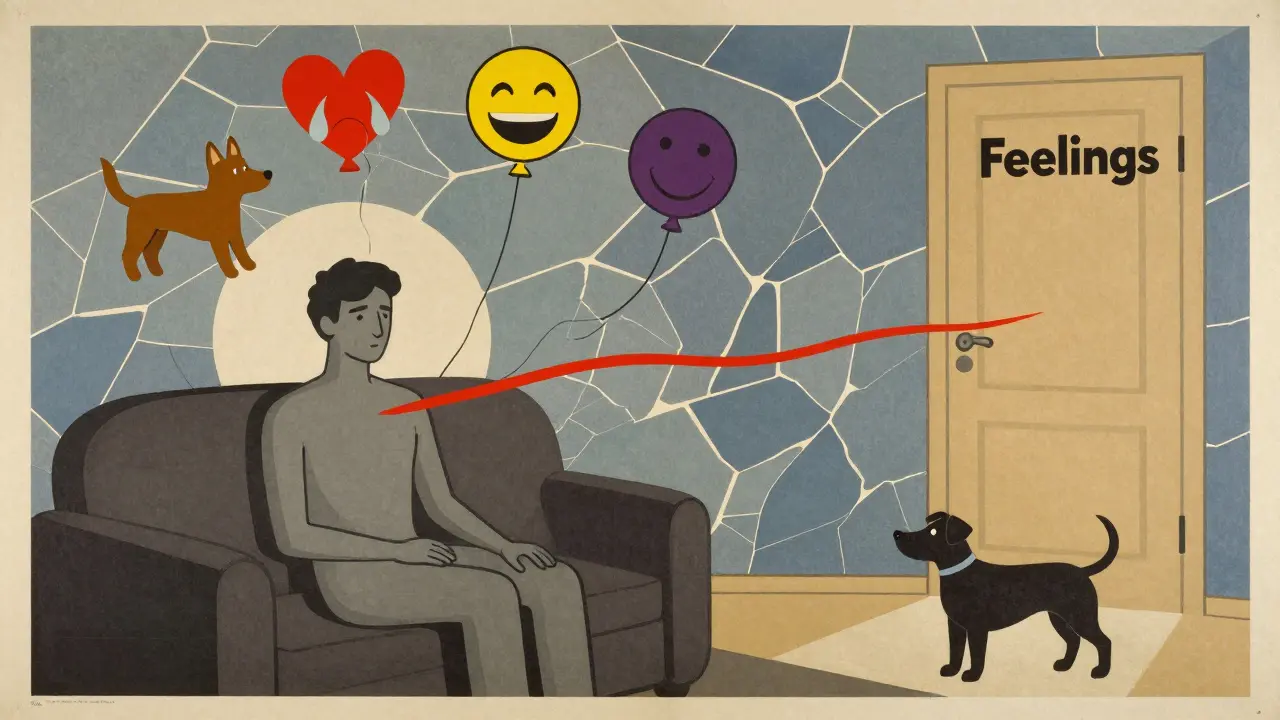
This isn’t rare. It’s not a myth. It’s not just in their head. About 40 to 60% of people taking SSRIs like sertraline, escitalopram, or fluoxetine report this exact feeling-emotional blunting. It’s not just being calm. It’s losing the ability to cry at a sad movie, to laugh with friends, or to feel excited about a birthday. Your dog still wags its tail, but you don’t feel the warmth of its love anymore. Your partner says, "I miss you," but you don’t know how to answer because you don’t feel the love you used to feel.
What Exactly Is Emotional Blunting?
Emotional blunting isn’t just feeling "a little dull." It’s a measurable change in how your brain processes emotion. Research from the University of Cambridge in 2022 showed that SSRIs interfere with something called reinforcement learning-the brain’s way of learning from rewards and punishments. When this system slows down, you stop associating actions with feelings. Eating your favorite food doesn’t bring pleasure. A hug doesn’t feel comforting. Even bad news doesn’t trigger the usual surge of sadness or anger.
It’s not the same as being tired or depressed. Cognitive tests show people with emotional blunting still remember facts, solve problems, and make logical decisions. But when it comes to emotional tasks-recognizing a facial expression, deciding if something is morally right, or feeling moved by music-their reactions are muted. That’s why doctors now call it a problem with "hot cognition"-the emotional side of thinking-not "cold cognition," which is just logic and memory.
And it affects both positive and negative emotions. You don’t just lose joy-you also lose grief, frustration, and even relief. That’s why some people say they feel "numb" rather than "better."
Why Do SSRIs Cause This?
SSRIs work by increasing serotonin in the brain. That helps with low mood, anxiety, and obsessive thoughts. But serotonin isn’t just a "happiness chemical." It’s involved in how your brain filters and responds to emotional signals. Too much serotonin, especially over time, seems to dampen the brain’s sensitivity to emotional triggers.
It’s not just one SSRI. Escitalopram, sertraline, fluoxetine, paroxetine-all of them carry this risk. Studies show no big difference between them. Higher doses make it worse. That’s why some people feel fine on 10mg but completely shut down on 20mg or 40mg.
And here’s the twist: some experts think emotional blunting might not just be a side effect. It might be part of how SSRIs work. Dr. David Taylor from King’s College London says, "It may be the mechanism that helps some people get better." If your brain is stuck in a loop of panic or despair, turning down the emotional volume might be the only way to break free. But for others, that same mechanism leaves them feeling like a ghost in their own life.
Who’s Most Likely to Experience It?
It’s not random. People who take SSRIs for severe depression or anxiety are more likely to report emotional blunting. So are those who were highly emotional before starting treatment-artists, caregivers, people who cried easily or felt things deeply. If you were the friend everyone came to for comfort, you might be the one who suddenly feels disconnected.
It also shows up more in relationships. On Reddit, users share stories like: "My wife left me because I couldn’t cry at our daughter’s graduation." Or: "I stopped telling my mom I loved her because I didn’t feel it anymore." These aren’t exaggerations. Studies show emotional blunting is linked to higher rates of relationship breakdowns.
And it’s not just you. A 2023 review of 587 patient stories from Mad in America found that nearly half of those reporting SSRI side effects specifically mentioned emotional numbness. On Drugs.com, 32% of escitalopram reviews mention emotional blunting. Only 12% of bupropion reviews do.
What You Can Do About It
Stopping SSRIs cold turkey is dangerous. It can cause brain zaps, dizziness, nausea, and even rebound depression. But you don’t have to live with emotional numbness. There are real, evidence-backed ways to fix it.
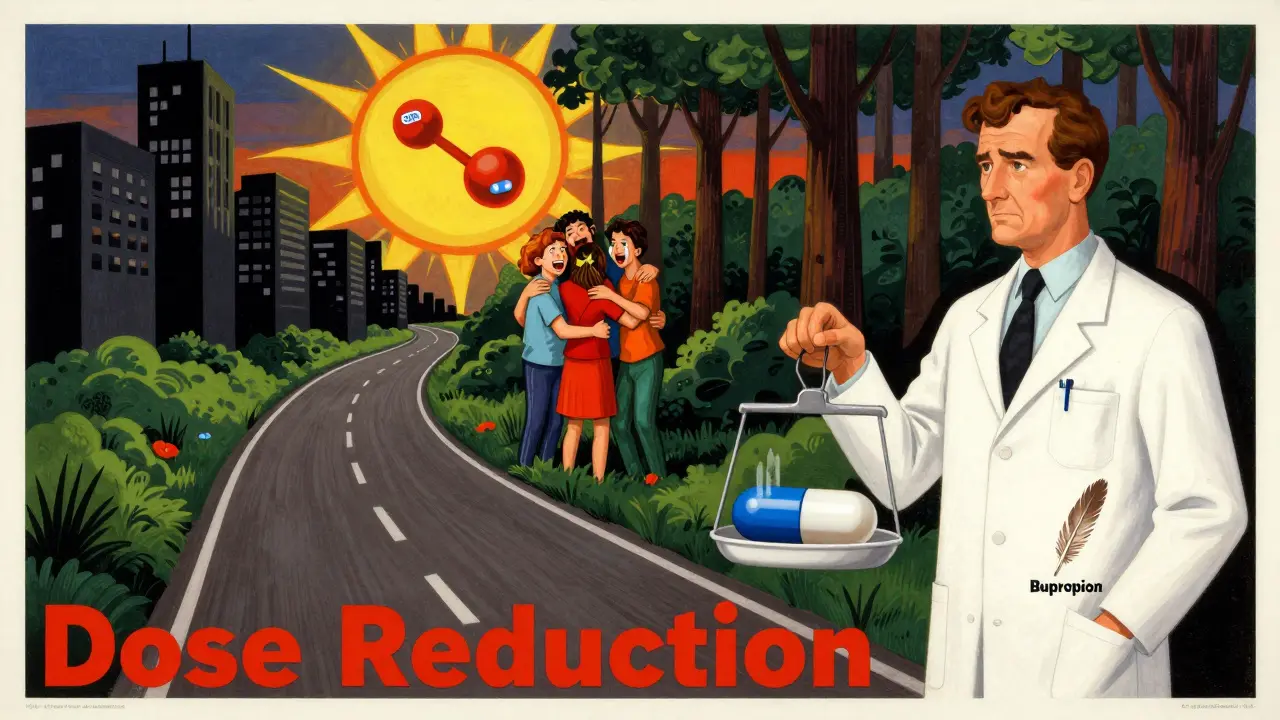
- Lower your dose - If you’re on a high dose (like 40mg of sertraline), cutting back by 25-50% often brings emotions back without losing the benefits. One 2021 study found this worked for 68% of people.
- Switch to bupropion - Bupropion (Wellbutrin) doesn’t work on serotonin. It targets dopamine and norepinephrine. That means it doesn’t cause emotional blunting. In fact, it often helps restore emotional responsiveness. A 2022 meta-analysis showed 72% of people felt better emotionally after switching from an SSRI to bupropion.
- Combine bupropion with your SSRI - If you still need the SSRI for anxiety or panic, adding a low dose of bupropion (150mg/day) can help reduce emotional blunting while letting you lower your SSRI dose. This combo worked for 63% of patients in clinical data.
- Try vortioxetine or mirtazapine - These are newer antidepressants with different mechanisms. Vortioxetine may improve emotional processing, and mirtazapine blocks receptors that dull emotion. Evidence is still growing, but they’re options if other methods fail.
Don’t switch from one SSRI to another. That rarely helps. The problem isn’t the specific drug-it’s the class.
How to Talk to Your Doctor
Most doctors don’t ask about emotional blunting. Only 38% of psychiatrists screen for it regularly, according to the American Psychiatric Association. That means you have to bring it up.
Here’s what to say:
- "I feel like I’m not myself emotionally. I don’t cry, laugh, or get excited like I used to."
- "I think the medication is working for my depression, but I’m losing the things that make life meaningful."
- "Can we talk about lowering my dose or switching to something like bupropion?"
Bring data. Mention the Cambridge study. Say you read that 40-60% of people feel this way. That gives your doctor permission to take it seriously.
Ask for a plan. Don’t just say, "I want to stop." Say, "Can we try reducing my dose over four weeks and see how I feel?"
What If You Need the SSRI?
Some people truly need SSRIs. If you’ve had multiple suicide attempts, severe panic attacks, or crippling OCD, the benefits might outweigh the numbness. That’s okay. But even then, you don’t have to accept emotional flatness as permanent.
Try this: Use the lowest effective dose. Don’t take more than you need. Combine it with therapy-especially CBT or ACT-which helps you reconnect with emotions even if they feel distant. Practice mindfulness. Write in a journal. Spend time with people who remind you of who you were before the meds.
And know this: emotional blunting usually improves within 4 to 6 weeks after a dose change. It’s not forever. It’s a side effect, not a life sentence.
The Bigger Picture
More than 8 million people in England alone are on antidepressants. Globally, the market is worth over $14 billion. And yet, emotional blunting is still treated like a secret. It’s not listed on most patient information sheets. It’s rarely discussed in medical training.
That’s changing. The European Medicines Agency added emotional blunting to SSRI labels in 2022. The National Institute of Mental Health just funded a $4.2 million study to find biomarkers for it. And 12 new antidepressants in clinical trials are being designed specifically to avoid this side effect.
But for now, the tools are here. You don’t have to suffer in silence. You don’t have to choose between being depressed and being numb. There’s a middle path.
It’s not about giving up on medication. It’s about finding the version of treatment that lets you feel alive again-not just stable, but truly present. Because depression stole your joy once. You don’t have to let the medicine steal it again.
Is emotional blunting the same as being depressed?
No. Depression is intense sadness, hopelessness, and fatigue. Emotional blunting is the absence of emotion altogether. You might feel calm, but not connected. You don’t cry because you can’t feel sadness-not because you’re better, but because your brain isn’t responding. People with emotional blunting often say they feel "empty," not "sad."
How long does emotional blunting last after stopping SSRIs?
If you reduce your dose or switch medications, emotional blunting usually starts to lift within 2 to 4 weeks. Full recovery often takes 4 to 6 weeks. If you stop SSRIs completely, symptoms may take longer-up to 8 weeks-because your brain needs time to rebalance serotonin levels. Never stop abruptly; this can cause withdrawal symptoms like dizziness, nausea, or brain zaps.
Can therapy help with emotional blunting?
Yes. Therapy-especially Cognitive Behavioral Therapy (CBT) or Acceptance and Commitment Therapy (ACT)-can help you reconnect with emotions even when they feel distant. It doesn’t fix the brain chemistry, but it gives you tools to recognize, name, and respond to feelings. Many people report feeling more "alive" in therapy even while still on medication.
Why do some doctors say emotional blunting is just residual depression?
Some experts believe emotional blunting isn’t caused by SSRIs at all-it’s what’s left of untreated depression. That’s why screening is so important. If you still feel flat after 8-12 weeks on an SSRI, it might mean your depression hasn’t fully lifted. A good doctor will check for lingering symptoms like low energy, poor concentration, or lack of interest. If those are still there, adjusting the medication may help more than switching.
Is bupropion a good alternative to SSRIs?
For emotional blunting, yes. Bupropion doesn’t affect serotonin, so it rarely causes emotional numbness. Studies show it improves emotional responsiveness in 72% of people who switch from SSRIs. It’s also effective for depression and doesn’t cause sexual side effects. But it can increase anxiety or cause insomnia in some people, so it’s not perfect for everyone.
Can emotional blunting come back after it’s gone?
Yes, especially if you increase your SSRI dose again or switch back to another SSRI. About 22% of people who adjust their meds see symptoms return. That’s why it’s important to stick with your new plan and monitor your mood. If you start feeling flat again, talk to your doctor right away. Don’t wait.
Comments
Christine Milne January 11, 2026 at 01:23
While I appreciate the anecdotal nature of this piece, it fundamentally misunderstands the neuropharmacological basis of SSRI action. The notion that emotional blunting is a distinct side effect rather than a residual symptom of inadequately treated depression is not supported by the DSM-5-TR or the latest meta-analyses from the American Journal of Psychiatry. The Cambridge study cited is observational and confounded by compliance bias. Furthermore, the suggestion that bupropion is a superior alternative ignores its higher seizure threshold risk in patients with eating disorders-a population frequently comorbid with major depressive disorder. This is dangerous oversimplification masquerading as medical advice.
Michael Marchio January 12, 2026 at 22:55
Let me be clear-this whole emotional blunting narrative is a luxury problem for people who never had to survive real hardship. Back in my day, we took whatever medicine worked, even if it made us feel like zombies, because feeling nothing was better than feeling the crushing weight of despair. You want to cry at a movie? Go watch a documentary about starving children in Gaza. That’ll make you feel something. Meanwhile, millions of people in developing countries can’t even access SSRIs, and here we are, complaining about losing the ability to feel joy. This isn’t medicine-it’s entitlement wrapped in serotonin.
Dwayne Dickson January 14, 2026 at 03:32
As a clinician with over two decades of experience in affective disorders, I must respectfully challenge the conflation of emotional blunting with treatment efficacy. The term itself is non-diagnostic and lacks operational criteria in the ICD-11. What is being described here is likely a continuum of anhedonia-either persistent or residual-rather than a pharmacologically induced state. The cited 40-60% statistic is drawn from self-reported Reddit threads and Drugs.com reviews, which are subject to extreme selection bias. Moreover, the recommendation to switch to bupropion without addressing potential dopaminergic overstimulation in bipolar spectrum patients is clinically reckless. Evidence-based practice requires stratification, not substitution.
Faith Edwards January 14, 2026 at 13:53
Oh, sweet mercy-another wellness warrior with a PhD in Google Scholar and a LinkedIn profile full of ‘I survived the numbness’ testimonials. Let me guess: you’re the same person who posted ‘I quit my SSRI and now I cry at sunsets’ on Instagram last Tuesday? Please. Emotional blunting isn’t a villain in a Netflix drama; it’s a physiological trade-off, like losing your peripheral vision to gain night vision. And yes, some of us chose the numbness because the alternative was screaming into a void for ten years. Your ‘middle path’ sounds like a corporate retreat slogan. Reality doesn’t come with a Spotify playlist of emotional restoration.
Jay Amparo January 14, 2026 at 21:35
I come from a place where depression is called ‘the heavy silence,’ and we don’t have access to psychiatrists, let alone bupropion. But I’ve seen friends on SSRIs-some lost their laughter, yes. But others, for the first time, held their newborns without shaking. I think the real issue isn’t the drug, but the expectation that medicine should give us back our old selves. Maybe we’re not meant to be the same person after trauma. Maybe numbness is just the space between who we were and who we’re becoming. I don’t have all the answers. But I’ve held hands with people who cried again after lowering their dose-and that’s enough for me.
Lisa Cozad January 15, 2026 at 02:11
I’ve been on 20mg of sertraline for three years. I stopped crying at weddings. I stopped laughing at my dog’s dumb face. I didn’t realize how much I missed it until my niece drew me a picture and I just… stared. No feeling. Just observation. I lowered my dose to 10mg last month. Two weeks later, I cried during a commercial for dog food. It was weird. But it felt real. I’m not ‘fixed.’ But I’m here. And that’s enough.
Saumya Roy Chaudhuri January 16, 2026 at 13:56
Wow, you actually think this is new? My cousin in Mumbai took fluoxetine for two years and became a robot. She stopped hugging her mother. Her husband divorced her. She said, ‘I’m not sad, I just don’t care.’ And now she’s on ayurvedic herbs and yoga. No pills. No numbness. Just pure Indian wisdom. You westerners think science fixes everything, but you forgot to ask your soul. 🙄
Mario Bros January 16, 2026 at 19:06
Bro. I was numb for 18 months. Didn’t care if I lived or died. Just… blank. Went from 40mg sertraline to 150mg bupropion. Two weeks later, I laughed so hard I cried. Then I cried because I realized I hadn’t felt that in years. My dog licked my face and I felt it. Like, actually felt it. 🥹 Don’t let anyone tell you this isn’t real. You’re not broken. You’re just medicated. And you deserve to feel again.
Bradford Beardall January 16, 2026 at 19:27
Interesting how this discussion ignores cultural context. In collectivist societies, emotional restraint is often valued-not pathologized. Emotional blunting may not be a side effect so much as a cultural alignment. In India, Japan, or even parts of rural America, being ‘calm’ isn’t numbness-it’s dignity. Maybe the problem isn’t the drug, but the Western obsession with emotional expressiveness as the only valid form of mental health. We’re pathologizing peace.