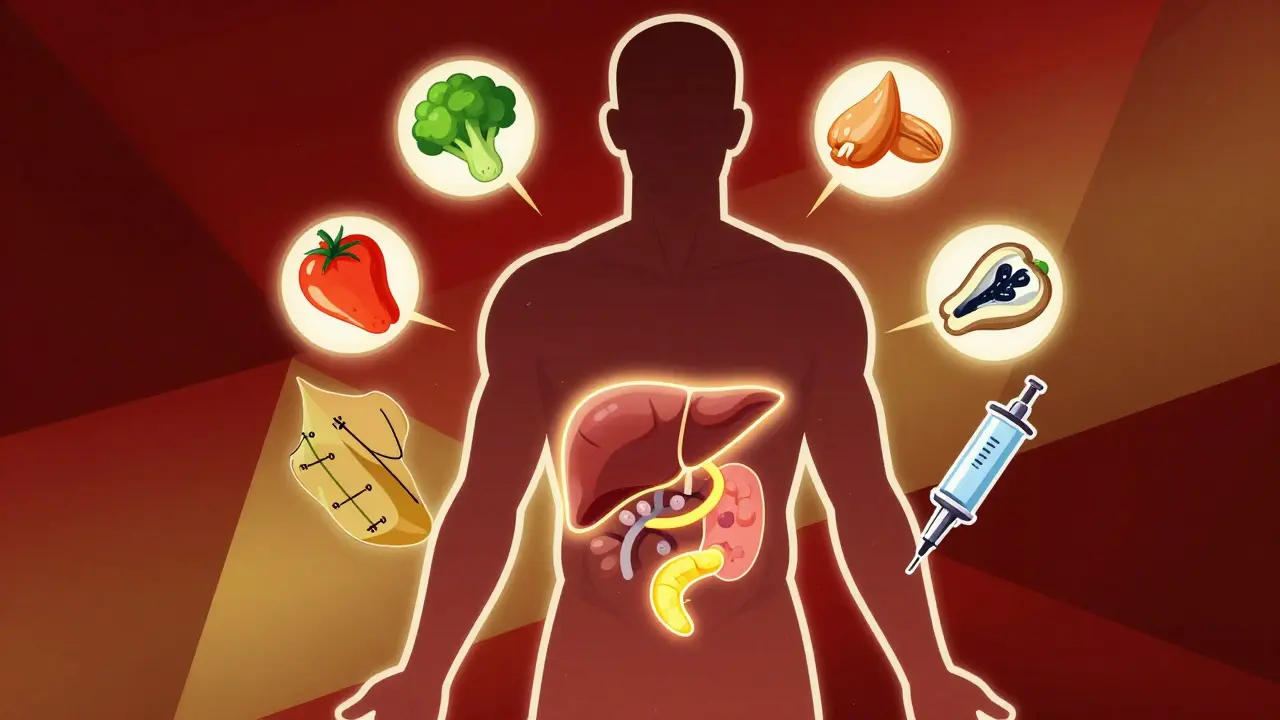
For millions of people with type 2 diabetes, losing weight isn’t just about fitting into smaller clothes-it’s about reversing the disease’s progression. The connection between excess weight and insulin resistance is direct, powerful, and well-documented. Losing even 5% of your body weight can lower your A1C, reduce medication needs, and improve energy levels. But how do you do it safely without crashing your blood sugar or giving up on long-term results?
Why Weight Loss Matters for Diabetes
Carrying extra weight, especially around the abdomen, makes your body less responsive to insulin. That means your pancreas has to work harder to produce more insulin, and over time, it burns out. This is the core problem behind type 2 diabetes. Research from the Diabetes Prevention Program (DPP) showed that people with prediabetes who lost 5-7% of their body weight cut their risk of developing full-blown diabetes by 58%. That’s more effective than metformin.
And it’s not just about prevention. For those already diagnosed, losing 10-15 kg (22-33 lbs) can lead to remission in nearly half of cases, according to the DiRECT trial. That means normal blood sugar levels without medications. How? Because fat buildup in the liver and pancreas interferes with insulin production. Shedding that fat lets those organs recover.
Weight loss also lowers blood pressure, improves cholesterol, and reduces inflammation-all of which cut your risk of heart disease, the leading cause of death in people with diabetes.
The Science-Backed Weight Loss Target
Forget crash diets. The goal isn’t to lose 50 pounds in three months. It’s to lose 5-7% of your starting weight and keep it off. For someone who weighs 200 pounds, that’s 10-14 pounds. For someone at 250 pounds, it’s 12-17 pounds.
This isn’t arbitrary. Studies show that losing this amount leads to:
- Improved insulin sensitivity
- Lower fasting blood sugar
- Reduced need for insulin or sulfonylureas
- Better blood pressure and triglyceride levels
The National Institute of Diabetes and Digestive and Kidney Diseases (NIDDK) recommends creating a daily calorie deficit of 500-750 calories. That means losing about 1-1.5 pounds per week-slow, steady, and sustainable. Faster weight loss often leads to muscle loss and metabolic slowdown, which makes regain more likely.
What to Eat: A Diabetes-Friendly Approach
There’s no single “diabetes diet.” But there are proven patterns that work. The American Diabetes Association (ADA) recommends focusing on:
- High-fiber carbohydrates: Aim for at least 14 grams of fiber per 1,000 calories. Think beans, lentils, oats, berries, broccoli, and whole grains. Fiber slows sugar absorption and keeps you full.
- Lean protein: Chicken, fish, tofu, eggs, and Greek yogurt help preserve muscle during weight loss and stabilize blood sugar.
- Healthy fats: Avocados, nuts, seeds, and olive oil don’t spike insulin. They also help you feel satisfied longer.
- Minimize added sugar and refined carbs: White bread, pastries, sugary drinks, and processed snacks cause blood sugar spikes and crashes, triggering hunger and cravings.
The Mediterranean diet has shown strong results in diabetes management. In the DiRECT trial, participants ate a low-calorie, nutrient-dense diet rich in vegetables, legumes, fish, and olive oil-and nearly half went into remission after one year.
Portion control matters just as much as food choice. Use smaller plates. Measure serving sizes with measuring cups or a food scale for the first few weeks. A common mistake? Underestimating how much you’re eating. One study found that people who tracked portions with apps like MyFitnessPal lost 18 pounds on average.
Move More: The Right Kind of Exercise
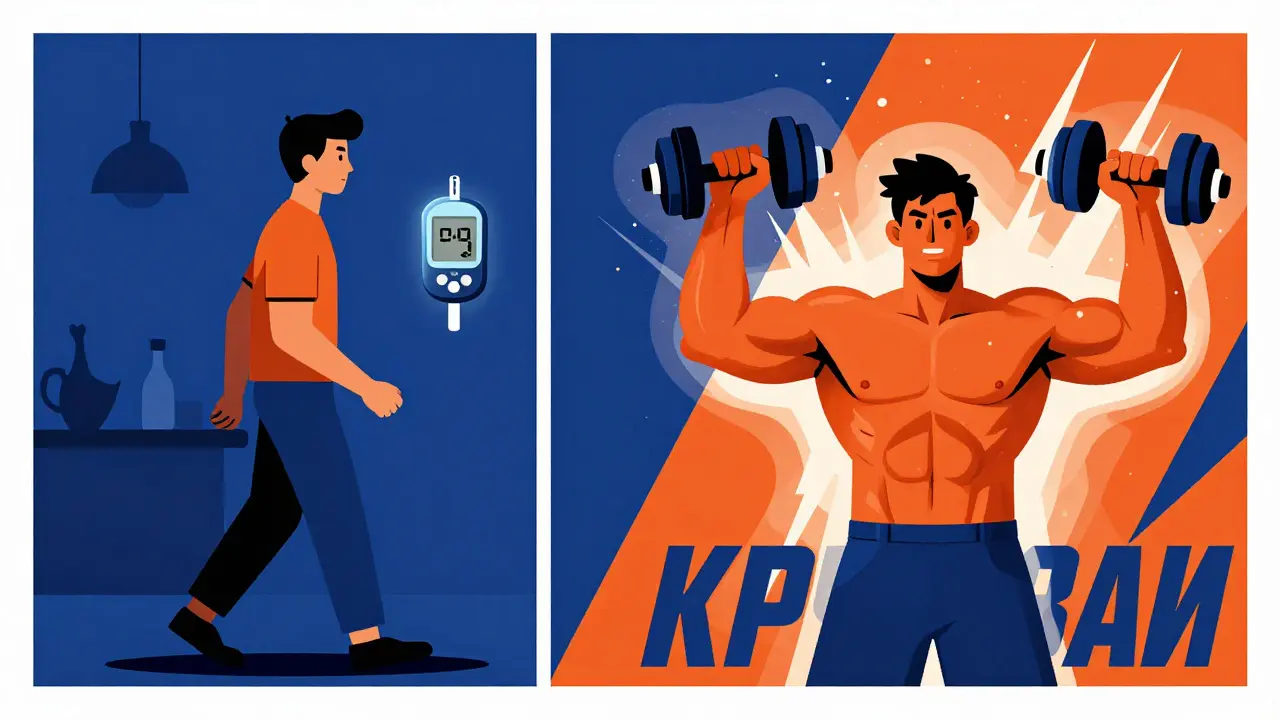
Exercise isn’t optional-it’s medicine. The CDC and ADA agree: aim for at least 150 minutes per week of moderate-intensity activity like brisk walking, cycling, or swimming. That’s 30 minutes, five days a week.
But here’s what most people miss: strength training. Lifting weights or doing bodyweight exercises (squats, push-ups, resistance bands) twice a week builds muscle. Muscle burns more calories at rest and improves insulin sensitivity more than cardio alone. People who added strength training to their routine broke through weight loss plateaus and saw bigger drops in A1C.
Don’t wait to feel “ready.” Start with 10-minute walks after meals. That’s enough to lower post-meal blood sugar spikes. Many users on diabetes forums report that walking after dinner became their most reliable habit.
Medications That Help-And Those That Hurt
Your medications can either help or hurt your weight loss goals. Some drugs cause weight gain, making it harder to lose fat. Others actively support it.
Weight-friendly options:
- GLP-1 receptor agonists: Semaglutide (Wegovy, Ozempic) and tirzepatide (Mounjaro) help people lose 15-20% of their body weight. They reduce appetite and slow stomach emptying.
- SGLT2 inhibitors: Drugs like empagliflozin (Jardiance) and dapagliflozin (Farxiga) make your kidneys flush out extra sugar through urine, leading to modest weight loss (5-10 lbs) and lower heart risks.
Weight-gain culprits:
- Insulin: Necessary for some, but it promotes fat storage. If you’re gaining weight on insulin, talk to your doctor about adjusting doses or adding a GLP-1 drug.
- Sulfonylureas: Medications like glimepiride and glyburide stimulate insulin release and often cause weight gain and low blood sugar-especially when you’re eating less.
Don’t stop your meds on your own. Work with your provider to adjust your treatment plan as you lose weight. Many people can reduce or eliminate insulin or sulfonylureas safely as their insulin sensitivity improves.
Behavioral Tools That Actually Work
Willpower isn’t enough. Sustainable weight loss needs structure. The most successful people use:
- Regular weigh-ins: Step on the scale weekly, not daily. Daily fluctuations are normal. Weekly trends tell the real story.
- Food tracking: Apps like MyFitnessPal or Lose It! help you see hidden calories. Users who tracked consistently lost 3.5-5.5% more weight than those who didn’t.
- Structured programs: The CDC’s National Diabetes Prevention Program (NDPP) offers 16 weekly sessions followed by monthly check-ins. People who complete it lose 5-7% of their weight on average.
- Telehealth coaching: Virtual coaching through apps or video calls has become just as effective as in-person sessions. Over 78% of providers now use telehealth for diabetes weight management.
One user on the ADA’s community forum lost 22 pounds in six months by following DPP guidelines: 150 minutes of walking a week and portion-controlled meals. Her A1C dropped from 7.2% to 5.9%.

Common Pitfalls and How to Avoid Them
Weight loss with diabetes comes with unique challenges:
- Hypoglycemia: If you’re on insulin or sulfonylureas, losing weight can make you prone to low blood sugar. Talk to your doctor before starting a weight loss plan. You may need to reduce your dose.
- Plateaus: After 3-4 months, weight loss often slows. Add strength training, increase walking steps, or tweak your protein intake. Muscle gain can mask fat loss-take body measurements too.
- Emotional eating: A 2023 survey found 42% of people with diabetes cite stress or emotions as their main barrier. Keep healthy snacks on hand. Practice mindfulness. Try journaling before reaching for food.
- Medication side effects: GLP-1 drugs can cause nausea or diarrhea. Start with a low dose. Drink plenty of water. Most side effects fade in a few weeks.
Don’t measure success only by the scale. Other wins count: better sleep, more energy, clothes fitting looser, no more afternoon crashes. Celebrate those.
What Works Best: Surgery, Drugs, or Lifestyle?
There’s no one-size-fits-all answer. Here’s how the options stack up:
| Approach | Average Weight Loss | Diabetes Remission Rate | Best For |
|---|---|---|---|
| Metabolic (bariatric) surgery | 20%+ of body weight | 60-80% | Severe obesity, long-standing diabetes |
| GLP-1 medications (e.g., semaglutide) | 14-21% | 50-60% | Those who can tolerate side effects |
| Intensive lifestyle (DPP/DiRECT) | 10-11% | 46% | Most people-safe, sustainable, low cost |
| Standard care (no program) | 2-5% | <5% | Not recommended |
Lifestyle changes remain the foundation. Even if you use medication or consider surgery, you still need to eat well and move. Drugs and surgery work best when paired with behavior change.
Staying on Track Long-Term
The biggest challenge isn’t losing the weight-it’s keeping it off. The Look AHEAD trial found that only 27% of participants maintained 10% or more weight loss after four years. Why? Support fades. Habits slip.
Success comes down to three things:
- Consistency over perfection: Miss a workout? Eat a slice of cake? Get back on track the next meal. No guilt, no reset.
- Community: Join a support group, find a buddy, or post progress in online forums. People with social support lose more and keep it off longer.
- Regular check-ins: Schedule quarterly visits with your diabetes educator or doctor. Adjust your plan as your body changes.
Remember: weight loss isn’t a race. It’s a lifestyle shift. The goal isn’t to be thin-it’s to be healthier, more energetic, and free from the grip of high blood sugar.
Can you reverse type 2 diabetes by losing weight?
Yes, in many cases. Research shows that losing 10-15 kg (22-33 lbs) can lead to remission of type 2 diabetes by reducing fat in the liver and pancreas, allowing them to function normally again. The DiRECT trial found 46% of participants achieved remission after one year with a structured weight loss program. Remission means normal blood sugar levels without diabetes medications.
How much weight should I aim to lose if I have type 2 diabetes?
Aim for 5-7% of your starting body weight. For someone weighing 200 pounds, that’s 10-14 pounds. This amount improves insulin sensitivity, lowers A1C, and reduces medication needs. If you can lose 10% or more, you significantly increase your chances of diabetes remission.
What’s the best diet for weight loss with diabetes?
There’s no single best diet, but the most effective approaches focus on high-fiber carbs (beans, oats, vegetables), lean protein, and healthy fats while limiting added sugar and refined grains. The Mediterranean diet and low-calorie, nutrient-dense plans like the one used in the DiRECT trial have proven results. Portion control is just as important as food choice.
Do diabetes medications affect weight loss?
Yes. Some medications like insulin and sulfonylureas can cause weight gain, making weight loss harder. Others, like GLP-1 receptor agonists (semaglutide, tirzepatide) and SGLT2 inhibitors (empagliflozin), promote weight loss. Always talk to your doctor before making changes-never stop or adjust meds on your own.
Is exercise necessary for weight loss with diabetes?
Yes. Exercise improves insulin sensitivity and helps preserve muscle during weight loss. Aim for 150 minutes of moderate activity like brisk walking per week, plus strength training twice a week. Walking after meals can lower post-meal blood sugar spikes. Many people find that adding strength training breaks through weight loss plateaus.
How can I avoid low blood sugar while losing weight?
If you take insulin or sulfonylureas, weight loss increases your risk of hypoglycemia. Talk to your healthcare provider before starting a weight loss plan. You may need to reduce your medication dose. Monitor your blood sugar more often, especially when changing your diet or activity level. Keep fast-acting carbs on hand in case your blood sugar drops.
What if I hit a weight loss plateau?
Plateaus are normal after 3-4 months. Try increasing your strength training, adding more steps to your day, or slightly adjusting your protein intake. Muscle gain can mask fat loss, so take body measurements and notice how your clothes fit. Revisit your food logs-you might be eating more than you think. Stay consistent; the scale will move again.
Weight loss with diabetes is challenging-but it’s possible. Thousands of people have done it. You don’t need to be perfect. You just need to be consistent. Start small. Focus on one habit at a time. And remember: every pound lost is a step toward better health, more energy, and freedom from the daily burden of high blood sugar.
Comments
Kathryn Weymouth December 23, 2025 at 03:36
Finally, a practical guide that doesn’t sugarcoat it. Losing 5-7% of body weight isn’t glamorous, but the data is undeniable. I’ve seen patients reverse their prediabetes with just this small shift-no magic pills, no detoxes. Consistency beats intensity every time.
And yes, fiber is non-negotiable. Beans, lentils, chia seeds-they’re the unsung heroes. I tell my clients to start with one extra serving per day. Small wins build momentum.
Also, tracking portions isn’t about obsession-it’s about awareness. Most people think they’re eating ‘moderately’ until they measure. Then the truth hits.
Strength training? Absolutely. Muscle isn’t just for looks. It’s metabolic armor against insulin resistance.
And please, stop blaming willpower. This isn’t about discipline. It’s about systems. Structure creates freedom.
Also, walking after dinner? Game-changer. My 82-year-old patient dropped her A1C from 8.1 to 6.3 just by doing that. No meds changed. Just movement after food.
One thing I wish more people knew: remission doesn’t mean cured. It means you’ve healed enough to stop the damage. Stay vigilant. Stay consistent.
And if you’re on insulin? Don’t panic. Talk to your provider. Dose adjustments are part of the journey, not a failure.
Weight loss with diabetes isn’t a diet. It’s a recalibration. And it’s possible.
Thank you for writing this. Real, grounded, human.
Nader Bsyouni December 23, 2025 at 19:14
So we’re back to the same old dogma about 5 percent weight loss being some kind of holy grail
Have you considered that maybe insulin resistance is a symptom not a cause
Maybe the real issue is chronic inflammation from processed seed oils and the industrial food system
And why is everyone acting like GLP-1 agonists are magic when they’re just appetite suppressants with a 10k price tag
Also the DiRECT trial was funded by pharmaceutical interests
And who says weight loss is even the goal
Maybe health is about metabolic flexibility not the number on the scale
Also why is fat always the villain
What about visceral fat distribution genetics epigenetics
Why is this narrative so reductive
It’s not about losing weight it’s about reclaiming autonomy from the medical industrial complex
Also keto works better anyway
Just saying
Julie Chavassieux December 24, 2025 at 23:15
I just… I can’t
After 12 years of trying
Every time I lose 10 pounds
My blood sugar drops so low I pass out
And then I gain it all back
And then I cry
And then I eat a whole pizza
And then I hate myself
And then I delete the app
And then I swear I’ll start again tomorrow
But tomorrow never comes
And I’m so tired
Why does everyone make it sound so easy
It’s not just willpower
It’s grief
It’s trauma
It’s fear
It’s being told you’re broken
And then being told you just need to try harder
And I’m so tired
And I just want to be okay
Without losing weight
Herman Rousseau December 26, 2025 at 21:17
Hey everyone - I’m right there with you Julie 😊
Been on this journey for 8 years. Started at 285 lbs. Now at 198. A1C down from 9.4 to 5.6.
Here’s the secret: I didn’t do it alone. Found a local diabetes support group. We walked together every Tuesday. Shared meals. No judgment.
Started with 10-minute walks after dinner. Then added bodyweight squats. Then resistance bands. Then light dumbbells.
Used MyFitnessPal for 3 months. Then just learned portion sizes. Now I eat intuitively - but mindfully.
Switched from glimepiride to metformin + semaglutide. My doc helped me adjust. No crashes.
Biggest win? I can now play with my grandkids without getting winded.
You don’t have to be perfect. Just show up. One day. One meal. One step.
And if you’re feeling stuck? DM me. I’ll send you my favorite 15-minute home workout. No equipment needed.
You’ve got this. We’ve got you.
💙
Vikrant Sura December 27, 2025 at 23:23
Study says 5-7% weight loss helps. So what. All studies are biased. Also why are you assuming everyone has access to healthy food or a doctor who listens. Also most of this is common sense. Also why is this even a post. Also I don’t care. Also I’m not losing weight. Also I’m not your guinea pig. Also you’re all doing it wrong. Also whatever.
Candy Cotton December 29, 2025 at 21:06
As an American woman of strong convictions and disciplined lifestyle, I must say that this article is dangerously naive. The notion that weight loss can reverse type 2 diabetes ignores the fundamental decline in American moral fortitude. We have become a nation of convenience, of processed carbohydrates, of weakness. The solution is not to tweak insulin doses or buy expensive drugs - it is to return to the values of hard work, self-reliance, and the American tradition of eating real food. No one in 1950 had GLP-1 agonists. They had meat, vegetables, and discipline. We must reclaim that. The government is not your nurse. You are responsible for your body. Period. No excuses. No pity. No subsidies for poor choices.
Johnnie R. Bailey December 31, 2025 at 14:15
There’s something deeply poetic about the body healing itself when given space - not through force, but through grace.
Fat isn’t just storage. It’s a messenger. When it accumulates around the liver and pancreas, it’s screaming: ‘Something’s off.’
And when we remove the noise - the sugar, the stress, the sleeplessness - the organs remember how to breathe again.
It’s not about willpower. It’s about listening.
Western medicine treats symptoms. But the body? The body wants to be well.
What if weight loss isn’t the goal - but the side effect of returning to rhythm?
Walking after dinner isn’t a tactic. It’s a ritual.
Measuring food isn’t obsession. It’s reverence.
And GLP-1 drugs? They’re not magic. They’re a bridge - a temporary handhold while the soul catches up to the body.
We’re not broken. We’re out of sync.
And maybe - just maybe - healing isn’t about becoming smaller.
But about becoming whole.
Tony Du bled January 1, 2026 at 02:30
Man I just started walking after dinner and my blood sugar’s been way better. No crazy diet, no supplements. Just got up after eating and strolled around the block. Took me 15 minutes. Felt weird at first but now I look forward to it. Like my own little wind-down ritual. Also I’m not even trying to lose weight. Just feel less zombie-like after meals. Weird how simple stuff works.
Art Van Gelder January 2, 2026 at 17:26
Let’s sit with this for a second.
Diabetes isn’t a disease of the pancreas. It’s a disease of disconnection.
Disconnected from food - we eat what’s cheap, fast, and engineered to trigger dopamine.
Disconnected from movement - we sit 14 hours a day and call it life.
Disconnected from community - we’re told to fix ourselves alone, in silence, with an app.
And we’re told to lose weight - as if the body is the enemy.
But what if the body is trying to survive?
What if the fat isn’t the problem - but the signal?
What if insulin resistance is the body’s last-ditch effort to protect itself from too much sugar, too much stress, too much loneliness?
And what if the path back isn’t through restriction - but through restoration?
Not of the body - but of the rhythm.
Of meals shared. Of walks taken. Of silence held.
Of being seen. Not fixed.
Maybe the real miracle isn’t the weight loss.
It’s the return to belonging.
Aliyu Sani January 2, 2026 at 23:25
bro this is lit but like... in nigeria we dont even have access to olive oil or greek yogurt. my fridge has garri, plantain, and spam. so what now? also insulin cost like 3x my daily wage. so yeah. this advice is cool for usa but for us? we just pray and hope our sugar dont hit 400. also why no talk about traditional foods? like bitter leaf soup? it actually helps. but nobody talks about that. also why is everyone so obsessed with scales? my aunty has type 2 and she’s big but she walks 5km daily and her sugar is 6.5. so maybe its not about size. maybe its about motion. just saying.
Sam Black January 3, 2026 at 17:14
One thing I’ve learned living in the bush outside Melbourne: the body doesn’t care about your A1C number. It cares about rhythm. Same time eating. Same time moving. Same time sleeping.
My cousin with diabetes didn’t lose weight - but he started eating his meals sitting down, no phone, with his wife. Three meals a day. No snacks. Walked 20 mins after dinner.
His A1C dropped from 8.9 to 5.8 in 10 months.
He didn’t track a single calorie.
He just came home to himself.
Maybe the real medicine isn’t in the food.
It’s in the presence.
Jamison Kissh January 5, 2026 at 11:44
What’s interesting is how little we talk about the emotional labor of managing diabetes while trying to lose weight. It’s not just about food and exercise. It’s about shame. It’s about being told you’re lazy while your body is fighting a biochemical war. It’s about being treated as a statistic instead of a person. And yet - the science still holds. The 5-7% rule works. The data doesn’t lie. So how do we hold both truths? That the body responds to behavior - and that the system fails so many of us before we even begin? Maybe the answer isn’t more willpower. Maybe it’s more compassion. And infrastructure. And access. And dignity.
Jeremy Hendriks January 7, 2026 at 01:30
Everyone’s acting like losing 5% is some kind of breakthrough when the real solution is intermittent fasting combined with keto and cold exposure. The ADA is outdated. They’re still pushing carbs like it’s 1995. Look at the data - low carb diets reverse diabetes faster than any lifestyle program. Also GLP-1 drugs are just a bandaid. Real change comes from discipline. Not apps. Not walking. Not measuring cups. You either control your intake or you stay sick. Simple as that. Stop making excuses. Eat less. Move more. End of story.
Gabriella da Silva Mendes January 8, 2026 at 14:20
OMG I JUST REALIZED I’VE BEEN DOING EVERYTHING WRONG 😭
Like I thought eating salad with ranch was healthy
But then I checked the label and it had 14g sugar in ONE DRESSING
AND I’VE BEEN EATING IT EVERY DAY FOR 3 YEARS
MY A1C IS 8.2 AND NOW I UNDERSTAND WHY
AND I JUST CRIED IN THE GROCERY STORE
AND I BOUGHT OLIVE OIL AND BALSAMIC
AND I’M GOING TO WALK AFTER DINNER
AND I’M NOT GIVING UP
THIS IS MY TURN
💖
Herman Rousseau January 9, 2026 at 02:54
Julie - I see you. I’ve been there. That ranch dressing? I used to drown my salads in it too. I get it. We’re not broken. We’re just fed wrong.
Try this: next time you’re tempted, just pause. Take a breath. Ask yourself - ‘Am I hungry? Or am I hurting?’
Then drink a glass of water. Wait 10 minutes.
Most of the time, the craving passes.
And if it doesn’t? Eat the dressing. But eat it slowly. Savor it. No guilt.
Healing isn’t about perfection. It’s about presence.
You’re not failing. You’re learning.
And you’re not alone.
I’m right here with you.
💙