
You feel fine. No chest pain, no shortness of breath, and your blood pressure is under control. But inside your arteries, a silent process could be happening. Many people don't know they have heart disease until they have a heart attack, but a coronary calcium score is a non-invasive CT scan that detects calcified plaque in the arteries before symptoms ever start. It's essentially a way to peek inside your heart's plumbing to see if there's any "rust" building up in the pipes.
Key Takeaways
- A calcium score measures calcified plaque to predict heart attack risk.
- A score of 0 means no detectable plaque; 400+ indicates extensive buildup.
- The test takes less than 5 minutes and requires no contrast dye.
- It's most useful for people with "intermediate" risk factors to decide on medication.
- It cannot detect "soft" (non-calcified) plaque.
How a Calcium Scan Actually Works
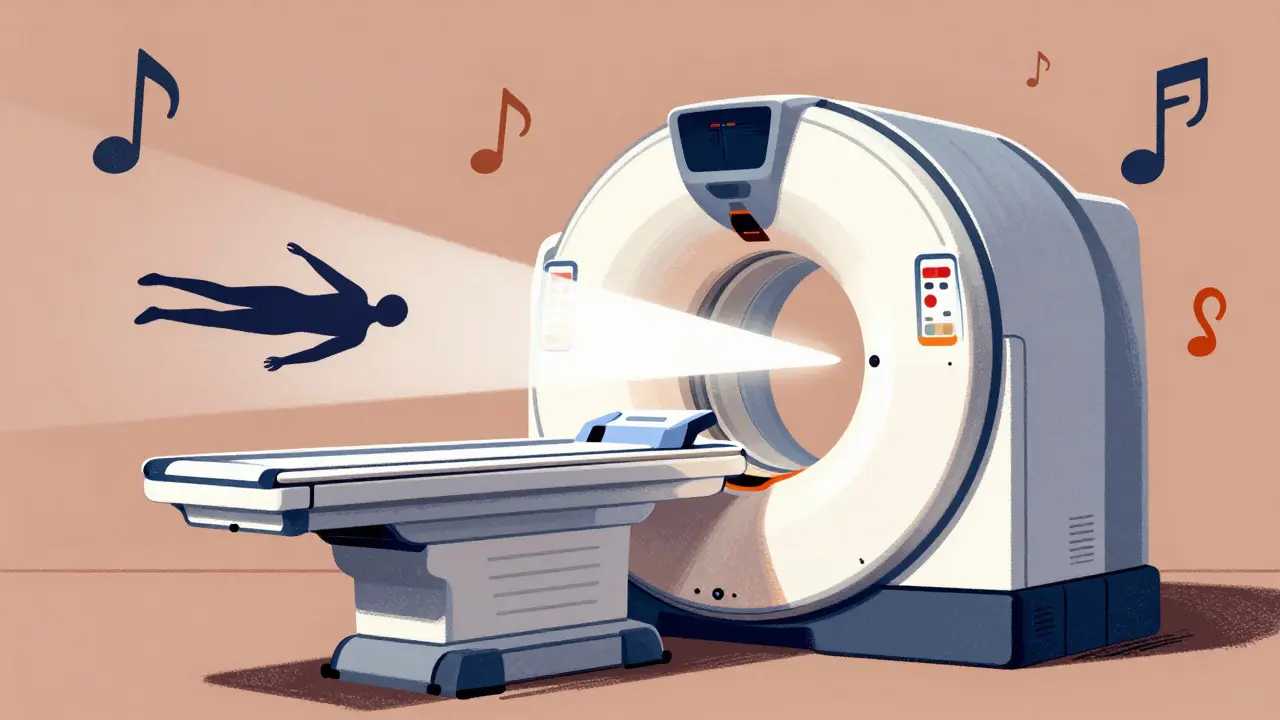
Unlike a traditional stress test that looks at how your heart handles exercise, a CAC scan (Coronary Artery Calcium scan) looks at the physical structure of your arteries. It uses multidetector CT (MDCT) technology to take a series of rapid-fire X-ray images. Because calcium is dense, it shows up bright white on the scan, while healthy artery walls are nearly invisible. This allows doctors to see exactly where plaque has hardened.
One of the best parts about this test is the lack of fuss. You don't need to drink a contrast dye or have an IV started. The whole process is quick-most people are in and out of the machine in under five minutes. You'll simply lie on a table and hold your breath for about 10 to 15 seconds while the scanner does its work. It's a low-dose radiation procedure, roughly similar to what you'd get during a mammogram.
Decoding Your Score: What the Numbers Mean
After the scan, a radiologist uses the Agatston Score system to quantify the plaque. This isn't just a guess; the software calculates the area of each plaque deposit and multiplies it by its density. The resulting number tells you how much "calcified burden" your heart is carrying.
| Score | Plaque Level | Heart Event Risk |
|---|---|---|
| 0 | No detectable plaque | Very low |
| 1-10 | Minimal | Low |
| 11-100 | Mild | Moderate |
| 101-400 | Moderate | Increased (up to 75% higher) |
| 401+ | Extensive | High risk of cardiac events |
While the raw number is helpful, your doctor will also look at your MESA Percentile. This compares your score to other people of your same age, gender, and ethnicity. For example, a score of 100 might be common for a 70-year-old but very concerning for a 40-year-old. If you land above the 75th percentile for your peer group, it's usually a sign that you need more aggressive prevention strategies.
Why This Test Beats Traditional Risk Calculators
For years, doctors relied on formulas like the Pooled Cohort Equations-basically a math problem using your age, cholesterol, and smoking status to guess your risk. The problem? These formulas often misclassify 20-30% of patients. You might be told you're "low risk" based on your blood work, but a scan reveals you actually have significant plaque. This is known as a "false low-risk" patient.
Conversely, some people have high cholesterol but zero calcium in their arteries. For them, starting a high-dose statin might be unnecessary. By providing anatomical proof, the calcium score helps your doctor move from "guessing" to "knowing." In fact, research shows this test reclassifies the risk level for nearly half of intermediate-risk patients, often leading to a more precise prescription of medication.

The Blind Spots: What a Calcium Score Misses
It's important to be realistic: a calcium score is not a complete map of your heart. It only sees calcified plaque. There is such a thing as "soft plaque"-fatty deposits that haven't hardened into calcium yet. These soft plaques make up about 20-30% of the total plaque volume and can actually be more dangerous because they are more prone to rupturing and causing a sudden heart attack.
If your doctor needs to see these soft plaques or check for actual blockages (stenosis), they'll order a Coronary CT Angiography (CCTA). Unlike the calcium score, a CCTA uses contrast dye and more radiation to create a detailed map of blood flow. While CCTA is more comprehensive, the simple calcium score is usually the better first step for screening because it's faster and easier on the body.
Preparing for Your Scan and Next Steps
If you've scheduled a scan, there are a few simple rules to follow. To keep your heart rate steady, avoid caffeine and smoking for at least four hours before the appointment. A racing heart can blur the images, making the score less accurate.
Once you get your results, don't panic if the number is higher than zero. A high score is a wake-up call, not a diagnosis of an immediate heart attack. It's a tool for prevention. Most doctors will use a score above 100 to justify starting or intensifying statin therapy and focusing on lifestyle changes. Many patients report that seeing a concrete number on a piece of paper is more motivating than a vague warning about cholesterol; it turns a theoretical risk into a visible reality.
Does a calcium score of 0 mean I can't have a heart attack?
Not necessarily, but it's very reassuring. A score of 0 means you have no calcified plaque, which statistically puts you at a very low risk for a heart event in the near future. However, it doesn't rule out a 100% chance of a heart attack because of the potential for "soft plaque" or other issues like blood clots or spasms. Continue following your doctor's general health advice.
Is the radiation from a CAC scan dangerous?
The radiation dose is quite low, typically between 1-3 mSv. For comparison, this is similar to the dose received during a mammogram. For most adults, this is considered a safe and acceptable level of exposure given the potentially life-saving information the scan provides.
How often should I get a calcium score?
This is not a yearly test. Because calcium accumulates slowly, repeating the scan every year usually doesn't provide new useful information. Most doctors only recommend repeating the test every 3 to 5 years, or if there is a significant change in your health symptoms.
Will my insurance cover a coronary calcium scan?
Coverage varies wildly. Many private insurers cover it if you have specific high-risk factors, but Medicare often does not include it in standard annual wellness visits. Many patients pay out-of-pocket, with costs typically ranging from $100 to $300 depending on the facility.
What should I do if my score is over 400?
A score over 400 indicates extensive plaque buildup. While this sounds scary, it's a signal to take immediate preventive action. Your doctor will likely recommend high-intensity statins to stabilize the plaque and prevent it from rupturing, along with a strict heart-healthy diet and a supervised exercise plan. In some cases, they may suggest further testing like a stress test or CCTA.