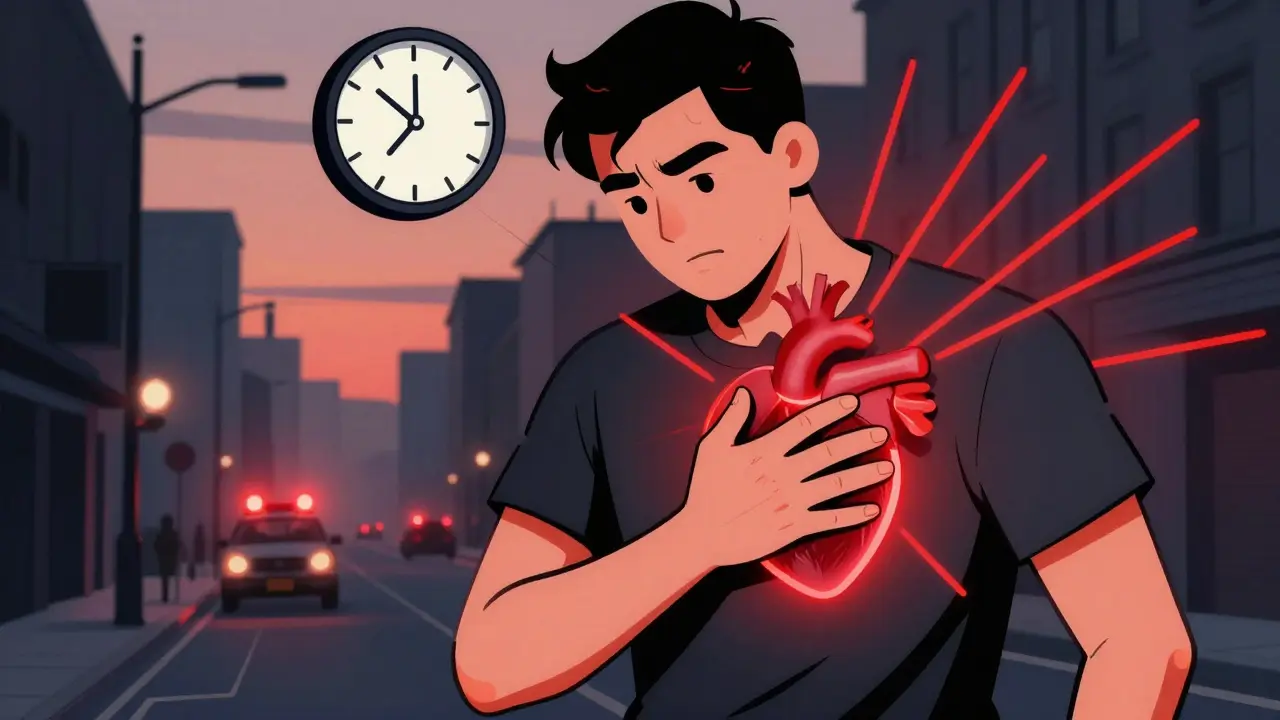
When your chest hurts, it’s easy to panic. Is it heartburn? A pulled muscle? Or something serious like a heart attack? The truth is, chest pain isn’t always what it seems - and knowing when to rush to the emergency department could save your life.
Every year, millions of people show up at emergency rooms with chest pain. In the U.S., it’s one of the top reasons for ER visits. But here’s the surprising part: only about 1 in 10 of those cases turn out to be a heart attack. The rest? Anxiety, acid reflux, muscle strain, lung issues, or even just a bad night’s sleep. So how do you tell the difference? And more importantly - when should you just wait it out, and when should you call 9-1-1 right now?
What Counts as Chest Pain?
Most people think chest pain means sharp, stabbing pain right in the middle of the chest. But that’s not the whole story. The 2021 American Heart Association and American College of Cardiology guidelines define chest pain more broadly: it’s any pressure, tightness, squeezing, burning, or discomfort in the chest - and it doesn’t even have to be in the chest.
That discomfort can spread to your jaw, neck, shoulders, arms (especially the left one), upper back, or even your upper belly. Some people feel like they’ve been hit in the chest. Others describe it as a heavy weight sitting on their chest. And for some - especially women, older adults, and people with diabetes - there’s no pain at all. Instead, they feel extreme fatigue, nausea, sweating, or just can’t catch their breath.
This matters because if you’re waiting for the "classic" heart attack symptoms and you’re not feeling a crushing pain, you might delay getting help. That’s dangerous.
When to Go to the Emergency Department Right Now
You don’t need to be 100% sure it’s a heart attack. If you’re unsure, it’s better to be safe. Here are the signs that mean you should call emergency services immediately - don’t drive yourself, don’t wait to see if it goes away:
- Crushing or squeezing chest pain that lasts more than 5 minutes - especially if it comes and goes
- Pain spreading to your arm, jaw, neck, or back
- Shortness of breath that comes with chest discomfort
- Breaking out in a cold sweat for no reason
- Nausea or vomiting along with chest pressure
- Dizziness, lightheadedness, or passing out
- Heart rate over 100 beats per minute or low blood pressure (below 90 systolic)
- Difficulty breathing with a respiratory rate over 20 breaths per minute
If you have even one of these - especially if you’re over 40, have high blood pressure, diabetes, high cholesterol, smoke, or have a family history of heart disease - call 9-1-1. Don’t text a friend. Don’t Google it. Don’t wait 10 minutes to see if it gets better. Time is muscle - every minute counts.
Why Calling 9-1-1 Is Better Than Driving Yourself
Some people think, "I’ll just drive to the hospital." But research shows that patients who drive themselves to the ER have a 25-30% higher risk of complications compared to those transported by ambulance. Why?
- Ambulances carry ECG machines - they can start checking your heart on the way to the hospital.
- Paramedics can give oxygen, aspirin, or even medications to stabilize you before you even reach the ER.
- They can alert the hospital ahead of time so the cardiac team is ready the moment you arrive.
- If you go into cardiac arrest on the way, they’re trained to handle it.
Studies show that getting an ECG within 10 minutes of arriving at the hospital is critical. But if you drive yourself, you might not even get one for 30 minutes or more. That delay can mean the difference between saving your heart and permanent damage.
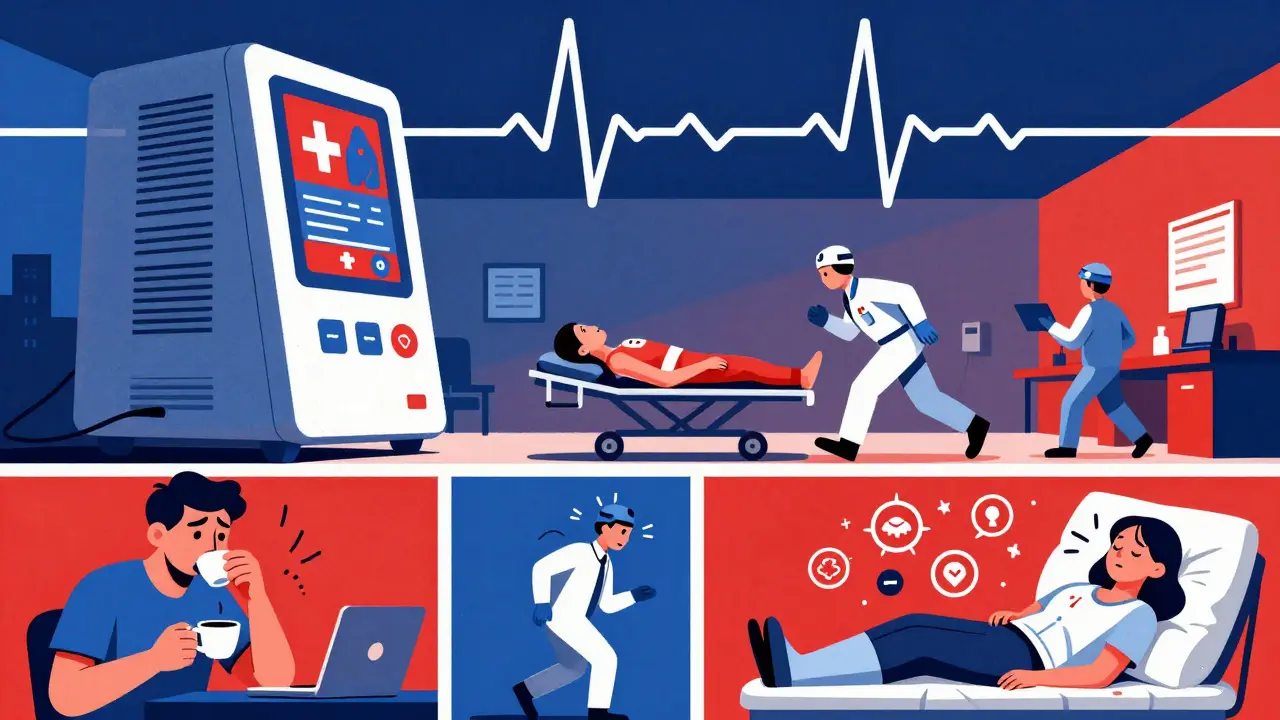
What Happens in the Emergency Department?
When you get to the ER with chest pain, the team doesn’t just guess. They follow a strict, evidence-based protocol. Here’s what you can expect:
- Immediate ECG - within 10 minutes of arrival. This is non-negotiable. The ECG is the fastest, cheapest way to spot signs of a heart attack. Even subtle changes can be life-saving clues.
- High-sensitivity troponin blood test - a protein released when heart muscle is damaged. Two tests, 1-2 hours apart, can rule out a heart attack in 70-80% of cases.
- Vital signs check - heart rate, blood pressure, oxygen levels, breathing rate. If you’re unstable (low BP, fast heart rate, trouble breathing), they act fast.
- "Sick vs Not Sick" assessment - doctors use their experience to judge if you look seriously ill. This gut feeling, backed by data, guides their next steps.
- Risk scoring - tools like the HEART score (History, ECG, Age, Risk factors, Troponin) help sort you into low, intermediate, or high risk. A score of 0-3? You might be sent home with follow-up. A score of 7-10? You’re going straight to the cath lab.
For patients with clear signs of a heart attack - especially ST-elevation (STEMI) - the goal is to open the blocked artery within 90 minutes. That’s called door-to-balloon time. Hospitals are measured on this. If you’re a candidate, they’ll take you straight to the catheterization lab for a stent.
When You Might NOT Need the ER
Not every chest discomfort is an emergency. If you have:
- Sharp, localized pain that gets worse when you breathe deeply or move
- Pain that only happens when you press on your chest
- Pain that improves after taking antacids
- Pain that’s been going on for days or weeks without change
- Clear triggers like stress, caffeine, or exercise that you’ve had before
…then it’s more likely to be something like muscle strain, acid reflux, or anxiety. But even then - if you’re unsure, or if this feels different from anything you’ve felt before - it’s still safer to get checked.
Outpatient clinics are great for follow-up. But if you’re having new, unexplained chest discomfort - especially with risk factors - the ER is where you need to go. No exceptions.
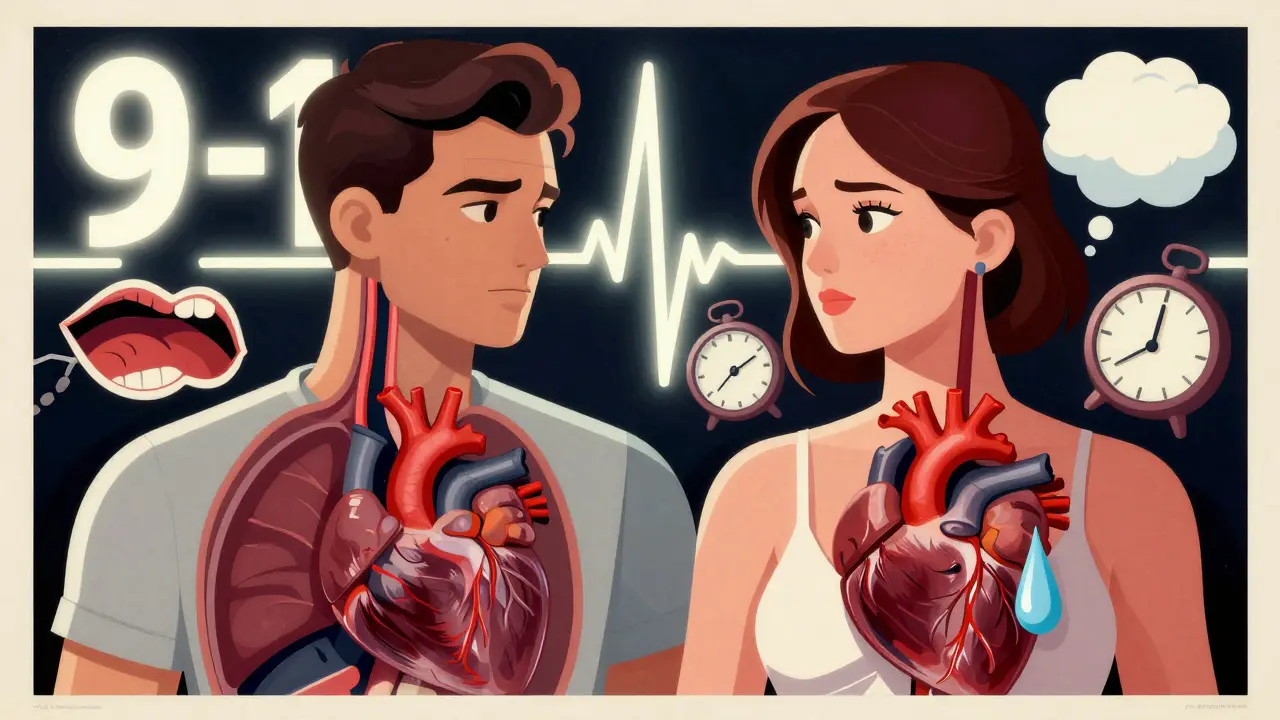
What You Can Do Before It Happens
Prevention beats emergency. If you’re at risk for heart disease - which includes most people over 40, especially with high blood pressure, diabetes, smoking, or family history - do these three things:
- Know your numbers: Blood pressure, cholesterol, blood sugar. Get them checked yearly.
- Learn the warning signs: Not just chest pain - fatigue, nausea, jaw pain, shortness of breath during light activity.
- Have a plan: Keep emergency numbers saved. Tell someone in your household what to do if you collapse. Carry aspirin (if your doctor says it’s okay) - one tablet, chewed, can help during a heart attack.
And if you’ve ever had chest pain before - even if it turned out to be nothing - talk to your doctor. Don’t assume it won’t happen again.
What’s Changing in Chest Pain Care
Thanks to advances in testing, the way ERs handle chest pain is faster than ever. High-sensitivity troponin tests, introduced in 2022, let doctors rule out heart attacks in under two hours for most people. That means fewer people are stuck in the ER for hours just waiting.
Some hospitals are even using AI to read ECGs. Early results show AI can spot tiny signs of heart strain that even experienced doctors miss. By 2025, most U.S. hospitals expect to use this tech - which could cut diagnosis time by 15-20 minutes.
But technology doesn’t replace common sense. If you feel something’s wrong - trust yourself. Your instincts matter.
Is chest pain always a sign of a heart attack?
No. Chest pain has many causes - from heartburn and muscle strain to anxiety and lung issues. Only about 10-15% of people who go to the ER with chest pain have a heart attack. But because heart attacks can be deadly, any new or unexplained chest discomfort should be evaluated - especially if it’s accompanied by shortness of breath, sweating, nausea, or pain spreading to the arm or jaw.
Can I wait to see if my chest pain goes away?
If your pain is mild and you’re certain it’s like something you’ve had before - like heartburn - you might wait a few minutes. But if it’s new, different, or getting worse, don’t wait. Heart attacks can start slowly, and delaying care can cause permanent heart damage. If you’re unsure, call 9-1-1. It’s better to be safe than sorry.
Why is an ECG done so quickly in the ER?
The ECG is the fastest way to detect signs of a heart attack - like blocked arteries or abnormal heart rhythms. It takes less than a minute, costs almost nothing, and gives critical information. Guidelines say it must be done within 10 minutes of arrival. Delaying it by even 20-30 minutes can slow down life-saving treatment.
Do I need to go to the ER if I have chest pain but no risk factors?
Yes - if the pain is new, unexplained, or feels different from anything you’ve felt before. Heart attacks can happen to anyone, even people without high cholesterol, smoking, or family history. Risk factors increase your chances, but they don’t guarantee you’re safe. When in doubt, get checked.
What if I go to the ER and it turns out to be nothing?
That’s okay. Emergency departments are designed to catch the rare but deadly cases - even if it means some people get checked for nothing. The goal is to make sure no one with a heart attack slips through. If you were sent home after testing, it means the doctors were confident you weren’t in danger. Use this as a wake-up call to talk to your doctor about heart health - even if you’re young.
Can women have heart attacks without chest pain?
Yes. Women are more likely than men to have "atypical" symptoms - like extreme fatigue, nausea, vomiting, back or jaw pain, or shortness of breath without chest pressure. This is why heart attacks in women are often missed or delayed. If a woman feels unusually tired or sick for no reason - especially with other risk factors - she should not ignore it.
Is it safe to take aspirin if I think I’m having a heart attack?
If you’re not allergic to aspirin and your doctor hasn’t told you to avoid it, chewing one adult aspirin (325 mg) while waiting for EMS can help reduce heart damage. Don’t take it if you’re unsure - but if you’re having chest pain and suspect a heart attack, it’s a simple, safe step that could save your life.
Final Thought
Heart attacks don’t come with warning signs everyone recognizes. Sometimes they’re quiet. Sometimes they’re subtle. And sometimes, they happen to people who seem perfectly healthy. The best defense? Know the signs. Act fast. And never hesitate to call 9-1-1 if something feels off. Your heart doesn’t care if you’re embarrassed, scared, or unsure. It only cares if you act in time.
Comments
phyllis bourassa March 5, 2026 at 22:55
I swear, if I had a dollar for every time someone said "it's probably just heartburn" and then ended up in the ICU...
My mom did this. Thought it was indigestion. Took a nap. Woke up with a heart attack. Never again. If it feels weird, call 9-1-1. No shame. No "maybe." Just call.
amber carrillo March 7, 2026 at 15:24
This is the kind of clarity we need. Too many people wait because they're afraid of being wrong. You're not wasting anyone's time by showing up. You're saving your life.
Tim Hnatko March 8, 2026 at 12:20
I work in ER triage. Saw 37 chest pain cases last week. 2 were heart attacks. Both came in by ambulance. One drove himself. Ended up in ICU for 5 days. The other walked out Monday. Don't gamble with your heart.
Joe Prism March 9, 2026 at 11:47
Time is muscle. Not a slogan. A law of biology. Delay = death. Don't overthink it. If it's new, call.
Bridget Verwey March 9, 2026 at 18:30
So let me get this straight. You'd rather Google "is this a heart attack?" than call 9-1-1? Bro. You're not a doctor. You're not even a Google expert. Call. The. Ambulance.
Andrew Poulin March 9, 2026 at 18:43
If you're debating whether to go to the ER you're already too late. Stop thinking. Start acting. Your heart doesn't care about your anxiety. It's not a suggestion. It's a biological emergency.
Weston Potgieter March 11, 2026 at 00:19
I had chest pain for 3 days. Thought it was stress. Then I passed out in the shower. Turned out I had a 90% blockage. No warning. No "classic" pain. Just... gone. Don't be me.
Vikas Verma March 11, 2026 at 12:41
In India, we have a term: "silent infarct." Many patients present with fatigue, dyspnea, or epigastric discomfort. No chest pain. Always rule out cardiac etiology first. Protocol is non-negotiable.
Sean Callahan March 12, 2026 at 13:07
i had chest pain last year and i thought it was just anxiety then i went to the er and it was just gas lol but i still feel kinda bad for going i guess? like i wasted their time? idk
Ferdinand Aton March 14, 2026 at 04:48
Actually, studies show that 30% of heart attack patients don't have chest pain at all. So if you're waiting for pain, you're already dead. The real danger is thinking you know what's normal.
William Minks March 14, 2026 at 04:55
I'm so glad this exists. ❤️ My uncle ignored his symptoms and passed away last year. Please, if you're reading this - call 9-1-1. No regrets.
Jeff Mirisola March 15, 2026 at 14:04
The ER isn't here to judge you. They're here to save you. Whether you're 25 or 75, whether you're healthy or not - if something feels off, show up. That's the only rule that matters.
Susan Purney Mark March 16, 2026 at 17:28
I'm a nurse. I've seen women collapse because they thought chest pain "wasn't their symptom." It's not just men who have heart attacks. It's not just pain. It's nausea. It's fatigue. It's jaw ache. Please. Listen.
Ian Kiplagat March 16, 2026 at 21:20
I had a 90% blockage at 32. No risk factors. No family history. Just... felt weird. Called 9-1-1. Got a stent. Now I tell everyone: if in doubt, go. It's not dramatic. It's just smart.
Amina Aminkhuslen March 18, 2026 at 06:41
You people are so dramatic. I had chest pain for 3 weeks. Went to the doc. It was a pulled rib. You think every ache is a death sentence? Chill. Not everything is a heart attack.