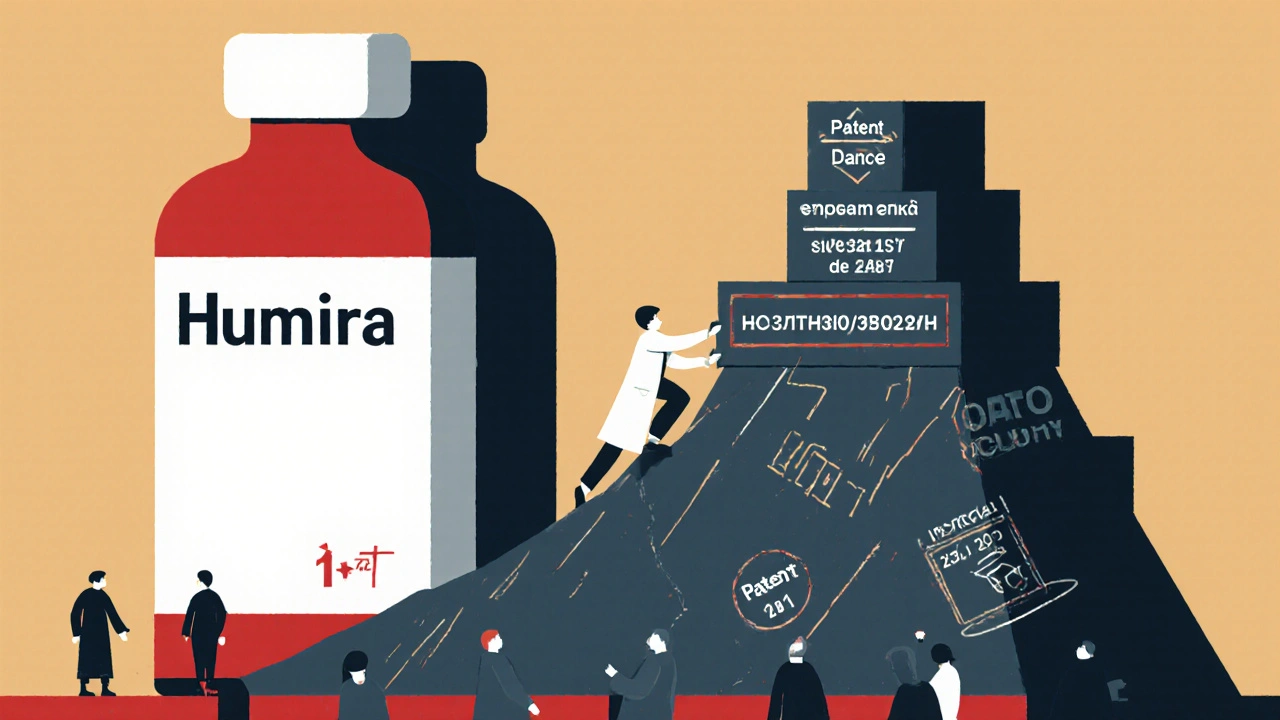
Biologic drugs have changed how we treat cancer, autoimmune diseases, and rare disorders. But they come with a price tag that can hit $100,000 a year. The reason? Patent protection that delays cheaper alternatives from reaching patients. Unlike generic pills, which can appear within years of a brand-name drug’s patent expiring, biosimilars face a far more complex road to market. In the U.S., it’s not just about patents-it’s about a 12-year government-mandated clock that locks out competition, even after the original patents expire.
How Long Do Biologics Have Exclusive Rights?
The Biologics Price Competition and Innovation Act (BPCIA) of 2009 set the rules. When a company launches a new biologic-like Humira, Enbrel, or Keytruda-it gets two layers of protection. First, a 4-year data exclusivity period. During those four years, no other company can even file an application to make a copy. Then comes the 12-year market exclusivity. Even if someone files for approval after year four, the FDA can’t approve it until the 12-year mark hits.
This means a drug approved in 2015 won’t face biosimilar competition until 2027-even if its core patent expired in 2020. That’s not a loophole. It’s the law. And it’s why the U.S. lags behind Europe and Japan in biosimilar access. In Europe, biologics get 10 years of data protection plus one year of market exclusivity-11 total. In the U.S., it’s 12. That extra year adds up. For Humira, the world’s top-selling drug for years, European patients saw biosimilars in 2018. American patients didn’t get them until 2023.
The Patent Dance: A Legal Maze That Delays Competition
Even after the 12-year clock runs out, biosimilars don’t just roll onto the market. There’s something called the “patent dance.” It’s a step-by-step legal process that starts when a biosimilar maker submits its application to the FDA. Within 20 days, they must hand over their entire manufacturing and clinical data to the original drug company. The original company then has 60 days to list every patent they think might be infringed-sometimes dozens, sometimes over a hundred.
Then comes the back-and-forth. The biosimilar maker responds, claiming some patents are invalid or don’t apply. Both sides negotiate which patents to fight in court. If they can’t agree, litigation begins. And litigation takes years. AbbVie, the maker of Humira, filed more than 160 patents on the drug. Many had nothing to do with the actual medicine. They were about delivery devices, packaging, or dosing schedules. Courts have allowed this strategy. The result? Even after the 12-year exclusivity ended, Humira’s biosimilars didn’t launch until 2023 because of ongoing lawsuits.
This isn’t an accident. It’s a tactic. A 2021 study found that 87% of biosimilar patent cases involve multiple claims. The goal isn’t always to win in court-it’s to drag out the process long enough to keep prices high and market share locked in.
Why Are Biosimilars So Hard to Make?
Don’t think of biosimilars as copies of aspirin. Biologics are made from living cells-human or animal. They’re proteins, antibodies, or complex molecules that change based on temperature, pH, and manufacturing conditions. Two batches made in different factories might look identical on paper but behave differently in the body.
To get FDA approval, a biosimilar must prove it’s “highly similar” with no clinically meaningful differences in safety, purity, or potency. That means expensive analytical testing, animal studies, and sometimes full clinical trials. Pfizer estimates it costs $100 million to $250 million and takes 5 to 10 years to develop a biosimilar. Compare that to a generic pill: $1-2 million and two years.
That’s why only 38 biosimilars have been approved in the U.S. since 2015. In Europe, it’s 88. The gap isn’t because Americans don’t need them. It’s because the cost and risk are too high for many companies, especially for complex drugs like antibody-drug conjugates or cell therapies.
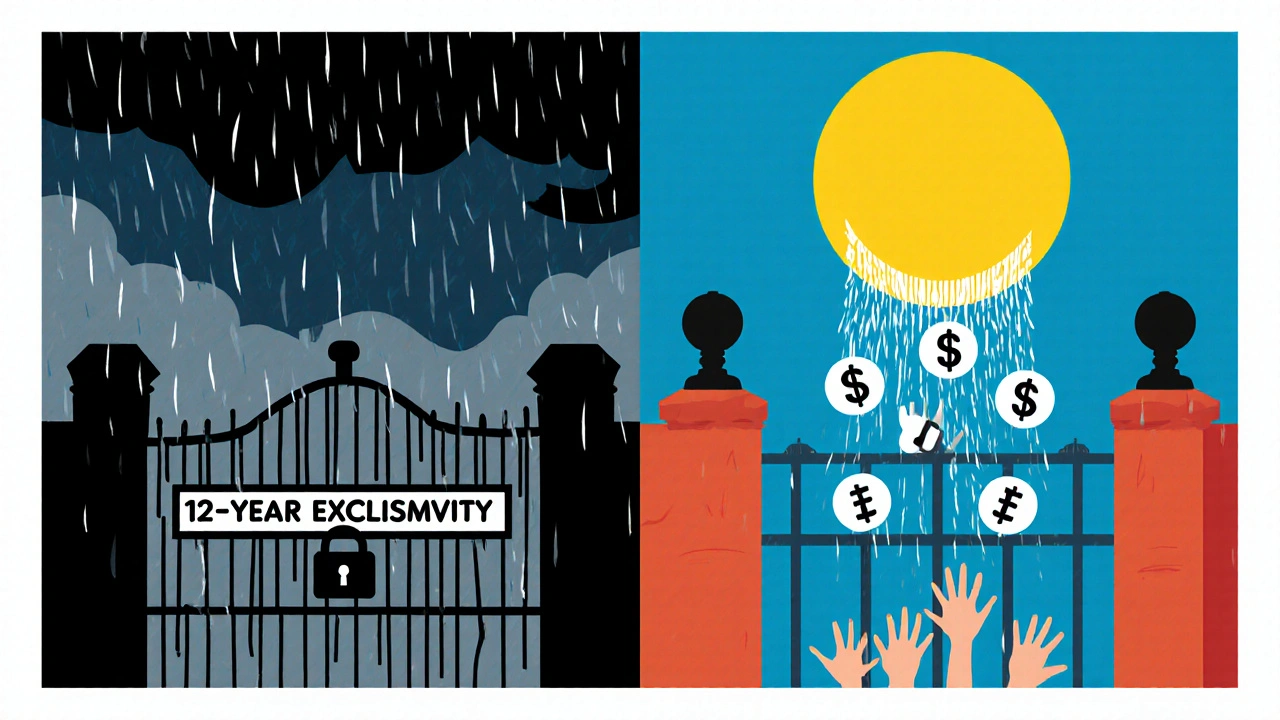
The Biosimilar Void: 118 Drugs, Fewer Than 12 in Development
Between 2025 and 2034, 118 biologics will lose their exclusivity. That’s a $234 billion market. But according to IQVIA, only 12 of those drugs currently have biosimilars in development. Why? Three big reasons:
- Patent thickets: Too many overlapping patents make it risky to enter.
- Orphan drugs: 64% of expiring biologics treat rare diseases. Small patient pools mean low profit potential.
- Molecular complexity: Newer biologics-like bispecific antibodies or gene therapies-are harder to replicate. None have biosimilars in the pipeline yet.
Take eculizumab, a rare disease drug. Only one biosimilar is being developed for it. Meanwhile, 88% of expiring orphan biologics have zero biosimilar candidates. That’s not just a market failure. It’s a patient crisis.
Who’s Losing Out?
Patients. Providers. Payers.
Humira’s price in the U.S. jumped 470% between 2012 and 2022. In Europe, where biosimilars entered early, prices stayed flat. A 2022 survey by the National Community Pharmacists Association found 63% of pharmacists had patients who quit their biologic therapy because they couldn’t afford it. Dr. Peter Bach from Memorial Sloan Kettering says U.S. patients pay 300% more than Europeans for the same treatment.
And it’s not just Humira. Enbrel, Remicade, Rituxan-all have seen similar patterns. The Congressional Budget Office estimates that if we fix the barriers, biosimilars could save the U.S. healthcare system $158 billion over the next decade. Under current rules? Only $71 billion.

What’s Being Done?
The FDA’s 2022 Biosimilars Action Plan promised to improve communication, speed up approvals, and support competition. But progress has been slow. Only 38 biosimilars approved in 10 years. Legislative efforts like the Biosimilars User Fee Act of 2022 stalled in Congress. Meanwhile, innovator companies continue to file new patents on old drugs, extending their control.
Some experts argue the 12-year exclusivity period is too long. The Biotechnology Innovation Organization says it’s necessary to reward innovation. But consumer groups like AARP and Doctors Without Borders say it’s a barrier to care. Legal scholars point out that the patent dance was meant to encourage negotiation-it’s become a tool for delay.
What’s Next?
The next five years will be critical. More than 100 biologics will hit their exclusivity end dates. If nothing changes, patients will keep paying high prices while the healthcare system burns through billions. But if regulators, lawmakers, and manufacturers work together-simplifying the approval process, limiting patent abuse, and incentivizing development for orphan drugs-biosimilars could finally deliver on their promise: affordable, life-changing treatments for millions.
It’s not about killing innovation. It’s about making sure innovation doesn’t come at the cost of access.
How long does it take for a biosimilar to enter the U.S. market after a biologic is approved?
It takes at least 12 years. The FDA cannot approve a biosimilar until 12 years after the original biologic’s approval date. Biosimilar manufacturers can’t even submit their application until 4 years after the original drug’s approval. This 12-year clock starts on the date of first licensure, not the date of patent filing.
Are biosimilars the same as generic drugs?
No. Generic drugs are exact chemical copies of small-molecule drugs, like aspirin or metformin. Biosimilars are highly similar versions of large, complex biologic drugs made from living cells. They can’t be identical because of manufacturing variability. The FDA requires them to show no clinically meaningful differences in safety, purity, or potency-but they’re not exact replicas.
Why do biologic companies file so many patents?
To extend market control beyond the original patent. Companies like AbbVie have filed hundreds of patents on Humira covering delivery devices, dosing methods, packaging, and manufacturing tweaks. These aren’t always about the medicine itself-they’re legal tools to delay biosimilar entry. Courts have allowed this strategy, creating what experts call a “patent thicket.”
What’s the patent dance, and why does it matter?
The patent dance is a legal process under the BPCIA where a biosimilar applicant shares its application with the original drug maker, who then lists patents they believe are infringed. Both sides negotiate which patents to litigate. If they can’t agree, lawsuits begin. It was designed to resolve disputes early, but it’s often used to delay biosimilar entry for years through prolonged litigation.
Why are there so few biosimilars for rare disease drugs?
Because the patient population is small, sales potential is low, and development costs are high. Of the 118 biologics set to lose exclusivity between 2025 and 2034, 64% treat rare diseases. Yet 88% of those have no biosimilars in development. Companies can’t justify the $100-250 million investment for a market of a few thousand patients.
How do U.S. biosimilar timelines compare to other countries?
The U.S. has the longest exclusivity period at 12 years. The EU offers 10 years of data exclusivity plus 1 year of market exclusivity (11 total). Japan has 8 years of data exclusivity plus 4 years of market exclusivity (12 total). South Korea gives 10 years of data exclusivity with no additional market exclusivity. This is why biosimilars entered Europe for Humira in 2018 but didn’t reach the U.S. until 2023.
Can biosimilars be cheaper than the original biologic?
Yes, but not always by much. In Europe, biosimilars typically cost 20-40% less than the reference product. In the U.S., early biosimilars have launched at discounts of 15-30%, partly because of complex pricing structures and lack of competition. If multiple biosimilars enter the market, prices could drop further-similar to what happened with generics.
What’s the biggest barrier to more biosimilar development in the U.S.?
The combination of long exclusivity periods, patent thickets, and high development costs. Even when patents expire, legal battles and complex manufacturing requirements make it risky and expensive to enter. For complex drugs like cell therapies, the barrier is even higher-no biosimilars are currently in development for any of the 16 complex biologics set to lose exclusivity between 2025 and 2034.
Comments
Ady Young November 30, 2025 at 02:58
Man, I didn't realize how stacked the deck was against biosimilars. The 12-year lock-in is insane when you think about it - even after patents expire, they still get to drag their feet for years with patent dances. It’s not innovation, it’s legal gymnastics.
Travis Freeman December 1, 2025 at 17:57
Honestly? This is why I’m so hopeful about policy change. We’ve got the science, we’ve got the need - we just need the will. Imagine if we cut that 12-year window to 7 like the EU. Millions could get treated without going bankrupt. We can do better.
Sean Slevin December 2, 2025 at 06:31
Wait - so the patent dance… is it really a dance? Or is it just a slow-motion chokehold? I mean, they file 160 patents on a drug like Humira… for packaging? Dosing schedules? That’s not protecting innovation - that’s weaponizing bureaucracy. And the FDA just… lets them?!!??
Chris Taylor December 3, 2025 at 06:08
I had a friend on Humira. She dropped it because her insurance wouldn’t cover it anymore. She’s been on prednisone since. It’s not just about money - it’s about dignity. People shouldn’t have to choose between their health and their rent.
Melissa Michaels December 4, 2025 at 15:09
The data shows that biosimilars reduce costs without compromising safety. The regulatory framework exists. What’s missing is political courage. The 12-year exclusivity period is not science - it’s corporate lobbying dressed up as policy. We need reform, not rhetoric.
Nathan Brown December 5, 2025 at 16:49
It’s funny how we celebrate innovation… until it’s not profitable enough. We’ll fund Mars missions but won’t let someone with RA get a $500 shot instead of $10k. We’re not broken - we’re just choosing who gets to live. And that’s the real tragedy.
Matthew Stanford December 6, 2025 at 15:07
For anyone saying ‘let the market decide’ - this isn’t a market. It’s a rigged game. The system’s designed to favor the rich. Biosimilars could save billions. Let’s make it happen.
Olivia Currie December 7, 2025 at 19:59
12 YEARS?!?!?!!?!!? I swear if I hear one more CEO say ‘we need to incentivize innovation’ while charging $100k for a drug made in a lab… I’m gonna scream into a pillow. This isn’t capitalism. This is medical feudalism.
Curtis Ryan December 9, 2025 at 05:04
lol at the patent dance. Like a courtroom tango. One company spins, the other trips, then they both just sit there for 5 years while patients suffer. Someone needs to hit pause on this circus.
Rajiv Vyas December 9, 2025 at 23:48
Big Pharma owns the FDA. You think this is about science? Nah. It’s about control. The government’s in on it. The whole system’s a scam to keep you poor and dependent. They’re selling you cancer cures like luxury cars. Wake up.
farhiya jama December 10, 2025 at 20:50
Ugh. Why do we even care? Someone else’s medicine problem. I’ve got my own bills to pay.
Astro Service December 12, 2025 at 19:42
Europe and Japan are weak. We don’t need their cheap drugs. American innovation is #1. If you can’t afford it, don’t take it. Work harder. This is America.
DENIS GOLD December 13, 2025 at 08:45
Wow. So the real villain here isn’t Big Pharma - it’s the fact that we let them get away with it. Congrats, America. You’re the reason your neighbor can’t afford insulin. 🤡