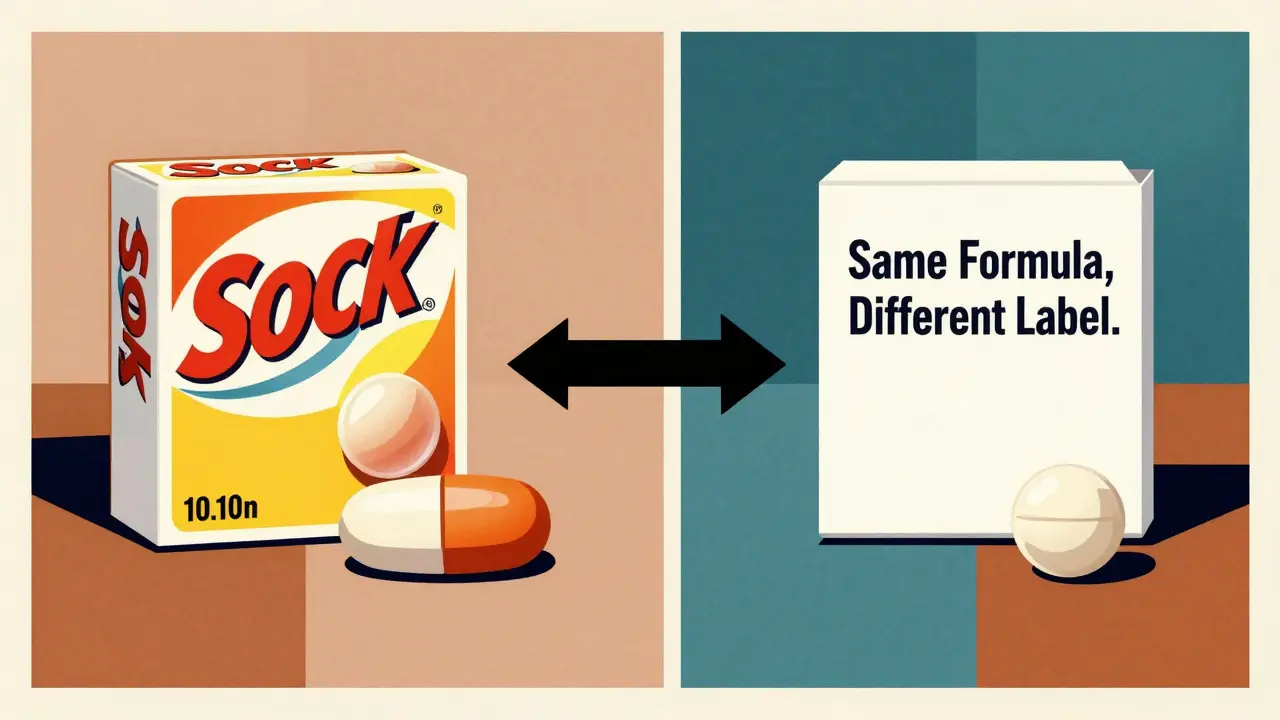
Ever opened your prescription bottle and seen a pill that looks different from last time - same name, same dosage, but a different color or shape? You’re not imagining things. That’s probably an authorized generic. And here’s the twist: it’s not a copy. It’s the exact same pill your doctor prescribed, just sold under a different label.
What Exactly Is an Authorized Generic?
An authorized generic is the brand-name drug, made by the same company, in the same factory, with the same ingredients, but without the brand name on the box. Think of it like a car manufacturer selling the exact same model under a different badge - same engine, same seats, same warranty, just no logo. The U.S. Food and Drug Administration (FDA) defines it clearly: it’s a drug approved under the original brand’s New Drug Application (NDA), but sold with different labeling, packaging, or product codes. No new approval is needed. No extra testing. Just a label change. You might see it at your pharmacy labeled as “Metformin Hydrochloride” instead of “Glucophage,” or “Atorvastatin” instead of “Lipitor.” Same active ingredient. Same inactive ones. Same manufacturing process. Same quality control. Just no marketing budget.How Is It Different From Regular Generics?
Regular generics are made by other companies after the brand patent expires. They must prove they’re “bioequivalent” - meaning they work the same way in your body. But here’s the catch: they’re allowed to use different fillers, dyes, or coatings. That’s why a generic pill might look different, taste different, or even cause minor side effects in sensitive people. Authorized generics don’t need to prove bioequivalence. Why? Because they’re not different. They’re the same pill, straight from the original factory. No guesswork. No variability. Just the brand drug with a new name tag. Here’s how they stack up:| Feature | Brand Name | Authorized Generic | Regular Generic |
|---|---|---|---|
| Manufacturer | Original brand company | Same as brand (or subsidiary) | Third-party generic company |
| Active Ingredients | Identical | Identical | Identical |
| Inactive Ingredients | Identical | Identical | May differ |
| Approval Path | New Drug Application (NDA) | Uses brand’s NDA | Abbreviated NDA (ANDA) |
| Bioequivalence Proven? | No (it’s the original) | No (it’s the same) | Yes |
| Appears in FDA Orange Book? | Yes | No | Yes |
| Price | High | Low (similar to generics) | Low |
Why Do Companies Make Authorized Generics?
It’s not charity. It’s business. When a brand drug’s patent expires, the law gives the first generic company 180 days of exclusive rights to sell the generic version. That’s a huge financial incentive - they can charge a little less than the brand and still make big profits. But here’s where brand companies fight back. They launch their own authorized generic - right on day one. Same pill. Same price as the generic. Suddenly, the first generic company isn’t alone anymore. They’re competing with the original maker. And that cuts into their profits. This tactic is legal. It’s been used since the early 2000s. Companies like Pfizer (through Greenstone), Procter & Gamble (through Prasco), and others have built entire divisions just to make these versions. Critics say it undermines the whole point of the Hatch-Waxman Act - which was to encourage competition by rewarding the first generic challenger. When the brand company itself enters the generic market, that incentive weakens. Some experts argue it’s a loophole. Others say it’s just smart strategy.
What Does This Mean for You as a Patient?
Here’s the good news: you get the same drug, often at a lower price. If you’ve ever had trouble tolerating a generic - maybe it gave you a stomachache or made you feel weird - an authorized generic might be the answer. Because it’s identical to the brand, it’s less likely to cause unexpected reactions. You might notice the pill looks different. That’s normal. The brand might use a red capsule. The authorized generic might use a white one. But the active ingredient? Same. The dose? Same. The manufacturer? Same. Pharmacists sometimes struggle to identify authorized generics because they don’t show up in the FDA’s Orange Book - the official list of approved generics. That means if your pharmacist isn’t familiar with them, they might question whether it’s the right drug. Don’t panic. Ask them to check the FDA’s separate List of Authorized Generic Drugs. Or better yet, ask your doctor to write “dispense as written” on the prescription if you want to avoid switches.Can You Trust an Authorized Generic?
Absolutely. There’s no compromise in quality. The FDA doesn’t require extra testing because the drug hasn’t changed. It’s the same production line. The same inspectors. The same batch records. In fact, many pharmacists and doctors prefer authorized generics over regular ones - especially for drugs with narrow therapeutic windows, like warfarin, levothyroxine, or epilepsy medications. Even tiny differences in inactive ingredients can affect absorption. With an authorized generic, you eliminate that risk entirely. And if you’re worried about cost? Authorized generics often cost less than the brand and are usually priced right alongside regular generics. Sometimes even cheaper.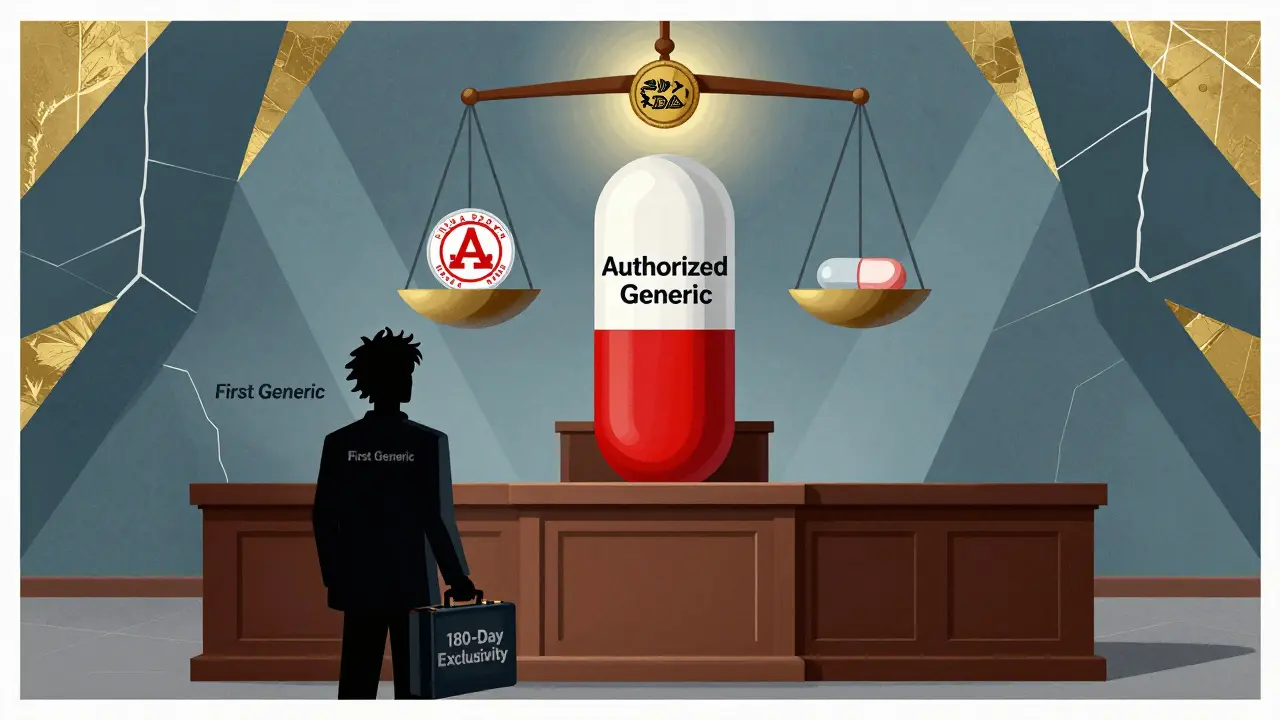
How to Spot One
When you pick up your prescription, check the label:- Is the drug name just the chemical name (e.g., “Sertraline”) instead of “Zoloft”?
- Is the manufacturer name different from the brand? (e.g., “Greenstone” instead of “Pfizer”)
- Does the pill look slightly different in color or marking?
What’s Next for Authorized Generics?
More drugs will go generic in the coming years. As blockbuster medications like Humira, Enbrel, and others lose patent protection, expect more authorized generics to hit the market. Some lawmakers have tried to close this loophole. They argue it discourages true generic competition. But so far, the FDA hasn’t changed its rules. And with drug prices under constant scrutiny, manufacturers have little incentive to stop. For now, authorized generics are here to stay. And for patients, that’s a good thing. You get the same drug, the same quality, and often the same price as a regular generic - with none of the guesswork.Are authorized generics the same as brand-name drugs?
Yes. Authorized generics are manufactured by the same company as the brand-name drug, using the exact same ingredients, in the same facility, under the same quality controls. The only differences are the label, packaging, and sometimes the color or markings on the pill.
Why do authorized generics cost less than brand-name drugs?
They cost less because they don’t carry the marketing, advertising, and research expenses of the brand-name version. The manufacturer saves money by removing the brand name and selling directly as a generic, but the product itself hasn’t changed.
Can I switch from a brand to an authorized generic safely?
Yes. Since authorized generics are chemically and physically identical to the brand-name version, switching is safe for nearly all patients. Many doctors actually recommend them for drugs where consistency matters, like thyroid medication or blood thinners.
Why doesn’t my pharmacist know what an authorized generic is?
Many pharmacists aren’t trained on the difference between authorized and regular generics because authorized generics don’t appear in the FDA’s Orange Book - the main reference they use. You may need to ask them to check the FDA’s separate Authorized Generic List or confirm with the manufacturer.
Are authorized generics available in Australia?
Australia doesn’t have a formal category called “authorized generics” like the U.S. does. Instead, the Therapeutic Goods Administration (TGA) allows generic manufacturers to market identical versions of brand drugs under different names. While the concept is similar, the regulatory framework and naming are different. Always check the active ingredient and manufacturer with your pharmacist.
Next Steps
If you’re on a brand-name drug and want to save money:- Ask your doctor if an authorized generic is available for your medication.
- Call your pharmacy and ask: “Do you carry the authorized generic version of [drug name]?”
- Compare the price - sometimes it’s the same as the regular generic, sometimes cheaper.
- If you’ve had issues with regular generics, try the authorized version. You might notice a difference.
Comments
Christina Widodo January 12, 2026 at 23:27
Okay but why does no one talk about how sometimes the authorized generic gives me less anxiety than the brand? I switched from Lipitor to atorvastatin and my brain fog disappeared. Same pill, different label, but my body knew the difference. I thought I was imagining it until I read this.
Prachi Chauhan January 13, 2026 at 17:10
so basically the pharma companies are playing chess with our prescriptions? they let the generic guy in… then drop their own version on day one? that’s brutal. it’s like letting someone borrow your bike… then riding the exact same one right behind them. capitalism is wild.
Katherine Carlock January 13, 2026 at 22:39
My grandma takes warfarin and she’s been on the authorized generic for years. No INR spikes, no hospital visits. She doesn’t even know the difference. She just knows the pills are cheaper now. I think this should be the default option for everyone. Why risk variability when you don’t have to?
Sona Chandra January 14, 2026 at 12:11
THIS IS A SCAM. THE BRAND COMPANIES ARE LAUGHING AT US. THEY MAKE THE DRUG, THEY OWN THE PATENT, AND NOW THEY OWN THE GENERIC TOO? WHAT’S NEXT? THEY’LL SELL YOU THE SAME PILLS IN A BOX WITH A DIFFERENT COLOR AND CHARGE YOU MORE FOR ‘PREMIUM PACKAGING’?!
Jennifer Phelps January 15, 2026 at 15:15
I got metformin last week and the pill was white instead of blue I asked the pharmacist and they said it was generic I didn’t even know there was a thing called authorized generic now I’m paranoid about every pill I take
beth cordell January 17, 2026 at 06:07
So if I switch to an authorized generic… I’m basically getting the brand drug but with a discount? 😍 I’m doing this for my thyroid med next refill. Also… anyone know if they come in flavored? Just asking for a friend 🤭
Lauren Warner January 19, 2026 at 04:39
Let’s be real. The FDA’s list of authorized generics is a mess. It’s not updated in real time. Pharmacists aren’t trained. Patients are confused. This isn’t transparency - it’s regulatory negligence disguised as innovation. You call it a win? I call it a loophole with a smiley face.
Craig Wright January 20, 2026 at 01:11
As a British citizen, I find this American regulatory gymnastics deeply concerning. In the UK, the NHS mandates bioequivalence testing for all generics - regardless of origin. The notion that a drug can be marketed as identical without formal approval is frankly irresponsible. This is not consumer protection - it is corporate exploitation dressed as cost-saving.