Anticholinergic Burden Calculator
How This Works
This tool calculates the Anticholinergic Cognitive Burden (ACB) score of your medications. The ACB scale rates medications from 0 to 3 based on their anticholinergic effects. A total score of 1 or more indicates potentially harmful cognitive effects, especially for older adults.
Total Anticholinergic Burden
0Common Medications & Their Ratings
Diphenhydramine (Benadryl)
First-generation antihistamine. Strong anticholinergic effects.
Doxylamine
First-generation antihistamine. Moderate anticholinergic effects.
Loratadine (Claritin)
Second-generation antihistamine. Minimal anticholinergic effects.
Cetirizine (Zyrtec)
Second-generation antihistamine. Minimal anticholinergic effects.
Fexofenadine (Allegra)
Second-generation antihistamine. Minimal anticholinergic effects.
Low-dose Doxepin
Prescription sleep aid with minimal anticholinergic effects.
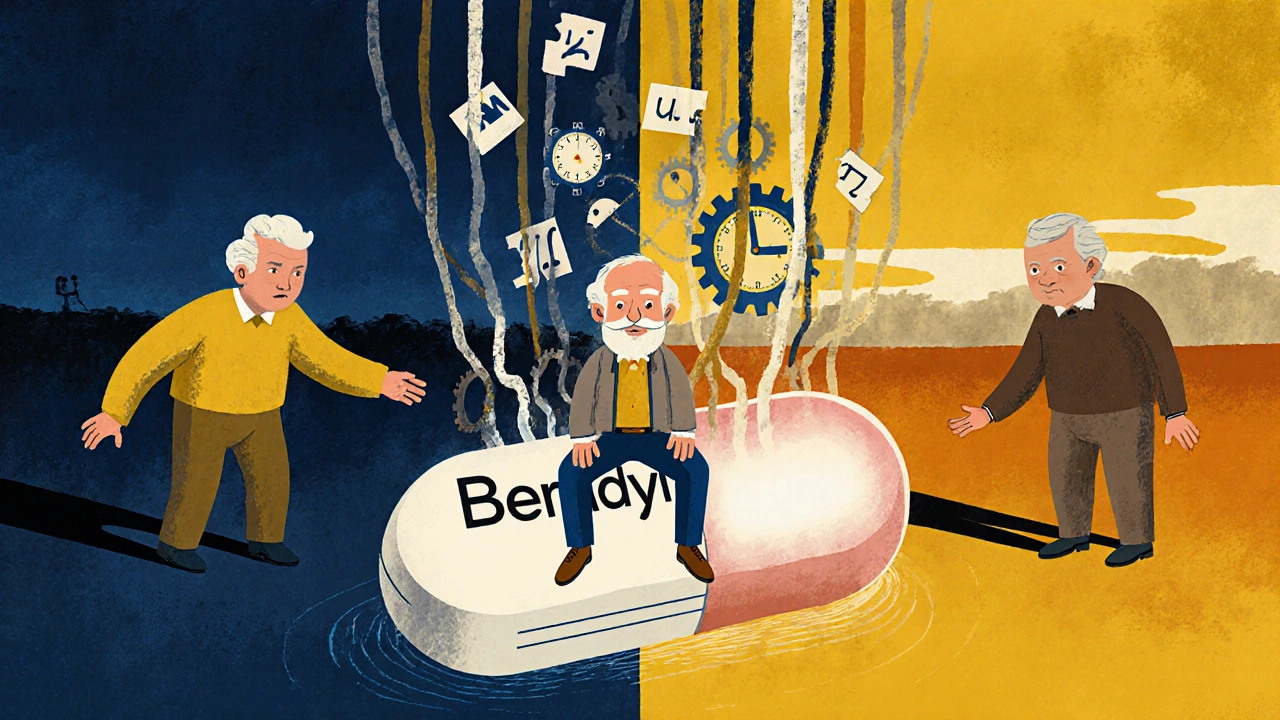
Many older adults reach for diphenhydramine-better known as Benadryl-to help them sleep or ease allergy symptoms. It’s cheap, easy to find, and works quickly. But what happens when you take it night after night, year after year? A growing body of research suggests this common over-the-counter drug might be doing more than just making you drowsy. It could be quietly affecting your brain in ways that increase dementia risk.
Why First-Generation Antihistamines Are a Concern
Not all antihistamines are the same. There are two main types: first-generation and second-generation. The difference isn’t just about how long they last or how strong they are-it’s about what they do inside your brain. First-generation antihistamines like diphenhydramine, doxylamine, and chlorpheniramine cross the blood-brain barrier easily. Once inside, they block acetylcholine, a key chemical messenger involved in memory, attention, and learning. This is called anticholinergic activity. It’s why these drugs make you sleepy: they’re dampening brain activity. But when this happens over years, it may wear down cognitive resilience. Second-generation antihistamines-like loratadine (Claritin), cetirizine (Zyrtec), and fexofenadine (Allegra)-were designed to avoid this. They barely enter the brain. Their anticholinergic effect is so weak it’s nearly negligible. For someone needing daily allergy relief, switching to one of these is a simple, low-risk change.The Evidence: What the Studies Really Show
In 2015, a major study in JAMA Internal Medicine followed over 3,400 adults aged 65 and older for more than a decade. It found that people who took strong anticholinergic drugs regularly-especially antidepressants, bladder meds, and antipsychotics-had a higher chance of developing dementia. But when they looked specifically at antihistamines, the link disappeared. The risk increase was zero. That same year, another study tracked nearly 9,000 older adults. It found 3.8% of those using first-gen antihistamines developed dementia, compared to 1% of those using second-gen. At first glance, that sounds alarming. But after adjusting for age, health conditions, and other meds, the difference wasn’t statistically significant. In plain terms: the numbers were too close to say one group was truly at higher risk. A 2019 follow-up study looked at over 1,000 daily doses of various anticholinergic drugs. Antidepressants? Risk went up 29%. Bladder meds? Risk jumped 65%. Antihistamines? No increase at all. The odds were exactly 1.00-meaning no change. So why do some headlines scream “Benadryl causes dementia”? Because early studies grouped all anticholinergics together. When you lump together a powerful psychiatric drug with a sleepy-time allergy pill, the signal gets muddy. Later, more precise analyses peeled them apart-and the antihistamine signal faded.Why Doctors Still Warn Against Them
Even if the direct link to dementia isn’t proven, doctors still tell older adults to avoid first-gen antihistamines. Why? Because they cause real, immediate problems. Dizziness. Confusion. Dry mouth. Urinary retention. Falls. These aren’t theoretical risks-they’re daily dangers for older adults. One fall can lead to a hip fracture, hospitalization, and a rapid decline in health. The American Geriatrics Society’s 2023 Beers Criteria, the gold standard for safe prescribing in older adults, gives first-gen antihistamines a hard “Avoid” rating. That’s not because of dementia. It’s because they’re unsafe for the body right now. The European Medicines Agency agrees. Their 2022 update says antihistamines should carry warnings about “potential long-term cognitive effects,” even if the evidence isn’t conclusive. Why? Because the risk is low but the population is huge. Millions take these daily. Even a tiny increase in harm adds up.
What About Sleep? Many Use It to Fall Asleep
The biggest reason people take diphenhydramine isn’t allergies-it’s sleep. A 2022 survey found 42% of adults over 65 use OTC antihistamines regularly to help them sleep. And 78% had no idea these drugs have anticholinergic effects. But here’s the problem: antihistamines don’t improve sleep quality. They just make you drowsy. You might fall asleep faster, but you’ll miss out on deep, restorative sleep stages. Over time, this can make fatigue worse, not better. There are better options. Cognitive Behavioral Therapy for Insomnia (CBT-I) works for 70-80% of older adults. It teaches you how to reset your sleep rhythm without pills. But access is limited. The average wait for a CBT-I therapist is over eight weeks. And Medicare only pays $85-$120 per session-far less than what most providers charge. Low-dose doxepin (Silenor) is a prescription sleep aid with minimal anticholinergic activity. It’s FDA-approved for insomnia and has an ACB score of 1-much safer than diphenhydramine’s score of 3. But it’s not cheap, and many doctors don’t think to prescribe it.What Should You Do?
If you or a loved one is taking diphenhydramine or doxylamine regularly, here’s what to do:- Check the label. Look for “diphenhydramine,” “doxylamine,” or “anticholinergic” on the Drug Facts panel. Many sleep aids and cold meds hide them under “inactive ingredients.”
- Switch to second-gen. For allergies, try loratadine, cetirizine, or fexofenadine. They work just as well without the brain fog.
- For sleep, try non-drug options first. Keep a regular bedtime. Avoid screens an hour before bed. Get daylight in the morning. Try a white noise machine.
- Ask your doctor about CBT-I. Even if it’s hard to find, it’s the most effective long-term fix for insomnia.
- Review all meds every six months. Many older adults take 5-10 pills daily. One of them might be contributing to brain fog.

The Bigger Picture: Why This Matters
This isn’t just about one drug. It’s about how we treat aging. We’ve normalized using pills to fix symptoms-drowsiness, insomnia, allergies-without asking whether they’re safe over time. We don’t think twice about taking a sleeping pill for years, but we’d never take a painkiller daily for decades without checking for liver damage. The same logic should apply here. Just because something is sold over the counter doesn’t mean it’s harmless. The real danger isn’t a guaranteed link to dementia-it’s the quiet, cumulative toll of drugs that dull the brain day after day. New research is underway. The ABCO study, launched in 2023 with $4.2 million in NIH funding, is tracking 5,000 older adults for a decade. It’s the most detailed look yet at how anticholinergics affect cognition over time. Results won’t come until 2033. But in the meantime, we already have enough to make smarter choices.Frequently Asked Questions
Is Benadryl linked to dementia?
Current evidence does not show a clear, direct link between Benadryl (diphenhydramine) and dementia. Large studies have found no significant increase in dementia risk specifically from first-generation antihistamines when properly adjusted for other factors. However, these drugs are still avoided in older adults because they cause immediate side effects like confusion, dizziness, and falls-which can lead to serious injury and cognitive decline.
Are all antihistamines dangerous for older adults?
No. Only first-generation antihistamines like diphenhydramine and doxylamine have strong anticholinergic effects. Second-generation options like loratadine (Claritin), cetirizine (Zyrtec), and fexofenadine (Allegra) are considered safe for long-term use in older adults because they don’t cross the blood-brain barrier significantly. Switching to these is a simple, low-risk change.
Can I take antihistamines occasionally without risk?
Yes. Occasional use-like once or twice a month for a bad allergy day-is unlikely to cause harm. The concern is chronic, daily use over years. The brain can handle short-term anticholinergic exposure. The risk builds with repeated, long-term disruption of acetylcholine signaling.
What are safer alternatives for sleep?
Cognitive Behavioral Therapy for Insomnia (CBT-I) is the most effective long-term solution, with success rates of 70-80%. For medication, low-dose doxepin (Silenor) is a prescription option with minimal anticholinergic activity. Melatonin may help with sleep timing but doesn’t improve sleep quality. Avoid combining sleep aids with alcohol or other sedatives.
How do I know if my medication has anticholinergic effects?
Check the Drug Facts label on OTC products for diphenhydramine, doxylamine, or chlorpheniramine. You can also use the Anticholinergic Cognitive Burden (ACB) Scale online-diphenhydramine is rated 3 (highest risk), while cetirizine and loratadine are rated 0 (no risk). Ask your pharmacist or doctor to review all your medications annually.
Comments
Cindy Burgess November 28, 2025 at 14:34
It’s astonishing how many people still treat OTC medications like they’re harmless candy. Diphenhydramine has been on the market since the 1940s, yet we’re only now beginning to understand its neurochemical impact. The evidence may not be definitive, but the precautionary principle is not optional in geriatric pharmacology. Every prescription, however benign it seems, deserves scrutiny when taken chronically. The body is not a machine that tolerates repeated insults without consequence.
Tressie Mitchell November 29, 2025 at 09:22
Let’s be real-this article reads like a pharmaceutical industry whitepaper disguised as public health advice. Second-gen antihistamines cost three times as much, and the only reason they’re ‘safer’ is because they were engineered to avoid liability, not because they’re inherently better. If you’re old enough to need sleep aids, you’re old enough to tolerate a little drowsiness. Stop infantilizing the elderly.
dayana rincon November 30, 2025 at 12:08
Benadryl = my grandpa’s nightly ritual 🛌😴. He says it helps him ‘chill out.’ Also says he’s never forgotten his own name. So… maybe we’re all just scared of the word ‘anticholinergic’? 😅
Orion Rentals December 2, 2025 at 05:34
The distinction between correlation and causation in longitudinal pharmacovigilance studies remains paramount. While the 2015 JAMA study and subsequent analyses indicate no statistically significant elevation in dementia incidence attributable solely to first-generation antihistamines, the clinical consensus to avoid these agents in older populations is grounded in the documented prevalence of acute anticholinergic syndrome. The risk-benefit calculus, therefore, favors non-pharmacological interventions and second-generation alternatives, not due to unproven neurodegenerative risk, but because of demonstrable functional impairment.
Sondra Johnson December 2, 2025 at 14:18
Can we just take a breath and stop turning every OTC pill into a moral panic? I get it-anticholinergics aren’t perfect. But let’s not pretend that CBT-I is magically accessible to every 72-year-old living in rural Iowa with no internet, no car, and a Medicare Advantage plan that won’t cover it. Sometimes, a little diphenhydramine is the only thing standing between a person and three hours of staring at the ceiling. The real villain here isn’t the drug-it’s the system that leaves people with zero good options.
Chelsey Gonzales December 2, 2025 at 16:25
so like… benadryl is bad? but claritin is fine? but claritin costs more? and my grandma cant afford it? and she just wants to sleep?? this whole thing feels like a scam. like why is the medical world so obsessed with making old people feel guilty for taking something that helps? 🤷♀️
MaKayla Ryan December 4, 2025 at 03:12
Of course the government wants you to stop using Benadryl. It’s American-made, cheap, and effective. They’d rather you buy expensive European meds or pay for therapy you can’t afford. This is how they control the elderly-make them dependent on overpriced prescriptions. Wake up. Diphenhydramine has been saving lives for 80 years. Don’t let bureaucrats scare you out of your rights.
Kelly Yanke Deltener December 5, 2025 at 05:28
I’m so tired of people acting like this is some new revelation. My mom took Benadryl for 20 years. She’s 83, sharp as a tack, still knits sweaters and drives herself to bingo. Meanwhile, the ‘experts’ are out here trying to guilt-trip seniors into feeling bad for wanting to sleep. You don’t get to decide what comfort looks like for someone who’s lived through the Depression, raised kids, buried spouses, and now just wants a little peace at night. This isn’t science-it’s condescension wrapped in a white coat.