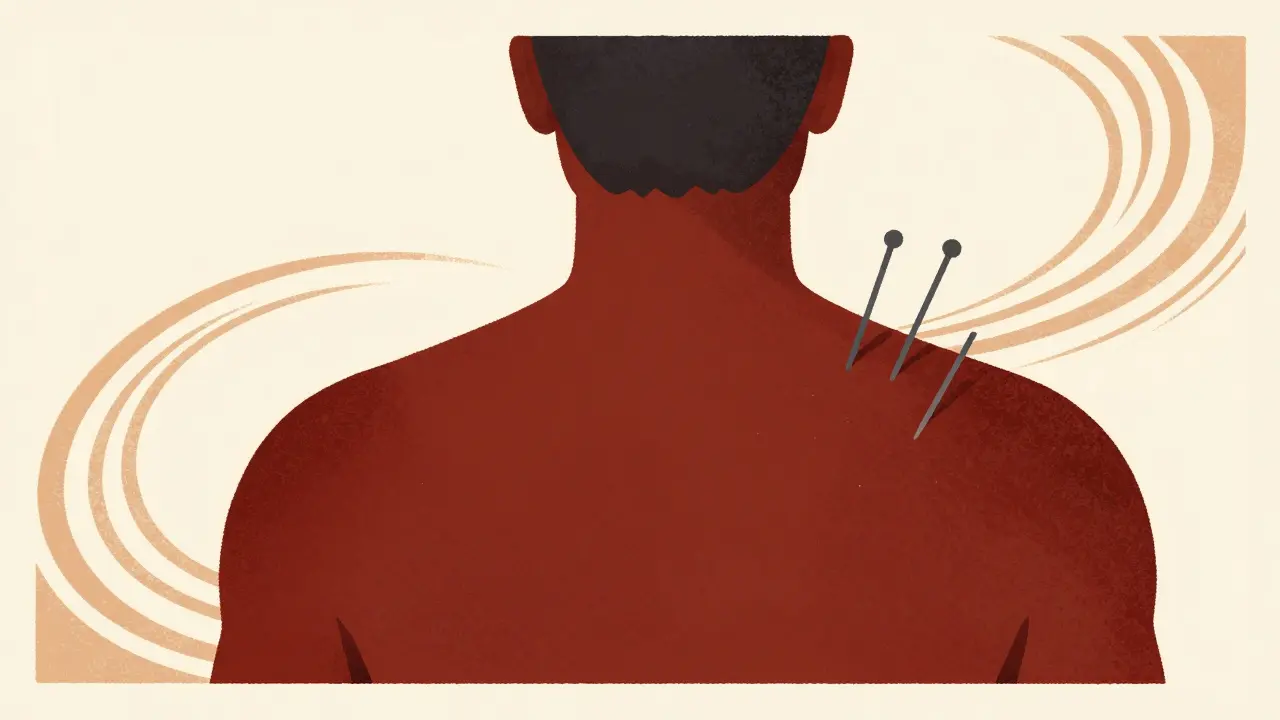
Imagine sticking dozens of tiny needles into your skin to stop a headache or soothe a sore back. For some, it sounds like a bit of a nightmare; for others, it's the only thing that actually works. With millions of people struggling with chronic pain and a growing fear of opioid addiction, more people are looking toward Acupuncture is a traditional Chinese medical technique involving the insertion of fine needles at specific points on the body to alleviate pain and treat various conditions. It has been around for roughly 2,500 years, moving from ancient temples to modern clinics and hospital wings. But does it actually work, or is it just a fancy placebo?
The Reality of the Evidence
If you're wondering if acupuncture is just "magic," the data suggests otherwise. A massive meta-analysis published in the Journal of Pain looked at over 20,000 patients across 39 randomized controlled trials. The result? Acupuncture provides a clinically relevant effect for pain that lasts at least a year after the treatment ends. It's not just a temporary fix; it's a sustainable shift in how the body processes pain.
When we look at specific conditions, the numbers get even more interesting. Research from JAMA Internal Medicine showed that for back and neck pain, osteoarthritis, and chronic headaches, acupuncture significantly outperformed doing nothing at all. While the gap between "real" acupuncture and "sham" acupuncture (where needles don't actually penetrate the skin) is smaller, the benefits are still there. This suggests that while the act of being treated helps, the specific placement of needles adds a layer of medical efficacy that goes beyond the placebo effect.
How It Actually Works
In the old days, practitioners talked about "Qi" (energy) flowing through Meridians invisible channels through which life energy flows, serving as the map for acupuncture point selection . Today, Western medicine explains it differently. Dr. Peter Wayne from Harvard's Osher Center suggests that the needles modulate central pain processing pathways and regulate neurotransmitters. Essentially, you're "hacking" your nervous system to turn down the volume on pain signals.
Depending on who you see, the approach varies. Some practitioners use a "fixed formula," using the same points for everyone with a specific condition. Others use a "flexible formula" or a fully individualized approach, where the needles are placed based on your specific diagnosis and how your body is reacting in the moment. Some may even use Electrostimulation the application of a small electrical current to acupuncture needles to enhance the therapeutic effect to boost the results.
Acupuncture vs. Common Pain Meds
Most of us reach for an Advil or Aleve when pain hits. These NSAIDs nonsteroidal anti-inflammatory drugs used to reduce inflammation and pain are effective, but they come with a price. In the US, these drugs cause about 103,000 hospitalizations a year due to stomach complications. Acupuncture, by contrast, has an incredible safety record. Serious adverse events happen in less than 0.05% of treatments. For many, the trade-off is a no-brainer: a few needles versus potential gastrointestinal bleeding.
| Method | Primary Benefit | Main Risk/Drawback | Typical Efficacy (Chronic Pain) |
|---|---|---|---|
| Acupuncture | Low side-effect profile | High out-of-pocket cost | Clinically significant / Long-term |
| NSAIDs | Immediate, easy access | Stomach/Kidney issues | Moderate / Short-term |
| Opioids | Powerful acute relief | High addiction risk | High (but risky) |

What to Expect During Treatment
If you've never had acupuncture, you're probably worried about the needles. The truth is, these aren't like the needles used for flu shots; they are hair-thin and barely felt. A typical course of treatment usually involves 6 to 12 sessions over about two months, with visits happening once or twice a week. Each session generally lasts between 15 and 30 minutes.
You won't always feel a "magic spark" after the first visit. In fact, a survey in Pain Medicine found that about 68% of patients didn't notice a significant improvement until their sixth session. Patience is key here. The benefits accumulate over time, often leading to a reduced reliance on medication. For example, some patients report cutting their ibuprofen use by 75% after a full course of treatment.
The Practical Side: Costs and Access
Despite the clinical evidence, getting acupuncture can be a headache. The cost typically ranges from $60 to $120 per session, and insurance coverage is hit-or-miss. In the US, only about 56% of private insurance plans covered it as of 2022. However, things are changing. Medicare now covers acupuncture for chronic low back pain, and the Veterans Health Administration has brought it into over 60% of its facilities.
Because the skill of the practitioner matters so much, it's important to check certifications. In the US, look for NCCAOM the National Certification Commission for Acupuncture and Oriental Medicine, which sets professional standards for practitioners certification. This ensures your provider has undergone thousands of hours of training and follows safety protocols, such as using single-use, sterile needles classified as Class II medical devices by the FDA.

Is it Right for Your Type of Pain?
Not all pain is created equal, and acupuncture isn't a cure-all. It absolutely shines when dealing with chronic conditions. If you have Osteoarthritis a degenerative joint disease characterized by the breakdown of cartilage -especially in the knees-or chronic low back pain that has lasted more than 12 weeks, the evidence is strong. It's also a go-to for tension-type headaches.
On the flip side, if you're dealing with acute postoperative pain (the kind you feel right after surgery), pharmacological interventions are usually still superior. While acupuncture can help reduce the amount of opioids someone needs, it's rarely a complete replacement for heavy-duty painkillers in an emergency or surgical setting. It's best viewed as part of a "multimodal" strategy-using several different tools to manage pain rather than relying on just one.
Does acupuncture actually hurt?
Most people find the process virtually painless. The needles are extremely thin compared to medical syringes. You might feel a slight pinch upon insertion or a dull ache once the needle is in place, which is often a sign that the treatment is working. Many patients actually find the sessions so relaxing that they fall asleep.
How many sessions do I need before it works?
While some feel immediate relief, the most consistent results appear after a series of treatments. Data shows that about 68% of patients notice a significant difference by their 6th session. A typical protocol consists of 6-12 sessions over 6-8 weeks. For chronic conditions, you may need occasional "maintenance" visits every few weeks.
Is it better than taking pain medication?
It depends on the goal. For long-term chronic pain, acupuncture is often preferred because it lacks the gastrointestinal and addictive risks associated with NSAIDs and opioids. Clinical reviews show its pain-relieving effects are comparable to NSAIDs for back pain and osteoarthritis, but with a much lower risk of serious side effects.
What is 'sham' acupuncture and why does it matter?
Sham acupuncture is a placebo where needles are inserted at incorrect points or don't penetrate the skin. Researchers use it to see if the benefit comes from the needles themselves or just the patient's expectation of healing. Evidence shows that real acupuncture is more effective than sham, though the difference is sometimes modest, indicating that both the physical stimulation and the psychological effect play a role.
Can I use acupuncture if I'm already on medication?
Yes, and it's often recommended as part of a multimodal approach. Many patients use acupuncture to gradually reduce their reliance on medications like ibuprofen or opioids. Always consult your doctor first to ensure the treatment doesn't interfere with any specific medical conditions or medications you are taking.
Next Steps and Troubleshooting
If you're ready to try acupuncture, start by checking your insurance provider to see if they cover it for your specific diagnosis. Look for a provider who is NCCAOM certified to ensure you're getting professional care. Be honest with your practitioner about your goals-whether you want total pain elimination or just to be able to walk the dog without a flare-up.
If you don't feel any improvement after four or five sessions, don't give up immediately, but do speak up. Your practitioner can adjust the point selection (moving from a fixed to an individualized formula) or try electrostimulation to see if a different stimulus triggers a response in your nervous system.
Comments
william wang April 16, 2026 at 14:27
I've actually seen some great results with the individualized approach for my own lower back issues. It really makes a difference when the practitioner adjusts based on your immediate feedback rather than just sticking to a generic map.
Tama Weinman April 16, 2026 at 21:09
Of course the 'science' supports it now that big pharma found a way to monetize the 'holistic' trend. Just follow the money and you'll see how these clinical trials are funded to push us away from traditional medicine into another subscription-based wellness loop.